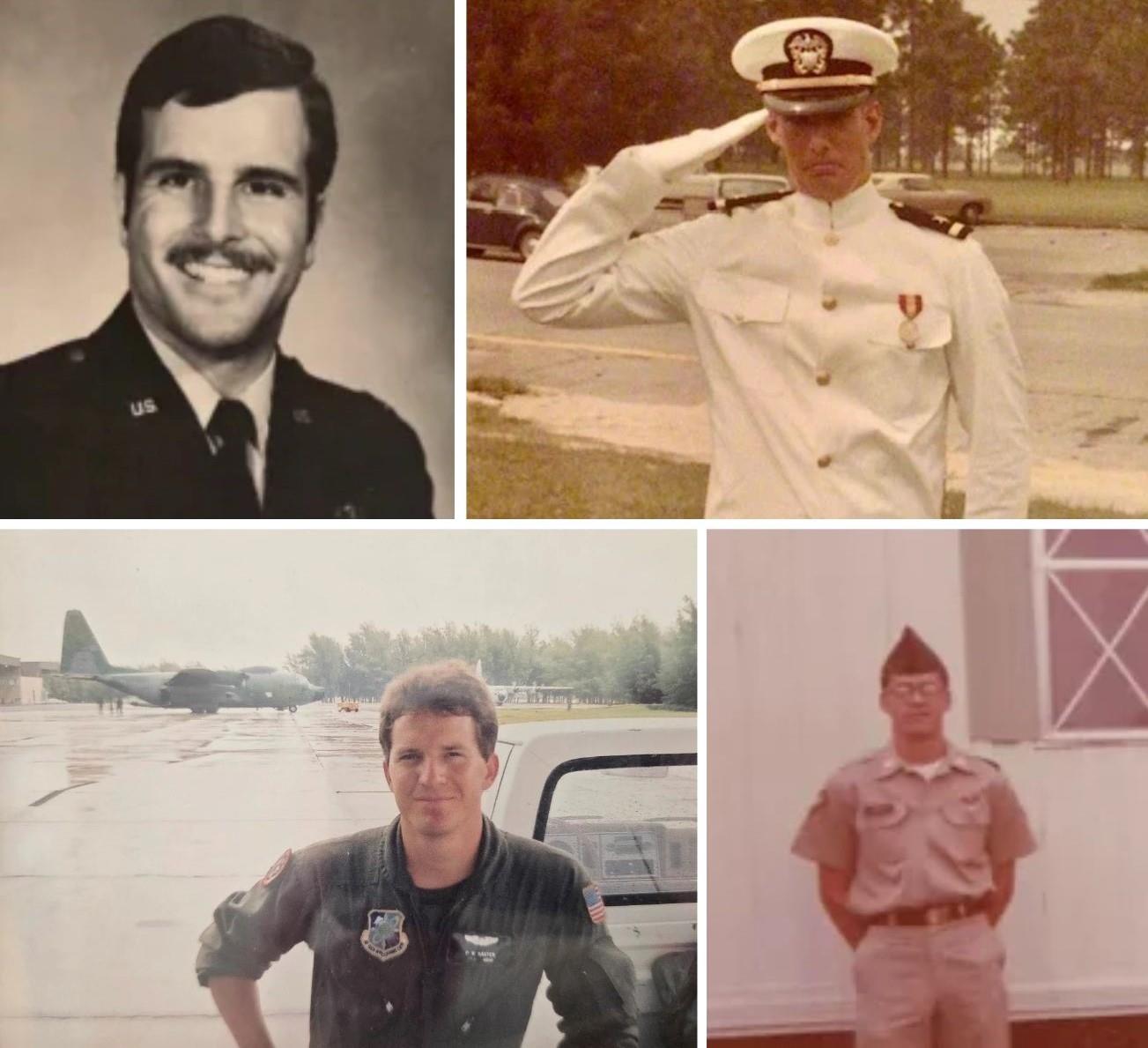
In recognition of Veterans Day, we honor and thank the veterans in our club who have served our country.
In recognition of Veterans Day, we honor and thank the veterans in our club who have served our country. Their experiences reflect a range of service, personal journeys, and lasting memories. We are grateful to each of them for sharing a glimpse of their time in uniform and for the dedication and commitment they have carried into their lives and our community. With gratitude, we recognize our veteran members, Bill Abel, Chris Baxter, Stephen Frangos, Fr Larry Gosselin, and Connard Hogan.
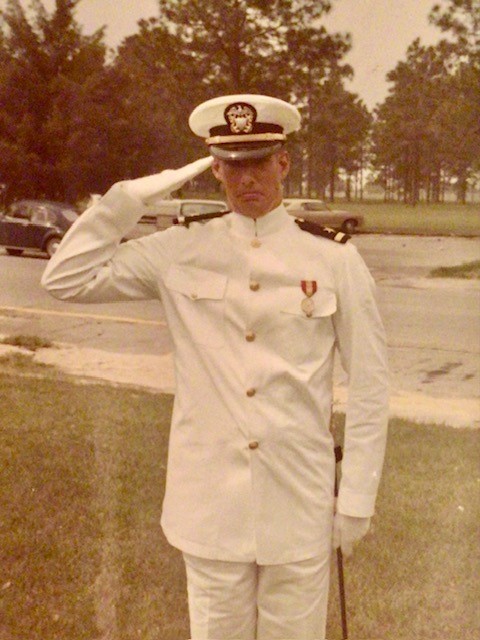
Bill Abel
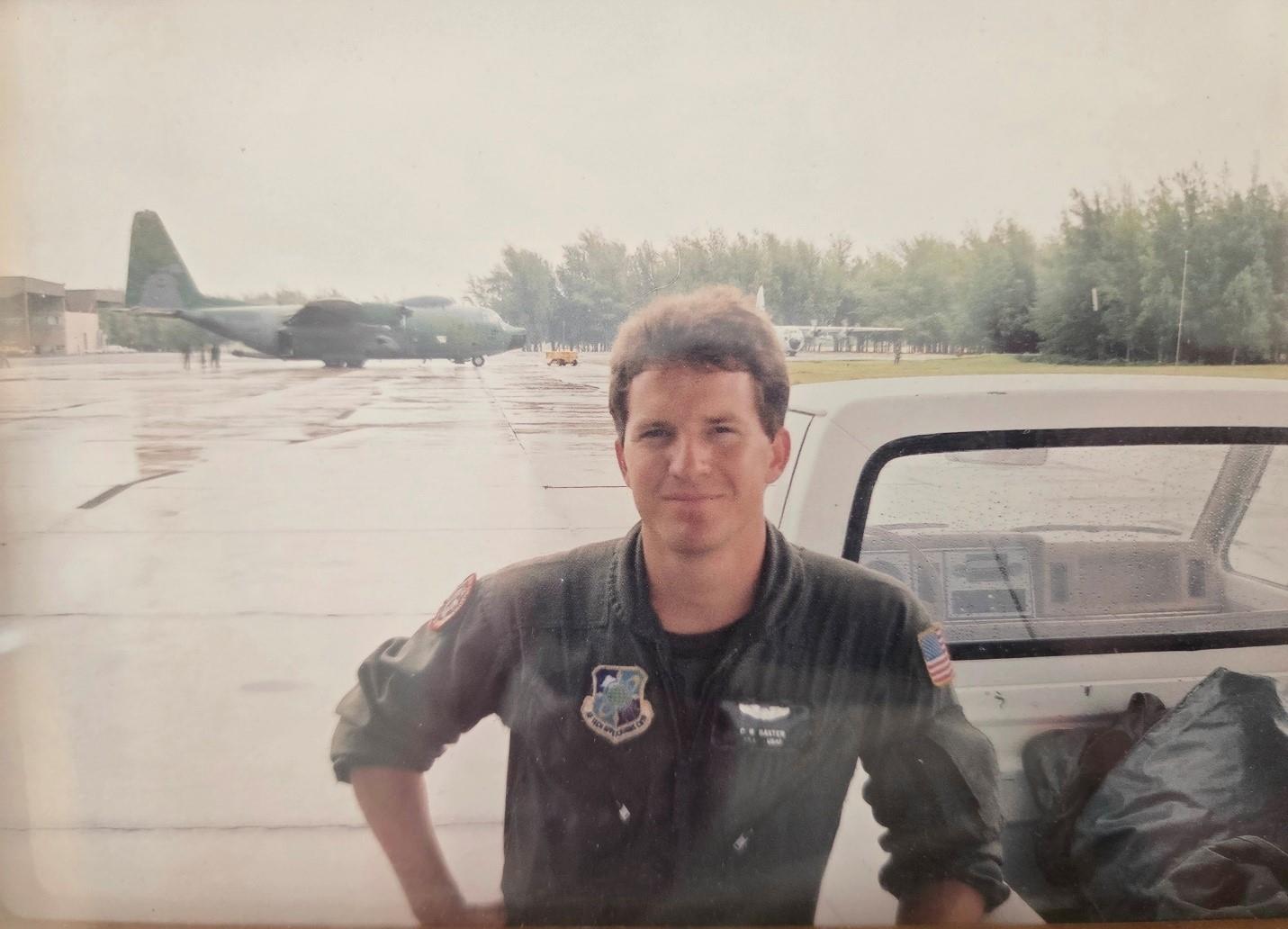
Chris Baxter
As much as it was about the opportunity to stand on my own two feet as a young man finding his way in the world, my decision to enter military service was not taken lightly. Upon entering, I signed a document swearing to support and defend the Constitution of the United States against all enemies, foreign and domestic. I was proud to serve our country. I was now part of something bigger than myself. At the time, the world was steeped in the Cold War. Though the hours and days were long and extended at times, and I was engaged in numerous mission sorties that put me in close proximity of potentially hostile forces, the perspectives and experiences I gained, the training I received, the opportunities I was given, the places I’ve travelled, the men and women I was honored to serve with, while carrying out our important mission have all left an indelible impression on me. Photo: Sand Island, Midway Islands (1980s)
Stephen Frangos, MD
I enrolled at the US Air Force Academy in 1975 and completed a B.S. degree in biological science. Following college, I attended medical school at the Uniformed Services University, a Department of Defense program. I then entered active duty US Air Force service as an Aerospace Medicine physician. For four years I provided Family Medicine and Aerospace Medicine services to USAF men, women and their dependents, and supported the flying operations in Europe assigned in Zaragoza, Spain and Royal Air Force Base Lakenheath, UK. I flew as often as I could as a crew member to establish rapport and enhance my credibility as a resource for air crew members. My crew position in the jet aircraft was as a Weapons System Operator, responsible for offensive and defensive aircraft systems. At the end of my four years I had logged more than 200 hours in fighter, tanker, cargo, and helicopter aircraft.
Fr. Larry Gosselin, ofm
I served in the U.S. Air Force from 1970-1975. I served as a Loadmaster on the C-141 A Star-Lifter, which at that time was the largest cargo transport aircraft in the Air Force. I served in the 939th Airlift Command and 313th Airlift Squadron at McCord Air Force Base in Washington State. At that time we were involved with suppling military support in transporting supplies, equipment, and personnel to places through the world, but largely to Southeast Asia and in country in Vietnam, during the war. I served two years on Active Duty and then served in the Reserves capacity after 1972.
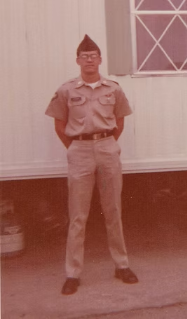
Connard Hogan
US Army
Specialist 5th Class, Military Intelligence
1/29/69-10/1/71
I will allow two excerpts from my memoir Barbwire, Brothels and Bombs in the Night: Surviving Vietnam to provide the gist of my military service story.
Author’s Notes
“This account is of my experiences in the US. Army, including my one-year tour in Vietnam. I do not claim to speak for anyone other than myself. Mine is only one story of the 2,594,000 vets who served there, which includes the 58,000 plus who didn’t return home alive.
Some names are fictitious, though all accounts are as accurate and true to my experiences as memory allows, and in no case did I intend to denigrate any individual.
Life within compounds surrounded by barbwire—the razor type—epitomized my life, though I escaped into the city of Nha Trang in pursuit of ‘recreation’ during the first portion of my one-year tour. For me, barbwire symbolized the wall of illusion between safety and injury, though it morphed into a symbolic psychological barrier that I internalized. As such, I consider myself a silent casualty, left with the notion that emotional and spiritual scars from trauma are, in many cases, worse than physical wounds. Trauma does not remain silent. Its debilitating effects corrupt an individual’s life until it is named and given a voice.
I wrote this story as a way to heal myself, in part, by acknowledging and remembering that which I experienced. I wrote it to provide a broader understanding of trauma to those who haven’t experienced warfare, particularly those who underestimate ‘Nam vet sacrifices. I wrote it for the loved ones of other vets, who—for whatever reason—didn’t, can’t, or won’t share their experiences. In addition, I wrote it to offer a possible path forward for those suffering trauma, from whatever source or to whatever degree.
So, I sing my song, my story, the only way I know how, hoping others will hear it.”
And from the end of Chapter One, “Full Circle”
“And as more of my ‘Nam memories have resurfaced over time, like a single file of infantry grunts returning from a deep jungle patrol—quiet, weary, unkempt, and dirtied, each one a member of the group but separate and unto himself—my recollections force me to accept that my ‘Nam war never ended. And I realize that it’s not about the forgetting...it’s about the remembering.”