New Community Garden in Los Osos
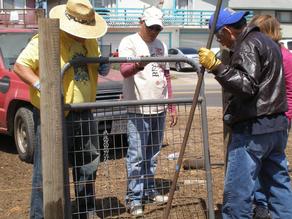
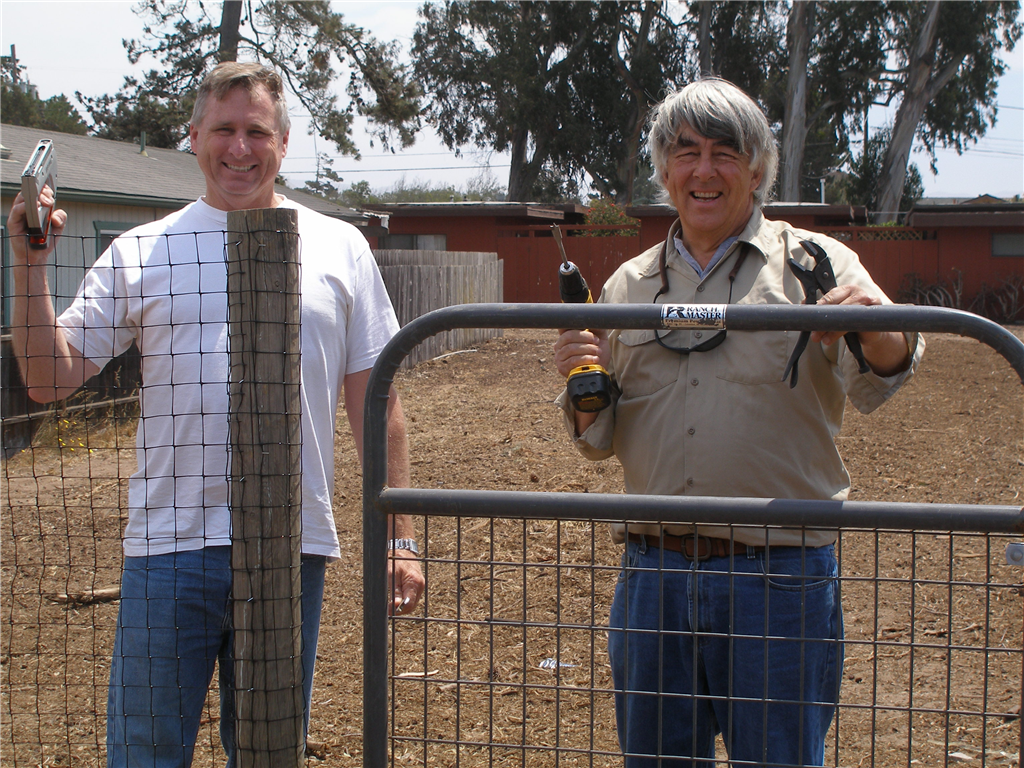
Construction has started on a new community garden at 1968 11th Street in Los Osos.
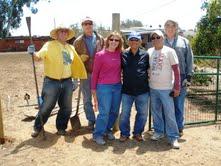
Called the Blue C Community Garden, it is a project of San Luis Obispo-based nonprofit organization Ecologistics in partnership with the Rotary Club of Los Osos.
It will have space for 15 plots, a permaculture demonstration garden and an ocean-friendly garden.
The permaculture demonstration garden will be used to teach local schoolchildren and other interested gardeners how to garden without environmental contaminants, such as chemical herbicides, pesticides and fertilizers, how to maintain soil health and nutrients, and to reduce irrigation needs.
This will be the second community garden in Los Osos~Baywood Park. Behind the Baywood Park Inn, there is a beautiful community garden with hothouses and 53 very active gardeners that was established three years ago.
San Luis Obispo has four community gardens; a 17 plot garden on Broad Street, one on Laurel Lane next to the fire station, downtown at Emerson Park and the newest one is the 40 plot Rotary Garden at Meadow Park.
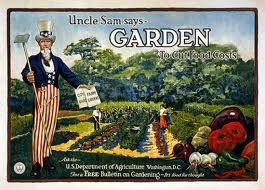
Victory Garden, History:
In March 1917, Charles Lathrop Pack organized the National War Garden Commission and launched the war garden campaign during World War I.
Victory gardens, also called war gardens or food gardens for defense, were vegetable, fruit and herb gardens planted at private residences and public parks in the United States, United Kingdom, Canada and Germany during World War I and World War II to reduce the pressure on the public food supply brought on by the war effort. In addition to indirectly aiding the war effort these gardens were also considered a civil "morale booster" — in that gardeners could feel empowered by their contribution of labor and rewarded by the produce grown. This made victory gardens become a part of daily life on the home front.
Victory gardens were planted in backyards and on apartment-building rooftops, with the occasional vacant lot "commandeered for the war effort!" and put to use as a cornfield or a squash patch. During World War II, sections of lawn were publicly plowed for plots in Hyde Park, London to publicize the movement. In New York City, the lawns around vacant "Riverside" were devoted to victory gardens, as were portions of San Francisco's Golden Gate Park.
In 1946, with the war over, many residents did not plant victory gardens in expectation of greater produce availability. However, shortages remained in the United Kingdom.
The Fenway Victory Gardens in the Back Bay Fens of Boston, Massachusetts and the Dowling Community Garden in Minneapolis, Minnesota, remain active as the last surviving public examples from World War II. Most plots in the Fenway Victory Gardens now feature flowers instead of vegetables while the Dowling Community Garden retains its focus on vegetables.
Since the turn of the 20th to 21st century, there has existed a growing interest in victory gardens. A grassroots campaign promoting such gardens has recently sprung up in the form of new victory gardens in public spaces, victory garden websites and blogs, as well as petitions to both renew a national campaign for the victory garden and to encourage the re-establishment of a victory garden on the White House lawn. In March 2009, First Lady Michelle Obama, planted an 1,100-square-foot "Kitchen Garden" on the White House lawn, the first since Eleanor Roosevelt's, to raise awareness about healthy food.