Morro Bay National Estuary Program
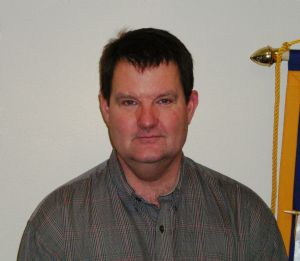
Sandy Nichols
introduced Chris Clark: An environmental attorney, member of the Bay Foundation Board of Directors; instructor in the City and Regional Planning Department at Cal Poly. He attended Grover Heights Elementary School.
Chris started his presentation by telling us that he, as a kid, lived in Anita Shower's house and lived in Grover Beach for several years, attended Grover Heights Elementary School. One day, returning fresh from surfing, he hadn't even toweled off, made a visit to the old house and knocked on the door. This gracious lady opened the door, invited him into the foyer, listening to Chris explained why he was there, still dripping wet and in his bathing suit. It was a cordial, brief moment after which, embarrassed, he high tailed it back to his car. Anita said she doesn't remember the incident.
Over the years, California has lost 95% of original wetlands. For example, the San Joaquin Valley. Most of the last truly natural estuaries are all south of San Francisco. Estuaries are loosely defined where fresh water meets sea water as tides dictate. As development continued to threaten the estuaries, there was a public movement to preserve them. The US Clean Water Act has identified 28 estuaries that are designated for protection and funding is provided to establish programs to do so. The Morro Bay Estuary is the smallest of those listed. Chris is a member of the Board of Directors, The Morro Bay National Estuary Program, created as a collaborative non profit agency to bring together the stake holders: public, EPA, Regional Water Quality Control Board, SLO County, City of Morro Bay, businesses, land owners, Sierra Club, Audubon Society, etc., to solve problems leading to the preservation of the Morro Bay Estuary and its inhabitants.
Funding comes from grants from the various agencies, and a $3.7 million fine assessed to PG&E, Diablo, by the RWQCB. It is a well funded program. The program staff members work on a variety of projects including (but not limited to) public education, the Volunteer Monitoring Program, watershed protection and restoration and managing the MBNEP grant programs. The program relies heavily on collaborative efforts that include local stakeholders and partners.
Several hundred acres that drain to the estuary have been purchased and are managed to protect water run off into the estuary. They have an action plan that took five years to accomplish and it is currently being followed. Among a variety of other actions, it will protect against loss of habitat, erosion and sedimentation, water pollution and freshwater flow. A significant component includes public education. For more information call, 772-3834,
www.mbnep.org
.
Added Note: Sandra Sansoni announced that each year, twenty women make a visit on their kayaks to the Morro Bay Estuary. They call the event, "Estrogen on the Estuary".