Community Help for Drinkable Water
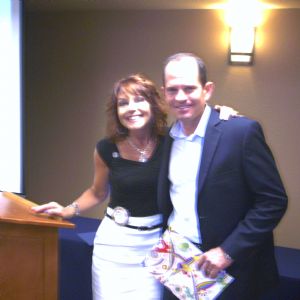
Our Guest Speaker, Brian Grant, the grant development and community director from the LifeWater Foundation, an organization whose mission is to partner with the poor to bring their communities safe water.
Mr. Grant thanked the members for inviting him to speak. Brain worked, as an adult, at the Salvation Army in
A water crisis worldwide means that every 20 seconds a child dies from contaminated water. The fact is that billions of people do not have access to clean water. Things we take for granted are at a crisis in parts of the world, especially in
LifeWater approaches the problem in different ways. Being a community driven organization, they support people so they can work together on teaching practices to fight for what is best for a community, an education on water to people so they can pass it on. LifeWater has a program to train the trainers and are always looking for funds and volunteers. Brian believes in the holistic and Christian approach. They make sure the solutions are relevant to the local needs and support the local culture. They bring in educational trainers so they are appropriate to the community where the trainers are going. The company provides education and curriculum. It is a participatory model in that the trainers train others before they leave. This organization has projects in Asia, Africa, and Latin America (in
The company is located in
Good sanitation includes safe, clean latrines. There must be hygiene education training; and there must be the importance of hand washing as well as using and managing safe drinking water sources. Fact: Most deaths occur because of drinking that kind of bad water. LifeWater provides clean water points or provides people with the education on how to get clean water. The goal is to reduce the amount of people drinking and using bad water.
You can become a white water field trainer. You can help raise money in order to help others. You may go on a field trip to see how this works. LifeWater is in the process of organizing a campaign and are in need of partners and ambassadors. They have engineers on staff as well as trainers.