Safe Driving - School Busses
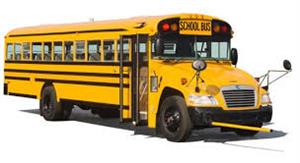
Last week's program was another in the series on Safe Driving. Sheila Winters, Director of Transportation for the Lake Stevens School District, gave us an overview of student transportation. Sheila started her career as a bus driver in 1979 when busses had manual transmissions and manual door openers. In those days, the training of drivers amounted to about 18 hours with four of those in a bus. Actual time behind the wheel was an hour. Then one was a bus driver!
The training of bus drivers in Washington State started in the 1970's and today consists of 30 hours in the classroom and many hours behind the wheel learning how to maneuver a bus. Two of the most important elements of the training is student management and customer service. Imagine trying to talk to your audience with your back to them giving them directions all the while operating a 40' school bus.Trainees must obtain a commercial driver's license with passenger and school bus endorsements. They must pass a vehicle inspection element as well as a practical element to obtain the license.</p> <p>The transportation department is actually a cooperative with the Granite Falls School District. Between the two Districts more than 10,000 students are transported every day. Annually, in Lake Stevens, the busses travel more than 700,000 miles while in Granite Falls they travel over 300,000 miles annually. There are over 100 drivers between the two districts. Statewide, there are almost 11,000 drivers. Statistically, they are the safest on the road. More children are killed in or around a bus by private vehicles than because of the bus or the bus driver. The causes of accidents are usually inattention, following too close or failure to yield. These causes also apply to bus drivers as well.</p> <p>Sheila Winters became a driver trainer in 1989. Three years later she was asked to join the State Planning Committee that writes the curriculum to teach people how to drive school busses. She was also involved with the Washington Association of Pupil Transportation for many years including over 20 years with the rodeo competitions at the local and state levels. Rodeos are competitions between drivers to show off the skills of bus handling they use every day. She added that Washington State is a leader in the nation in bus driver training.</p> <p>Sheila reviewed some of the regulations regarding school busses. When a bus is traveling on a two lane road and the amber warning lights begin to flash all traffic in both lanes must slow down and stop when the bus stops and activates the red lights and extends the stop sign. No traffic may pass the bus in any direction. When the bus is traveling on a roadway that has three or more lanes and the amber warning lights begin to flash all traffic in the lane that the bus is in and the adjacent lane must slow down and stop when the the bus stops and activates the red lights and extends the stop sign. Bus routes are designed so that students do not have to cross a road that has three or more lanes, however, she reminded everyone that we should be alert to the possibility of students approaching busses from any direction.</p> <p>During the question and answer session, a question was asked about why a school bus seemingly makes numerous stops on a road. Why not just have the students gather at one or two central locations on the road? Sheila explained that the students must have a safe walkway to go from their home to a bus stop location. So, you would see a bus stop frequently on a road that does not have sidewalks.