The Nick of Time Foundation
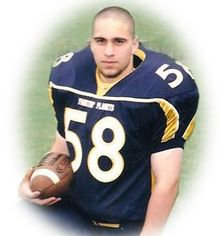 Darla and her sister, Sue Apodaca, talked about the inspiration for the Foundation and what the organization has done since. By the time of the Youth Heart Screening Day next week at Meadowdale High School in Lynnwood, 10,000 students will have been screened for heart abnormalities. About 3/10ths of a percent of those have had to have additional testing. Keep in mind that most young people--target age range 14 to 24--are not regularly screened for heart issues. We think that young people are healthy. Nick was healthy. The young student who passed away last fall at Meadowdale HS was healthy when he collapsed on the track and died as the teacher performed CPR and three classes stood by and watched. Part of the Foundation's efforts are to make sure that all schools have automated external defibrillators (AEDs) on campus and in many cases several. But, a key component is making sure the students (and staff) know how to use them. And, know CPR as well. Those tools are useless if no one knows how to do CPR or use an AED.
A Heart Screening Day at a local school is open to any young person in the community and region and involves the student completing a questionnaire beforehand that includes fairly pointed questions about the family's health history, having their blood pressure, pulse rate, height and weight taken, an EKG done (males and females are separated from each other) and finally an evaluation of that EKG by a doctor. This is all done at the school--usually in the gymnasium. Students are seen at the rate of 20 every 15 minutes. Darla and Sue added that typically 35% of the student population of a school is seen. Parents have to give permission for the screening. So, keep in mind readers, that a Screening Day involves much prep work well in advance. So much so, that the Foundation only does about ten a year. Two of the additional stations in the gym that students go through are the Hands Only CPR station and the AED station. Students are then run through a scenario of having to use CPR and the AED.
In September 2011 the Foundation's Heart of Schools project helped provide and place over 130 AED's and CPR training in all 130 Seattle Public School facilities and athletic fields. Because of this there was a "save" six weeks later. So, this does work. The Foundation was also instrumental in getting legislation passed (House Bill 1556) that requires CPR to be taught to all high school students and required Emergency Action Plans to be put in place for all athletic activities.
Sudden Cardiac Arrest (SCA) is not the same as a heart attack. A heart attack is akin to a plumbing problem. The heart continues to beat or try to. An SCA is akin to an electrical problem. A person in cardiac arrest has no heartbeat. The heart may quiver but does not pump blood. It strikes without warning for a number of different reasons including genetic factors and cardiac abnormalities. The symptoms of cardiac arrest include sudden collapse, no pulse, no breathing and, loss of consciousness. A shock from a defibrillator is the only thing that can save a person in cardiac arrest.
What would Nick have aspired to? What about the young man at Meadowdale? Or the person in Lacey, WA last fall who also died? Are they future inventors, business leaders, artists, planners, solvers, thinkers? Is it worth risking the lives of the young people when we have the ability to check for abnormalities? Typically, a pediatric or adolescent so called well-child checkup does not include an EKG screening. Why? Primarily because of cost. Sue shared a story of a young athlete who wasn't going to get a screening because mom said "He's fine and I would know if he's sick." but, he went on to get one because the track coach made the whole team do it. After his screening, the doctors wouldn't allow him to go back to class. Two weeks later he had open heart surgery and had his heart valves replaced. Last March he ran/walked the St. Patty's Day Dash in Seattle, ran over 500 miles during the summer to train to re-join the team and made it last September! What is he going to aspire to all because of the screening?
Lake Stevens School District is fortunate in that there are AED's at all of its facilities including four at the high school campus and two at the stadium. Sue and Darla encouraged the LSSD Staff members in attendance this morning to check on the Emergency Action Plans. There are several good training tools in them. Mike Snow, Principal of Cavelero Mid High School had already contacted the Foundation quite a while ago, so we are on the list to have a Screening Day, but, we're at least three years away. When our time comes though the Foundation will be seeking support from the Lake Stevens Community perhaps to underwrite the costs of the screening--typically about $25 per student. A family shouldn't have to make a choice about paying a bill or putting food on the table and checking out their son or daughter's heart. Scott Smith reminded us that our Club has a history of supporting this. A few years ago a Firefighter/EMT by the name of Pat Cook came to us asking for donations to underwrite the costs of purchasing AED's. At the time the devices cost about $3,000. Today they are much less.
As a community can we get behind supporting The Nick of Time Foundation? You bet!