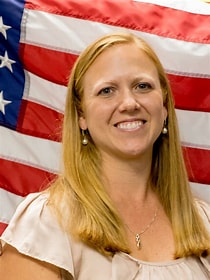
The featured speaker at last week's meeting was the General Manager of the Lake Stevens Sewer District, Mariah Low. Mariah started in her new position four months ago after a distinguished career with the Washington State Patrol Crime Lab. Mariah succeeds Tonya Seifert as GM. Mariah served on the Board of Commissioners with the District before taking on her new role. She provided an update on the District and how the rapid development in our community affects what happens to the waste that we create. An avid outdoorswoman, you will often find her exploring the numerous trails in the region.
Meeting the challenges of protecting the environment and providing quality sewer service to the community was the opening comment of her presentation. Marian commented about the March issue of the Rotary magazine illustrating wasteland and how inadequately sanitation systems are failing rural America being appropriate for her presentation today.
Within the Lake Stevens Sewer District boundaries there are 1,600-1,700 septic systems. The 200 foot rule applies when a septic system fails, the homeowner must hook up to the Lake Stevens Sewer District. A glimpse at the history of the district. The District is a Special purpose District established in 1957. The first Waste Water Treatment Facility began operations in 1965. In 1971 they expanded a 8.5 acre lagoon. The 1983 Comprehensive Plan expected the population to triple by 2000. In 2009, they began building the new Wastewater Treatment Plant which went into operation in 2012.
In 1960, the City of Lake Stevens was approximately 900 people. Current Lake Stevens comprehensive plan shows the population growing to around 46,800 by 2035. The District is regulated by several different entities. From the Clean Water Act of 1948, to the National Pollutant Discharge Elimination System, the National Pretreatment Program and the State Department of Ecology and Puget Sound Nutrient General Permit to name a few.
Mariah talked about the process. The nutrient cycle is water based so the treated water goes out into the outfall into Ebey Slough. Mariah showed a chart comparing rates in Snohomish County which is among the higher end but not at the top. The rates paid by customers do not go into the Capital facilities. Last year the District capital expenses were USD $6,511,703 and the coming year will be approximately $7,063,440. The map showed pipes that are over 50 years old. Mariah showed a map with various lift stations amounting to about 30 in the District.
Mariah talked about the changes coming in the downtown area and the need to meet these activities. A new lift station was installed in 2020 which included odor control and some work on SR9/SR204 intersection will require some upgrades. Mariah concluded with ways to protect the system. In response to a question, Mariah stated that the District will be debt free by 2033. In the last two years, the District has paid of approximately $36 million dollars on their debt service.