Rotary Foundation
by Lorine Parks
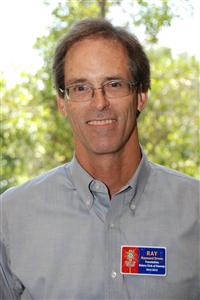
Any speaker’s hardest task? Making the statistics for an old subject sound as suspenseful as a Super Bowl, and the history as appealing as Mom’s stuffing with turkey and pumpkin pie. Ray Brown, our favorite Foundation Chair, proved up to the job.
How to begin the Foundation story? Ray invoked the spirit of Arch Klumpf, who in 1917 was the first to pitch Rotary as a force for “doing good in the world,” by advancing world peace and eliminating poverty. By 1928 enough money had been endowed for the Rotary Foundation to have a name of its own.
The kind of money needed, the kind that pays big interest payments without touching the principle, came to Rotary in 1947. Paul Harris’s death that year gave Rotary the impetus it needed, monetary gifts in his name, and the Rotary Foundation was on its way.
By 1919 Rotary had began raising money for crippled children, with a $500 donation to a program that later became the beloved and successful Easter Seals.
Then in 1978, after helping a local project in the Philippines to eradicate polio, Rotarians were ready for an endeavor of global scale. That came about in 1984-85, when world-wide eradication of polio became Rotary’s official mandate.
The name “Polio Plus” means that not only are we protecting children against polio myelitis but also childhood tuberculosis, diphtheria, mumps, pertussis, and measles. Mothers are given the tetanus protection as well.
Ray gave a quick polio update: there are only three countries where polio is still endemic, Afghanistan, Pakistan and Nigeria. But eradicating the dread virus there will cost almost as much as all the money spent so far. Raising a goal of $.5 billion has been pledged through 2018.
There are pockets of resistance, stubborn tribal enclaves, where superstition and propaganda have made the natives fearful that the vaccine is really a sterilization medication, designed to destroy their ethnic group. Anti-American sentiment misleads the locals into rejecting anything that has a Western name on it.
The good news is that the Bill and Melinda Gates Foundation has committed to matching whatever we Rotary can raise, on a 2 for 1 basis.
More good news: polio in India, the world’s second most populous country, has been eliminated. World-wide, an estimated 1.5 billion lives have been saved since the program began.
Ways that Downey Rotarians can help include the monthly assessment in our dues of $7, automatically delivered directly to the Foundation’s effort. When there are charitable events like the Paul Harris dinner celebration just held, that money goes to the Foundation too.
Rotary has developed a personalized “scorecard” for each member. It shows where you stand, and how you can contribute, if 1) you are already a Paul Harris Fellow (go up to the next level); or 2) how to finalize their Paul Harris goal if you have already given something, by letting the Downey Club, through the Foundation, match your dollars with their dollars for every new contribution.
And 3), if you are not yet launched into your Paul Harris membership, the Foundation can match your donations to get you started. Whatever you can give, “it is the price we pay for all the good we do.”
Thanks to Ray’s eloquence and enthusiasm, hearts were stirred and everyone was shown a path to do their bit “to make the world a better place.”