Thousand Smiles - Ensenada, Mexico
by Lorine Parks
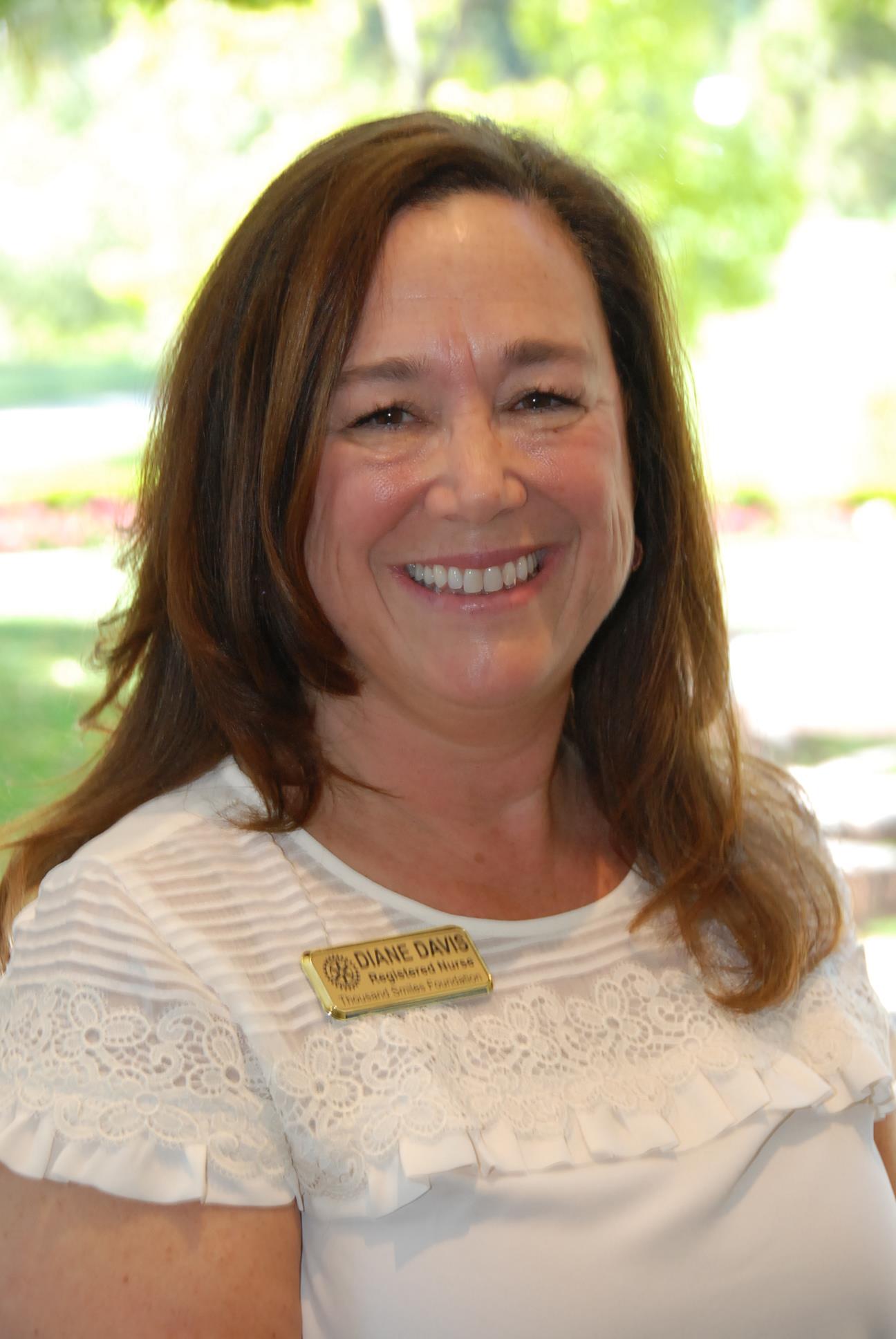
“How to use my skills as a nurse?” That’s the question Diane Davis asked Melodie St. John, president of the Hollywood Club and our District Governor-Elect for 2019-20.
“Come to Thousand Smiles in Ensenada,” Melody said, and that opened a new chapter of service for Diane and her whole family, Diane told us.
Thousand Smiles, a 501c3 Foundation whose resources come from Rotary Clubs, volunteers, grants and other donations, is dedicated to providing free medical and dental care to children, with special emphasis on free maxillo-facial surgeries and dental work to underprivileged children in Mexico who suffer from facial deformities such as Cleft lip and palate. We in Downey Rotary have taken this as one of our major club projects, so Diane was here to tell us just what involvement means.
What happens in a typical quick but action-packed weekend in Ensenada, at the Clinic? Rotarians volunteers arrive on a Friday and medical personnel participate in a screening clinic for patients. Dental hygenists are busy. Professionals such as Diane spend the day screening patients and getting the operating room ready for Saturday’s surgeries. Instruments have to be cleaned, supply carts loaded, for the multiple-discipline surgical procedures. Not just MD-ENT surgeons operate, but dental surgery by DDS’s takes place.
All medical personnel donate their services, and most are Rotarians. Those not club members are friends and family. Diane showed us pictures of her daughter Elizabeth gowned and working with her, her son Sean as well, her sister, and husband John. Each clinic treats 70-125 patients over the weekend.
“The word is out – they come from all over Mexico,” Diane says.
Cleft lip and palate cause feeding, speech and hearing problems, as well as a social stigma because of the disfiguring appearance. What causes the cleft? No one knows; probably environmental, as well as hereditary factors, are involved.
In the United States, these problems are recognized at birth and usually fixed before the child reaches one year of age. But because of poverty, Third World families cannot afford the surgery, and the patients may have to wait till they are well advanced in childhood before help is administered.
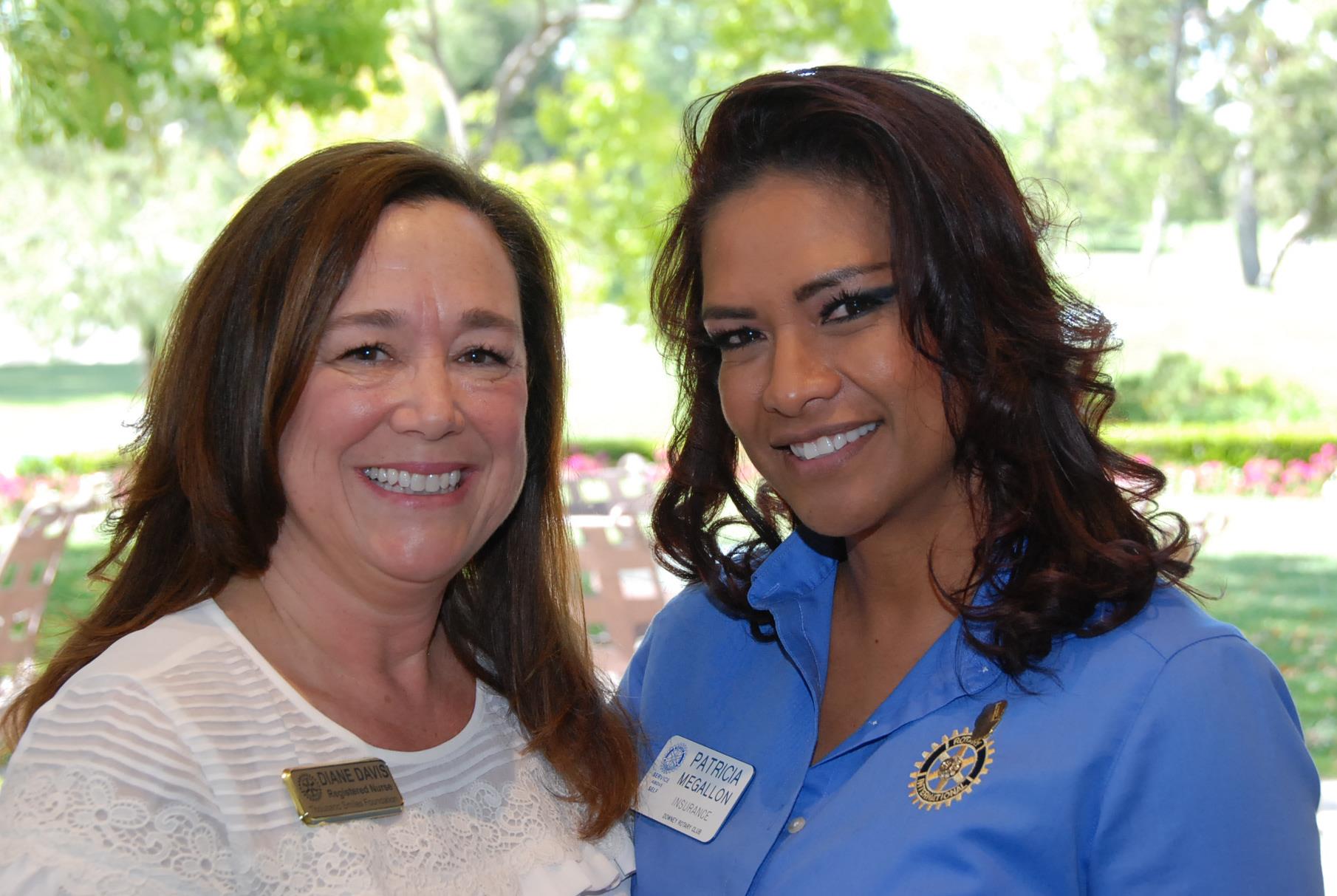
Non-professional Rotarians are busy on Friday helping with organizing supplies, and making and serving lunch to the volunteers, as well as the patients and their families, most of whom have traveled a long way to be there. Diane showed pictures of Patricia Megallon, who joined the group in February. Patricia got the surgical operating room supply carts in order, and actually scrubbed them down with a toothbrush to be sure they were sanitized. After each use, the carts are stored in a dusty warehouse until needed again, so Patricia had plenty to do.
Friday evening is a “huge Rotary function,” Diane says, involving eating out at local restaurants and cantinas located in the “black market,” an area which Diane says gets that name from the black color of the streets. Every one enjoys getting together again and relaxing.
Now it’s Saturday, and as many as 9-15 surgeries will be performed, Again, the pre-op and post-op are busy, and four obstetrical rooms allotted them by the Ensenada General Hospital are contantly in use. The rooms have been converted for the weekend into pre and post-op wards, and two operating rooms.
Anesthesiologists and surgeons are busy, and some of the surgeons are qualified in dental surgury and orthdontics as well. As the clinic is supported by several Rotary Districts, many of the doctors are American from Southern California, like San Diego (Chula Vista Club), and Los Angeles. But local Mexican doctors volunteer too, and interns and ressidents learn a lot by assisting.
Youth is involved: Rotaract, and students come.
Raul Lopez asked the big questions, “How can our Club help? And what can one person do?”
Thosand Smiles is already one of our club-approved projects for donations. Diane answered appreciatively, “First, money. Second, get involved. Come down for a clinic. It’s so quick – just a Friday and a Saturday, then come home Sunday.” The four weekend screening and followup clinics are held in February, May, August and November. And she added, “I’d love the club to come down here.”
Plans for the future include making dentures for financially strapped adults. The project needs more rooms at the hospital, which is also handling its own work load, and a building to house x-ray equipment and facilities.
“Every one has a job.” Some surgury procedures can take from 5-8 hours to perform, and most are on an out-patient basis. Rotarians are kept busy making serving luncheon sandwiches and keeping families and young siblings occupied and entertained during the long waits.
And while the medical services are free, there are other associated costs, approximately $250 for the surgery and $150 for dental work. That helps cover hospital costs and supplies. Diane showed us a box with compartments full of powdered bone for bone graft: the contents of that box alone cost $5,000.
“Kids are so resilient,” Diane says. She showed us pictures of kids before and after, and the change was spectacular. We saw Marco and Dulce who had their cleft palates repaired, and were given a normal child’s smile. Then there is Juan Jose - “JJ” - whose heartwarming story was that he was a child born both deaf and mute, which is often the case wth cleft palate deformty. His parents, a 15 year old mother and an 18 year old father who was “a gangbanger and narcotics dealer,” had abandoned him in an orphanage for deaf children. A pair of visiting missionaries were so struck by his sunny disposition that they managed to adopt him from the orphanage, and he is healthy, happy and thriving.