The Rancho Foundation
by Lorine Parks
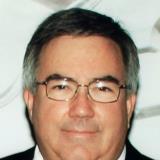
Greg Watson, Director of The Rancho Foundation, told us about new developments and projects. The Foundation is the fund-raising arm for Rancho Los Amigos Hospital that raises private funds to go directly into programs for patients, that the Hospital cannot fund itself.
Once the Country Poor Farm, and then the pre-eminent center for treating polio and post-polio episodes, Rancho is also world-famous for surgery and rehab work for head injuries and spinal cord injuries.
Rancho also now treats two thirds of its patients for stroke–related disabilities.
These victims are not all adults, as children can have strokes too, and more women than men are being treated. Watson said that the Foundation has developed Stoke Prevention programs, to make the general public more aware of the dangers. A program is scheduled for next Wednesday at the Rio Hondo Event Center, and Watson graciously said that any Rotarian who signs up at this meeting can be added to the already-closed list. The 9:30 am to 11 am presentation will educate about stroke prevention and also give a free carotid artery check-up, which is an expensive prime diagnostic tool for the likelihood of stoke.
New happenings in technology include developing robots and robot motors that can mimic human actions. Rancho is the first hospital in the world to have a device that allows a paraplegic to be strapped to a board and then raised by robot to a standing position. After years of being supine, the patient benefits in digestion as well as psychological ways. Some could even play golf.
Working with Cal Tech and USC, Rancho doctors have developed a microchip that can be implanted to spark muscles into performing tasks that direct brain commands cannot do.
If a body is smashed by an accident, Watson said, Rancho can help. Then during recovery, The Foundation has projects to speed up the process and motivate the patients to look forward to getting well. Recently they gave a young girl who was recovering from an automobile accident a Princess Day at Disneyland, who by the way, cooperates with all the Foundation’s programs.
And when a young woman named Reba, age 19, was hit by a car going 90 miles an hour, she was in a deep come and given no chance of regaining consciousness. But miraculously, she did wake up, and as we saw in a video, she spoke to us and showed us the stages of rehab, from wearing a halo head- brace to being able to compete in the Foundations Olympics, running and doing the broad jump.
Rancho’s most famous patient currently is Katie Sullivan, who was born without legs. When she came to Rancho as a young woman, Rancho fitted her with a new prosthesis that consisted of new legs and “blade runner” ankles and feet. She competed in the Special Olympics in London, and although she only got fifth place (only!), she is considered a blue ribbon person by the Rancho Foundation. This reporter met Katie at the Long Beach Press-Telegraph awards for Amazing Women in 2013, and Katie was not wearing slacks as most women nowadays do. She had on a short chic bubble skirt, which exposed her metal underpinnings. Brave, proud and matter-of-fact.
“At Rancho,” Watson said, “everything is possible, and we never give up.”
A fundraiser that Rotarians might want to participate in, is The Amistad Ball, April 13 at the Westin in Long Beach. “”It’s a giant birthday party,” Watson said, “our 125th.” It’s a sell-out every year.
Locally, Rotarians can exert pressure, as Watson stressed, so that high schools monitor and police head injuries in sports, and in football especially. Concussions are not to be taken lightly, and they are much more frequent these days for this reason: high school athletes are much bigger than they were in the past.
“If force = mass times acceleration,” Watson made it clear, “then bigger boys running faster are going to create more massive impact than before.”