Rotary Youth Exchange
by Lorine Parks
Our program was the Rotary Youth Exchange Program, presented by Warren Bobrow.
RYEP was started in 1923, and 100 students from the United States participate each year. When foreign students come to our district, which stretches from Hawaii to the West Coast, Nevada and Utah, the highlight of the year-long stay is a month-long train trip, to see our country. It begins in San Diego, comes through Los Angeles and San Francisco, goes on to Portland and Seattle, then Chicago, Rotary’s headquarters, and Indianapolis, and Boston. What an opportunity to see the variety and grandeur of the United States.
A picture of some of the exchange students said it all: many faces, each with one side of the face painted with the Stars and Stripes, and the other side decorated with insignia from the flag of each one’s own country.
We had a student from the United States with us who went to Auckland, New Zealand, and wore a leather jacket decorated with pins and designs from all over that country. What a colorful souvenir.
Anyone may qualify to apply to go as a Rotary exchange student. The qualities we look for are an interest in adventure, learning a language and another culture, living with a host family, and a desire to represent Rotary world-wide.
One may be a high school junior or senior and also in what in other countries is called the Gap Year, a year taken off between high school and college. But while an exchange student, even in Gap Year, the young person must attend school. This is how they will meet their peers and engage in activities with them, such as sports and drama.
These school terms count as school credits here, and U.S students may take their SAT’s while abroad. Nothing is lost, and everything is gained.
While living in the host Rotary district, the student will typically live with three different families, while attending the same school. The families may have children or not, be older or younger, or single parent, so the student gets to experience a real cross-section of life there.
The advantage of being an exchange student, or of hosting one, goes on for a life time. It is like adopting a family. The average cost for a Rotary club to sponsor a student is about $100 per month, for pocket money. Every other cost, including transportation, is covered by the Rotary Foundation. This is the largest student exchange in the world, and the United States is only one participant.
The Japanese short term exchange will be continued this year. Because of the earthquake last year, and tsunami damage, the program has been shortened to four weeks in the summer, in Osaka which is in Southern Japan and was not damaged. Japan hopes it will be able to start up their popular one-year program soon.
Bill Kirkwood won the raffle! Now it’s back to where it started for next week.
Shirley Johnson reported that she had talked to Wendy Doty, and Wendy said she’ll be back just as soon as she has her operation scheduled for Nov. 7. We wish you well, Wendy.
John Lacy got a round of applause when he announced he was making his last announcement, but then the Club realized he was only talking about the Golf Tournament. Paul Mathys, Rich Strayer, Kevin MacDonald and Alex Lopez have been working, along with others, to make it a success. It’s one of our biggest moneymakers for all of our charitable donations.
All members who helped at the Pancake Breakfast to benefit the YMCA, were asked to stand, and the Club gave them a round of applause.
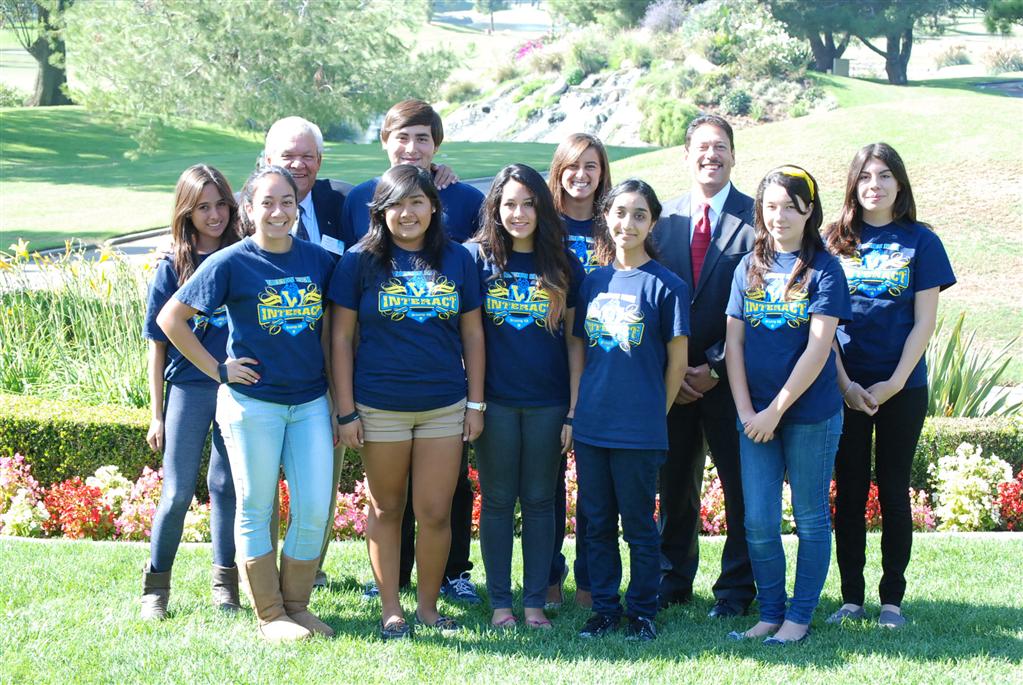
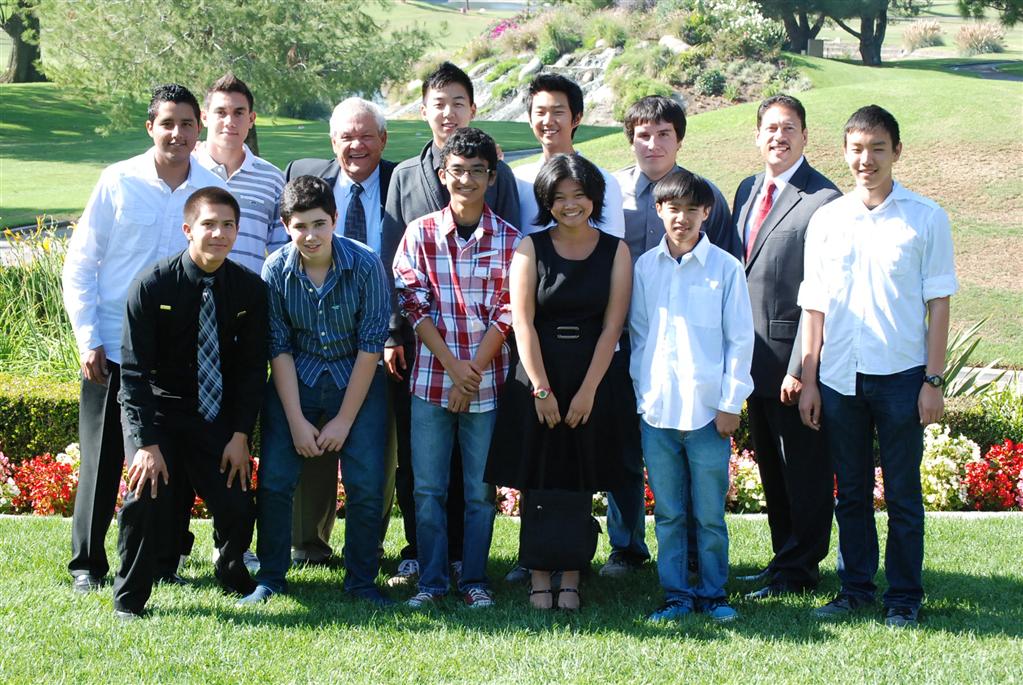
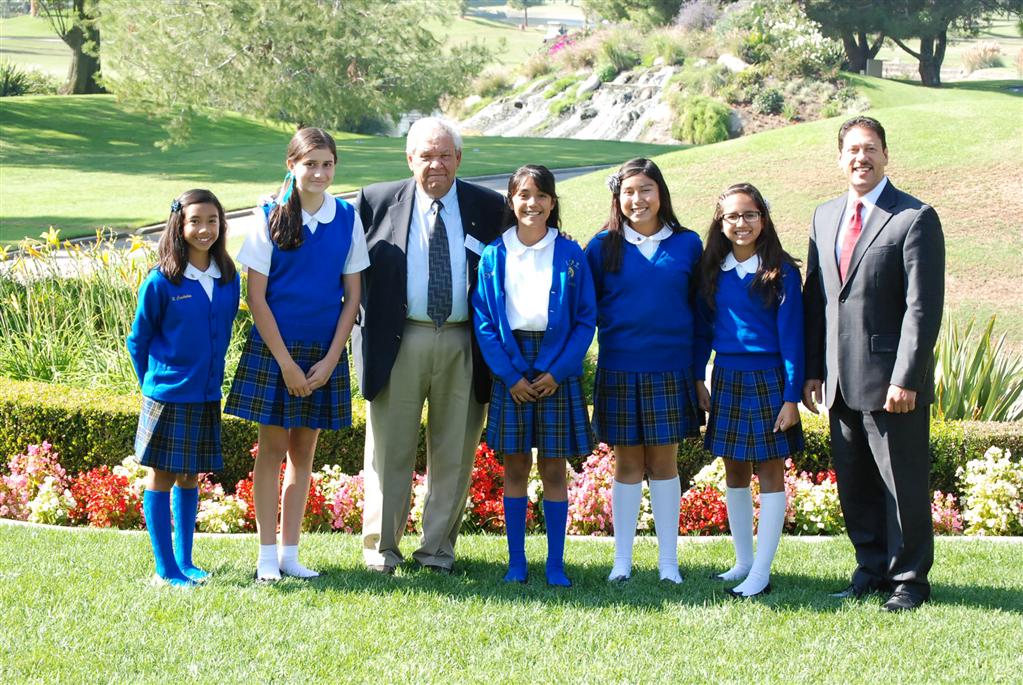
Our guests for the day were the Interact Clubs’ officers from Warren and Downey High Schools, and OLPH, coordinated by Lorraine O’Neal. Assistant District Governor for New Generations Jeremy Brown did the induction honors. Interestingly, all the officers for Warren were females except for one young man, the president. All the officers for Warren were males except for one young lady. All the Officers for Our Lady of Perpetual help were female. Explain the odds.