Guatemala with Wayne and DeeDee Wilcox
by Lorine Parks
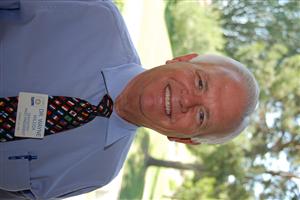
Into a mountainous countryside of farm lands and steeply terraced river valleys, where women wash clothes in the mountain streams and carry water back home in colorful jars balanced on their heads – into this Third World culture two years ago came Dr. Wayne Wilcox and his wife DeeDee, bringing dental care and hygiene to the people of Guatemala.
While Guatemala City has a sparkling clinic referred to as “la moderna,” most of the time on the Wilcoxes’ church mission was spent in remote clinics. Sometimes they would be set up in a school room, sometime even in a chapel. Always there were long lines of people waiting for the only professional attention they would get.
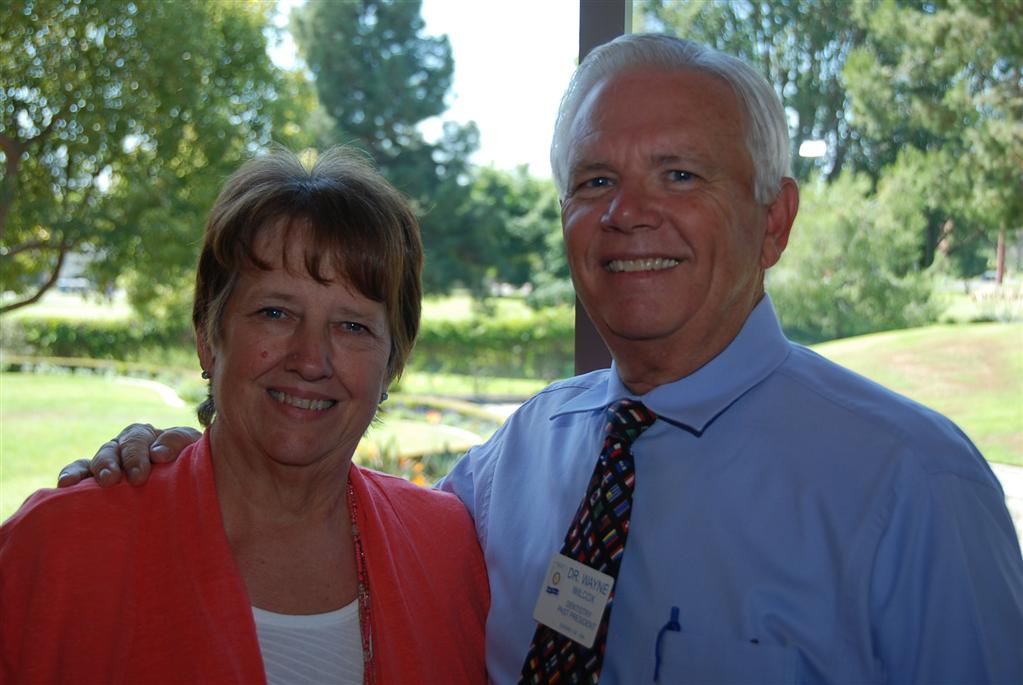
One major clinic in Guatemala City is established by a local church. They have a unique relationship with the missionaries. The church supplies the building and equipment and all the maintenance. They also supply the patients. The dental missionaries volunteer their time and talents, and a steady flow of work is guaranteed.
Sometimes there would be too many to see, and then the Wilcoxes would triage their clientele, prioritizing those in greatest need and pain, whose teeth could be saved, regretfully passing on those where decay was too far advanced for their work to be of any help.
Everywhere they brought stuffed toys and teddy bears with toothbrushes in their hands. That made it easier for children to accept the tooth brush, the only oral hygiene they would ever get.
In some remote areas wearing the gold you have is the safest and showiest way to establish your status. Wayne showed us pictures of gold-covered teeth, and artificial front teeth studded with gold stars. However, the Wilcoxes and their mission did not themselves do cosmetic work like that.
In places where fields are still plowed with oxen, there are churches where the figure of a black Jesus is worshipped. As Wayne pointed out, the dark skin color speaks to the color of their own skin.
Guatemala, directly south of Mexico, is the largest country in Central America, with 16 million people, and Guatemala City has modern skyscrapers, in a valley set at six thousand feet altitude. The weather there is eternal springtime. DeeDee showed us pictures of the high-rise apartment building where they made their home for two years. An Islamic mosque sits beside a Jewish synagogue and Catholic and Protestant evangelical churches. There are beautiful old churches built by the conquistadores five hundred years ago, in the Spanish colonial Baroque style.
In 1523, almost 600 years ago, a group of Spanish conquistadores led by Pedro de Alvarado swept into northern Guatemala and defeated what was left of the once powerful Mayan Empire. Antigua, set in a jewel-like bowl between mountains and a lake, was made the capital and was the political, economic and religious center of Central Americas, until a series of earthquakes in the 1773 caused most of the buildings to fall. The cemeteries there are well known for their above-ground burial practices, with white mausoleums lining the avenues of the dead.
The capitol was moved to Guatemala City, but Antigua is still a popular resort and a quaint and charming place to visit. Guatemala is bounded by both the Atlantic and the Pacific Ocean and so is susceptible to hurricanes.
Although Guatemala City is a modern capitol city, country people still bring in goats who are milked right on the city sidewalks to give warm fresh milk.
On the outskirts of the city is a huge garbage dump, measuring forty acres of landfill. The margins of the landfill are so heavily populated they are considered a municipality of the city. Thirty thousand squatters reside along the perimeter of the garbage dump in tar paper shacks. Wayne showed us pictures of the children there, who pick through the trash for anything salvageable, for food or re-sale on the open market, like metal or paper. If these children of the poorest of the poor have no birth certificates, they cannot attend school.
The National musical instrument is the marimba, and it is played everywhere, including in the churches instead of an organ. A New Year’s custom is called “burn the devil,” and it consists of writing down sins and bad habits and then setting fire to them, to get rid of them. That’s one way to approach New Year’s Resolutions. On Christmas Eve fireworks are lighted and there are big decorated floats built in truck beds.
DeeDee told us that in Guatemala, in making chicken soup, “everything goes in,” and that means the head and skin and all.
Traffic in the city is lively and many go by motorbike if they cannot afford a car. There are “chicken buses” for those too poor to own their own transportation. “Chicken” because on market days the buses carry all kinds of livestock on the racks on the roof.
Trucks coming into the city are piled high, twice as big as the cab, with produce. Wayne explained that much of the population is employed in sustenance agriculture and truck farming and in making small crafts, such as furniture. There is little industry, and the economy is dominated by the private sector. Major US investment is the United Fruit Company. The people produce coffee, sugar, fruits, especially bananas, flowers and vegetables, but import most of their corn from the United States.
Early in the twentieth century, Guatemala had a mixture of democratic governments, as well as a series of dictators. From 1960-1996, Guatemala underwent a civil war fought between the government and leftist rebels. Following the war, Guatemala has witnessed both economic growth and successful democratic elections. In the most recent, in 2011, Otto Perez Molina won the presidency.
The distribution of income remains highly unequal and 56% of the population lives in poverty. Remittances from Guatemalans who fled the country and came to the United States during the civil war now constitute the largest single source of foreign income.
Extensive as their program was, the Wilcoxes could only show us a fraction of Guatemala, a country roughly the size of the state of Tennessee. It has many cultural treasures, such as the on-going excavations of the ruins of the ancient Mayan city and ceremonial center of Tikal, which is a UNESCO World Heritage Site. Perhaps another time Wayne and DeeDee will show us even more of this beautiful neighbor of ours.
Missionary extraordinaire and former president of our club Wayne presented our President Larry with a flag from the Guatemala City club.