Flex & Turn
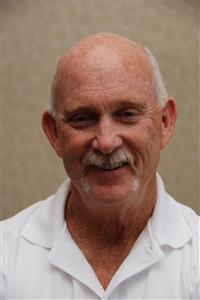
When personal trainer and physiologist Greg Welch last spoke to this club on the subject of conditioning, he stressed the fact that skeletal muscle is the most adaptable tissue in the human body. Although aging mediates cellular changes in muscle, decreasing the actual muscle mass, the detrimental effects of aging on muscle have been shown be restrained or even reversed with regular resistance exercise.
The purpose of conditioning is that we recruit into action fibers we already have. Our nerve and muscle fibers are continually contracting and relaxing; awake or asleep they are still working. Conditioning creates stress in a controlled atmosphere. Also remember, Greg said, to feed those fibers, the body needs the right amount of sugar, fat and triphosphates.
In a conditioning program, we recruit nerves that were dormant, by simple programmed movement. Movement can be in any shape or form, as long as it is controlled slowly. Although we may feel new aches and pains when we first work out, we aren’t using “new” muscles when we exercise. We always have the same number of muscles. But we are making different ones function.
Greg demonstrated the value of stability exercises while standing on one foot with the other raised. This he could do with remarkable steadiness. However, when he introduced a new element - a spongy pad to stand on – his balance was much more shaky. When he used a firmer inflated plastic pad with rubbery spikes, his ankles and knees trembled as his brain tried to tell his body how to compensate for this unstable footing.
In another exercise, Greg stood on his toes, then raised onto his tiptoes, and even in a person in as remarkable condition as Greg, we could notice the change in stability. Then, standing on his toes, he moved up and down by also bending his knees. He was showing us how to develop a combination of strength and balance, with simple exercises we could do at home or office.
He then introduced more variations, standing on one foot and extending the other leg up, then out, then moving that leg from side to side. The plastic pad with bristles on it created an unstable platform, and as he said, his mind was constantly making decisions as to how to stay balanced. His body responds to signals from his brain, through new neural connections made as muscle mass increases. That is how the good news of conditioning works.
When we move from concrete to grass, or from sidewalk to street, we use this same decision-making process.
But as we age, we lose the quickness in that decision-making ability, and some of our decisions are not as good as they had been. “Why do you suppose older people shuffle when they walk,” Greg asked? It’s not a problem with their feet or legs. “It’s fear of falling.” They keep to a narrow base and move in a restricted manner within that space. But one should not give in to this fear. Instead, one can build defenses, muscles and neuron pathways, that will give the confidence to use leg muscles properly.
To prevent falling too easily, Greg proposed some simple exercises, such as lightly hopping on one leg, then the other. This not only prevents ankles from rolling over, it enhances the pathways to the brain for making balance-keeping decisions. When making muscle fiber, the body makes neuron fiber to control it too.
When standing on the inflated plastic pad, the whole body from ankle to neck is involved. The hip muscle is involved, and so are the back muscles, as the difficulty is increased by standing on one foot and moving the other leg.
To get everyone involved in experiencing this, Greg asked the whole club to stand and then to try standing up on their toes. The adaptation from sitting to standing is human muscle learning, Greg explained. And when you close your eyes, and take away visual acuity, it is even harder. Weight training also has cardiovascular benefits, we admitted as we sat down.
In answer to a question Greg said cross-training – using resistance exercises as well as muscle fiber training - is helpful. Several disciplines at once, could be useful in, for example, improving one’s swing as a golfer. Many muscle groups have to be coordinated in the back swing.
In case of accidents, such as a fall, to minimize damage, Greg counseled that you flex and turn, going with the energy flow.
When you walk, if you are aging, or have a disease like Parkinson’s, the length of your stride shortens. Again, the fear of falling reinforces the short “old man’s” step. But one should take longer steps, and Greg demonstrated the full stride as compared to the closed one.
The stride can be improved at home by doing toe raises while holding on the back of a chair. Keep your head up and your body leaning forward. Or, you could go the Downey Family YMCA and use the new treadmills.
The YMCA has new enhanced tread mills, which now allow you to turn on a screen and choose whether you would like to go for a walk in the New England countryside or a climb in the Sierras. The videos are so real you expect to look down and find dirt on your shoes.
Flex and turn is Greg’s advice for the New Year, flex and turn and go with the energy flow.