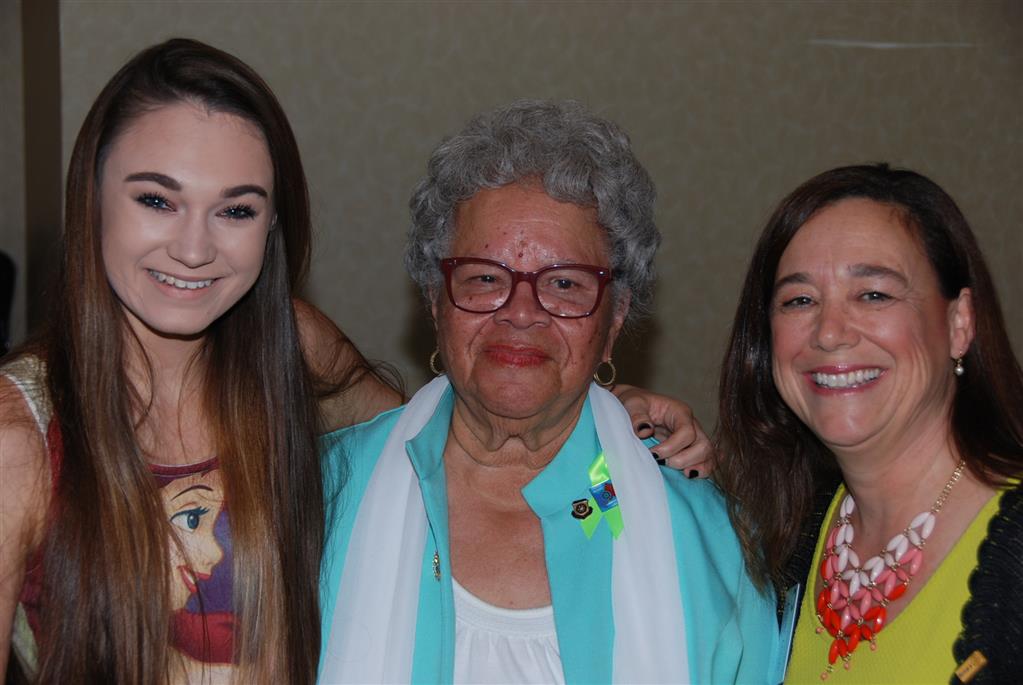
First Woman in Rotary
by Lorine Parks
Who knew? The Rotary Club of Duarte was the one to send seismic shocks through Rotary International. It was 1976, and the local Superintendant of Schools and his Assistant (those educators are always making trouble), brought in a person eminently qualified by profession and by cooperative community spirit, to be a Rotarian. And yet that nomination for membership was declined, on the national organization level.
This act of inclusion sufficed to put Duarte beyond the official Rotary pale for eleven years. And it took a series of judicial actions, culminating in the landmark United States Supreme Court decision (unanimous by the way), to reinstate Duarte within Rotary.
But let Dr. Sylvia Whitlock tell the story. Dr. Sylvia became one of the first woman members of Rotary International, when her club was re-granted Rotary status in 1987.
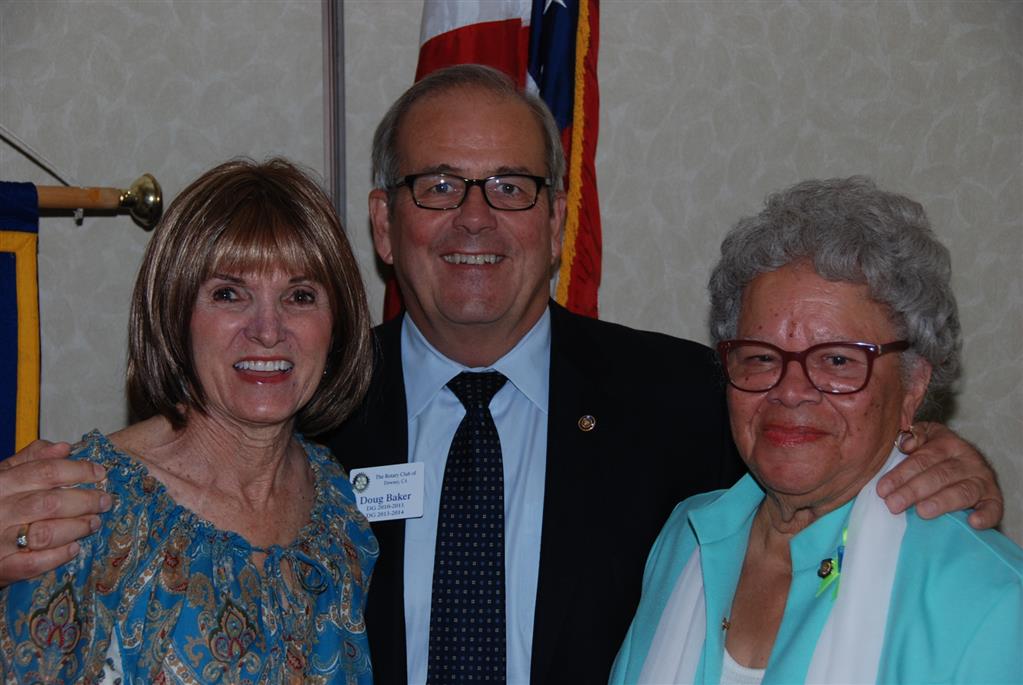
Doug Baker was on hand to introduce Dr. Sylvia to us, and he admitted that although Dr. Sylvia is his dear friend, she is not impressed by his status. In fact, at the lunch table waiting to be introduced, she had asked Doug, “And just who is the Governor of this Club’s District this year?” Doug pointed to the conspicuous banner we display with such pride every week, “District Governor’s Home Club,” and pointed to himself as that District Governor.
Dr. Sylvia told us that when she was asked to join, she had not, she said, heard of Rotary. But she had heard of Kiwanis. She said that she knew that “Kiwanis” meant, “Waiting to join Rotary.”
In 1976, as now, Duarte was a bedroom community most famous for being the home of The City of Hope. But what’s in a name? The little Duarte Club was told it could not call itself a Rotary Club so it adopted the title, The Ex-Rotary Club of Duarte.” And having the parent corporation lift the charter had its advantages: no dues to pay.
The issue on which it was expelled was not directly that of gender, not the “female” issue. It was on the technicality that Duarte had violated the by-laws of Rotary International, which said that women were excluded from full active membership. The vote on this was 1,000 to 34.
As Governor Doug attempted to point out, Paul Harris most likely would have included women in his original group of people he would like to do business with, meet socially, even do service projects with. But in 1905, said Doug, in Paul Harris’s defense, women were not part of the business and professional scene. Ahem.
When Rotary was debating taking in women, Dr. Sylvia said she remembers that it was the wives who put up the opposition. “They were being protective of their husbands,” she said. For example, she overheard one wife’s response, on being asked if women should be members of Rotary, “I didn’t think so then, and I don’t think so now.”
 |
 |
 |
 |
The case for what was essentially gender equality moved all the way through the judicial system, beginning with the California State Court.
In California there was by then in place the Unruh Act, which entitles all persons to full and equal accommodations, privileges, membership in public corporations. Rotary International won the case at the lowest court level, that it was not a public corporation, even though the meetings were used for business purposes. But the Duarte Club appealed this ruling to the California Superior Courts, which reversed the lower court and held that Rotary was a public corporation and not, as some die-hard members tried to describe themselves, as “a boys club,” or “a tree-house.”
The case was carried to the California Supreme Court, which refused to hear it, which meant that the Superior Court’s ruling against Rotary International would stand.
To complete this saga of an idea whose time had come, Rotary International brought the issue to the U. S. Supreme Court, which on May 4, 1987 ruled there could be no violation of the prohibition against discrimination. Women were in.
The Duarte Club had won. But they were not notified directly of their reinstatement. The only concession Rotary International made to the new status, was to send them a bill for dues.
Media from all over the world were immediately on Dr. Sylvia’s doorstep, asking questions about how it felt to be setting a precedent. She was glad to have the opportunity to be part of a humanitarian organization that does so much good, was her answer.
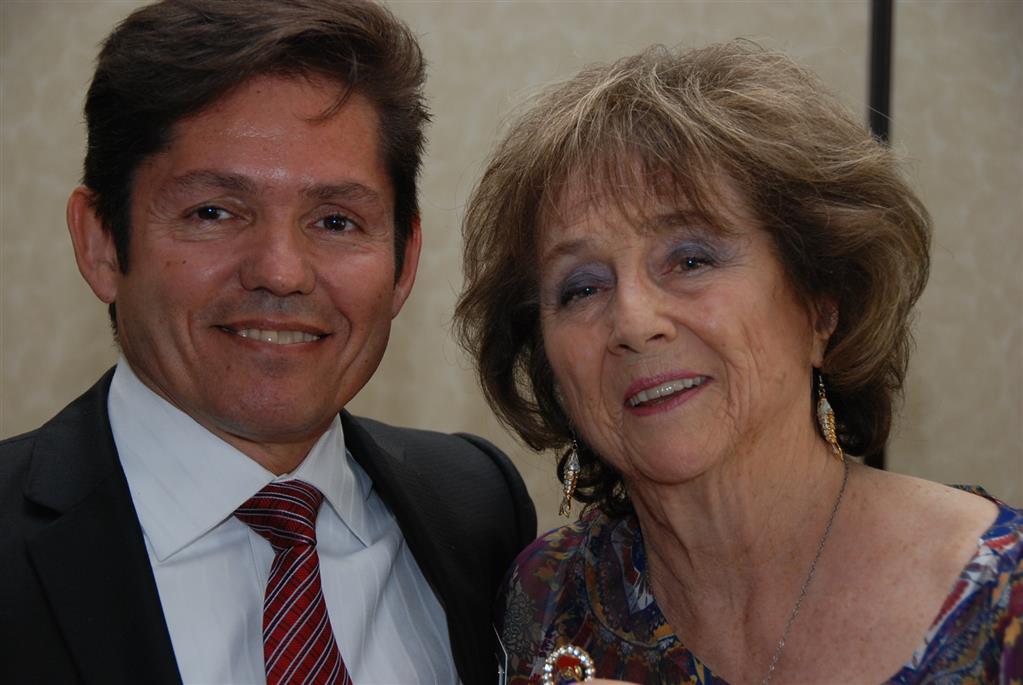
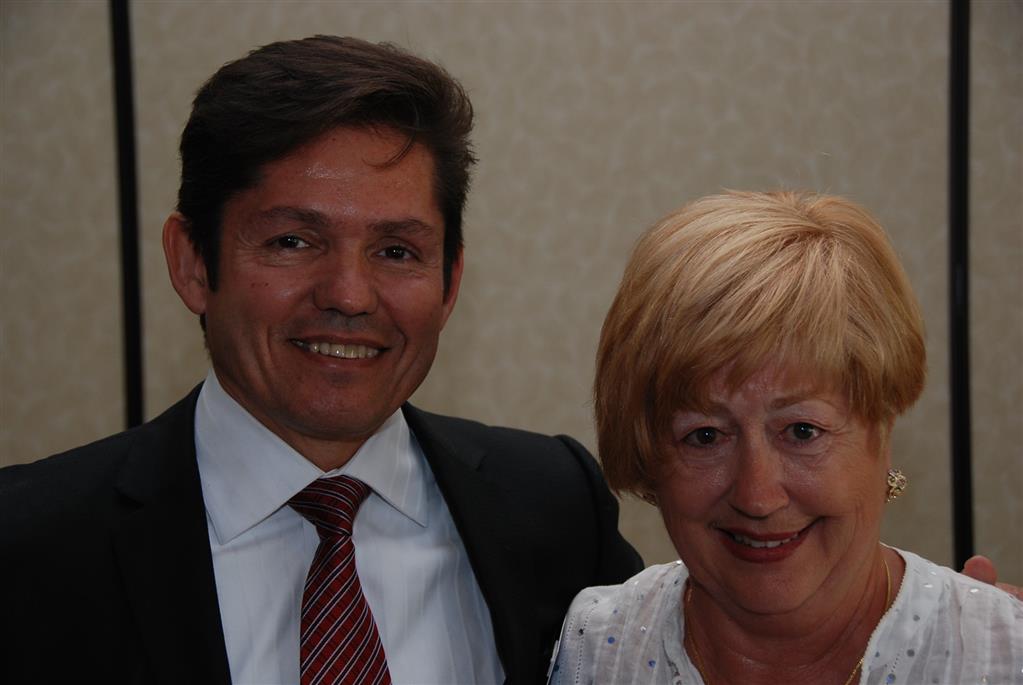
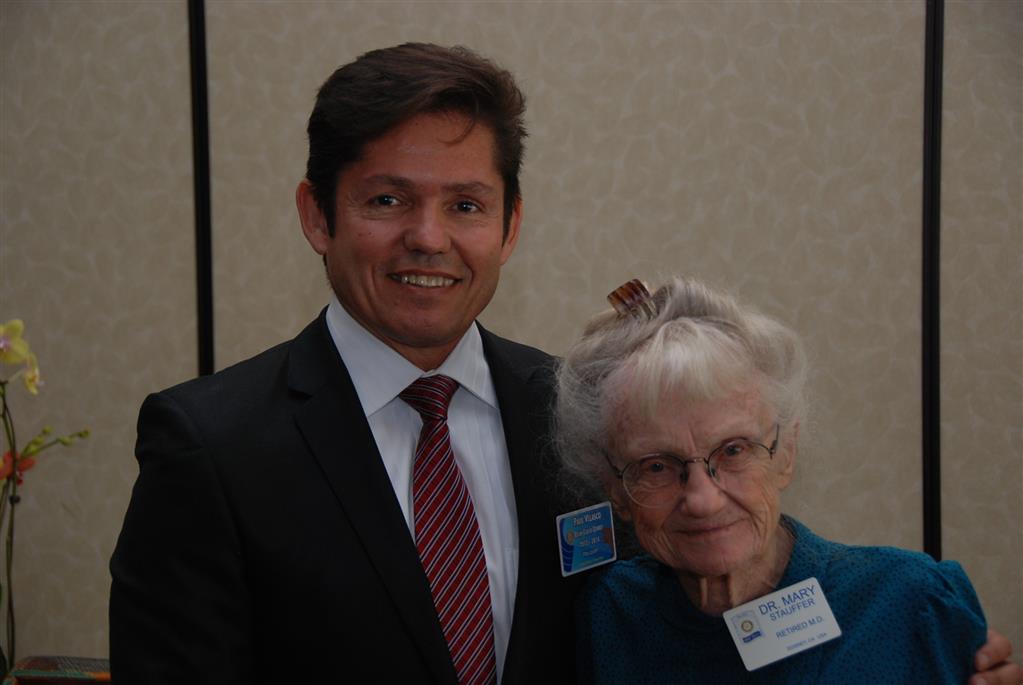
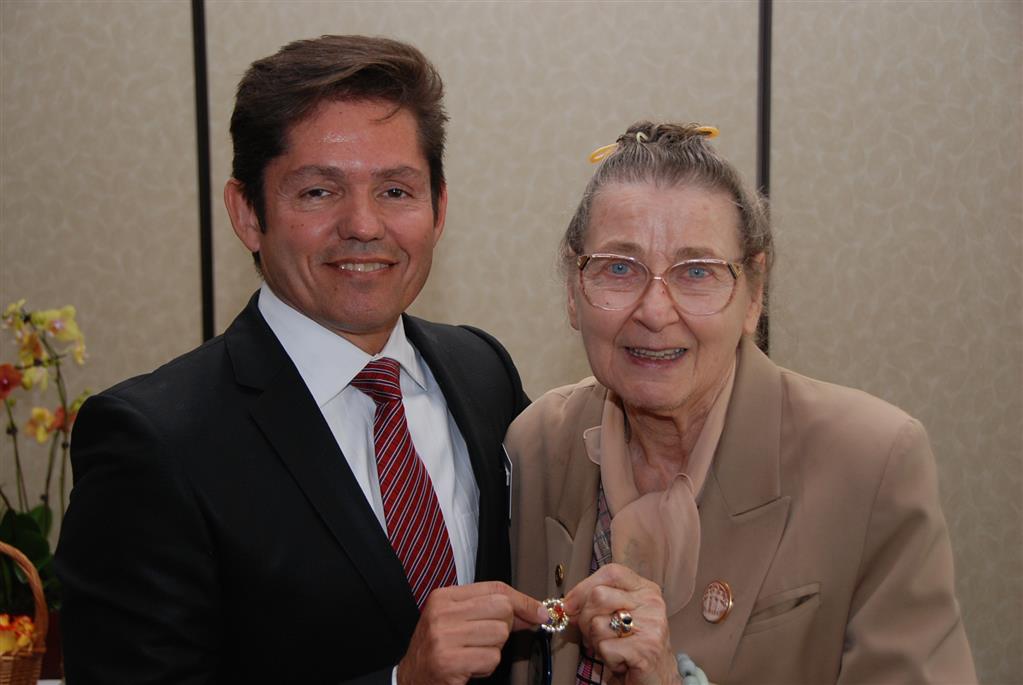
President Paulo Velasco thanked Dr. Sylvia for coming, and presented her with a large orchid plant from the club. And in honor of Dr. Sylvia’s visit, Paul recognized some of the women who have served in the club. Lorine Parks, with twenty-six years perfect attendance and counting, was the first to receive a beautiful badge, with “14 genuine zircons” and Pat Pratt, also with 26 years, was given one too. Dr. Mary Stauffer and Mary Phillips were singled out to represent all the women in the club, both past and present members, for all they have done.
Partly as a tribute to Mother’s Day and partly to women serving in Rotary, rose buds were distributed to all the women in the club, and Connie Baker, as First Lady, was given another well deserved beautiful orchid plant, “for being such a large part of our club.”