Federal Bureau of Investigastion
by Lorine Parks
Terrorism – it’s right here. Al Shabaab which means “youth” in Arabic is an Islamic terrorist group linked to al Qa’ida and operating here in Southern California. As an example, Nima Ali Yusuf, 24, was recently indicted with four others in San Diego on charges of conspiracy to provide material support for terrorist. In short, they are terrorist financiers.
How does the money get raised and how is it paid, without going through legitimate channels? How can the FBI tell when commerce is terrorist-based? The answer comes in schemes and scenarios that outdo any spy series on television or in the movies: life is stranger than fiction.
Our visiting FBI agent, who as a courtesy the HubBub will keep his identity anonymous, painted a convincing picture for us of one way, which is how opiate drugs from Colombia can be smuggled to the United States and then U. S. dollars laundered back to the Columbian drug cartels which buy gold, which is used to support terrorist activities.
First the drugs are smuggled here in so many ingenious ways, and then the U. S. dollars earned by them have to be smuggled out. The agent showed pictures from LAX of confiscated children’s toys and go-carts with dollars hidden inside. Money raised here goes to support the Islamic terrorist groups.
Incidents which illustrate the reach of terrorists include events such as the suicide attack on the USS Cole missile-destroyer ship in 2000, while it was harbored and being refueled in the Yemeni port of Aden. The Boston Marathon Massacre in 2013 as well as the 9/11 attack on New York City and the Pentagon in Virginia, are the most visible proofs of how deeply within this country terrorism can reach.
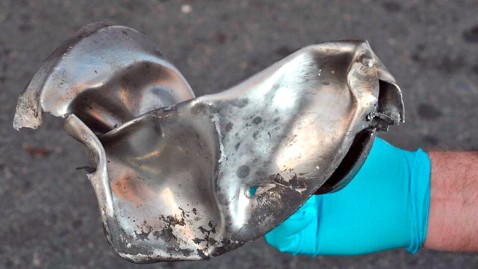
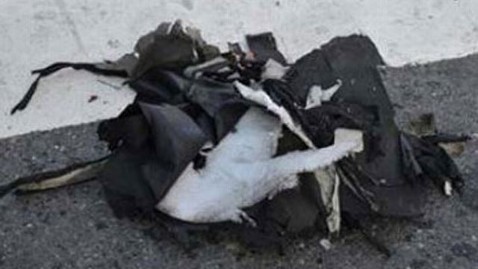
This agent is with the FBI’s Counter-Terrorism Division. Naming a number of terrorist groups for us, such as Hezbollah, a Lebanese Islamic extremist group operating in Syria and Iran; Al Qa’ida, which was Bin Laden’s organization; the Taliban, which wages war in Afghanistan; ISIS-ISIL which has the aim of establishing an Islamic State, or Caliphate, in the Middle East; and al Shabaab, Somalia-based, which has infiltrated U.S. cities.
The FBI counts on civilian informants, the agent said, to learn when terrorist organizations appear. How to know if this is a terrorism front? Red flags that the FBI looks for include: one location where many businesses seem to be operating; a business which has many bank accounts; money flow activity between the United States and China, and the United States and Latin America and the Middle East; and incomplete or incorrect IRS 990 forms.
The agent also taught us a new word: hawala. International money transfers often happen within mechanisms known as “halawa,” or hundi, an informal transfer system based on a huge network of money brokers, principally located in the Middle East, North Africa, the Horn of Africa and the Indian subcontinent.
Halawa operates without banks. It uses funds that are un-banked, discretely handled, efficient, economical and un-taxable. Halawa existed long before banking systems were developed in the late Middle Ages in Europe. Interpol defines Hawala as “money transfer without money movement.”
Transactions are done without promissory notes because the system is heavily based on trust. Hawala is frequently referred to as ”underground banking.” This is a misnomer because Hawala services often operate openly and legitimately.
Recipients are given only a code number or simple token, such as a low-value bank note torn in half, to prove that money is due. Over time, transactions in opposite directions cancel each other out, so physical movement is minimalized. If an imbalance builds up, cash or jewelry is carried across borders, and books are adjusted.
A common form today is a foreign worker’s remittances to their countries of origin. Remittances are not a new phenomenon in the world, being a normal concomitant to migration which has always been a part of human history.
Several European countries, for example Spain, Italy and Ireland were heavily dependent on remittances received from their emigrants during the 19th and 20th centuries. Today remittances from Guatemalan nationals make up a large part of their country’s foreign trade.
Not only do these workers distrust official institutions, they cannot afford them. Hawala dealers usually charge a commission of 1-2% for a transfer and they might offer a better exchange rate than the official one. Moreover they often arrange for funds to be delivered to people’s homes, even in small villages. By contrast, Western Union charges $22 to send $150 from New York to Pakistan, a near-15% commission.
Hawala money-movers have none of the trappings of banks, such as buildings and paperwork. Their methods predate western banking practices by centuries. Hawala originated in South Asia during ancient times and a slang term there for this “money” is chop.
In the second half of the Tang dynasty, the Chinese devised a system known as fei guan, or flying money. It was a way for southern Chinese provinces to pay tax to the Imperial capital without the risk of travelling and being robbed on the way.
After the horrific events of 9/ll, this ancient system was discovered to have been used to bankroll the operations. Since Hawala is underground, it works perfectly for terrorists who do not want to be discovered but who need to pay and get paid.
Conventional Western-style Islamic banking still makes up only a fraction of the trillions of dollars worth of banking assets of Muslims.
After the September 11th attack the American government suspected that some hawala brokers may have helped terrorist organizations to transfer money to fund their activities. They have since found that mobile phone money transfers and wire transfers are also used, and bit coin payments.
The question for law-enforcement agencies is whether informal money transfer networks are so permeated by illegal activities that they should be shut down all together. Historically, for example, hawala networks have played a vital role in the smuggling of gold from Europe to India through Dubai.
As a result of intense pressure by the U S government, a number of hawala networks have been closed down. But anyone with a little money, a few trusted friends and a telephone can execute a hawala transaction.
The agent’s talk gave us just an introductory peek at the complex, fascinating and ever-shifting world that the FBI’s Counter-Terrorism Unit has to face every day.