Downey Symphony
by Lorine Parks
“It’s all about the music!” When you go to a symphony concert, Mark Artusio explained, you hear live musicians making music, live. By comparison, when you go to a movie you may also hear music of symphonic quality played by studio musicians who are highly skilled professionals. But the sound they produce is only background for the action.
At a concert hall like the Downey Theatre, you can concentrate on the music, until it means something to you. 55-60 people are on stage in front of you. The conductor, Sharon Lavery, who has studied music all her life, is leading the orchestra in pieces that she has chosen to form the evening’s experience. It’s all about the music.
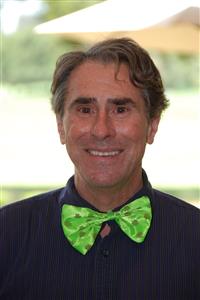
Mark Artusio, principle bass player with the Downey Symphony Orchestra, came to tell us about his experiences as a professional musician.
How long before you can play in symphonic music in a symphony orchestra? Mark estimated fifteen years of experience playing an instrument, with four to five hours practice daily, and that’s in addition to the time you spend on your day job. By then you can expect to be paid union scale, which for two rehearsals and a performance, runs to about $450 for a gig. Musicians for Downey contribute one additional unpaid rehearsal.
With a sly sense of humor, Mark went on to say that a symphonic musician is one for whom there is no hope: it’s too late to do anything else with one’s life. Having dedicated oneself to learning a skill at this level of excellence, one just has to keep on playing.
That’s the kind of dedication it takes to play in a fine regional orchestra like Downey’s. By contrast, starting with the least, there can be neighborhood groups, where no one gets paid. Then, there are society orchestras and dance band orchestras, and opera orchestras, which all have their own compositional range.
But a symphony orchestra is one which plays the repertoire of the great symphonic composers, of periods, such as the Baroque (Vivaldi), classical (Mozart), and Romantic (Beethoven, Brahms, Tchaikovsky), up to and including the modern (Mahler) and contemporary.
Mark has played for the Downey Symphony Orchestra for 24 years. He first was engaged when he was fresh out of UCLA, and Maestro Tom Osborn wanted talented but less expensive players. As the Downey Symphonic Society, the parent group of the Downey Symphony Orchestra, has grown more sophisticated in obtaining funds from grants and contributions, the Orchestra now is able to afford more than entry level musicians.
Besides being the first-chair string bass player, Mark is also the contractor for the o,rchestra. That is, he hires the individual musicians for each concert. In so doing he has to be aware of the schedules of other fine regional orchestras, such as the Long Beach, Pasadena and Orange County, because many of the same musicians play in each. Payroll alone, for musicians for one concert, including such miscellany as deductions and ssi contributions, runs about $25,000.
Mark also plays the bass in the major outreach program of the Downey Symphonic Society, Music in the Schools. “We play an hour’s program in each K-5 school. I was at the Lewis School this morning ,” he said. “We use all kinds of music, classical, Romantic, jazz, mariachi, Chinese, to teach the kids.” Mark is part of a five piece unit – string bass, violin, wind (oboe), drums, brass, that illustrates, for example, the difference between accompaniment and melody, and rhythm and tempo.
What is a song, compared to a piece of music? The quintet shows how melody can be played by one instrument, and also developed by several sections. The kids learn to see - and hear – musical concepts in sound, in a different way.
The Downey Symphonic Society also provides a yearly morning concert in the Downey Theatre for all third graders, and when funds are available, one for the fifth graders too. That requires performing three consecutive concerts for the third grade population of all the schools, to be bussed in, in one morning. Mark thanked the Downey Unified School District for its cooperation. Funds to make these Theatre concerts possible are provided by the Kiwanis Foundation and by Helen Hoag.
Mark thanked those Rotarians who have attended concerts, and singled out Dr. Jordan Phillips and Art Morris, as having been important patrons of the Downey Symphonic Society during the fifty-nine years of its existence so far.
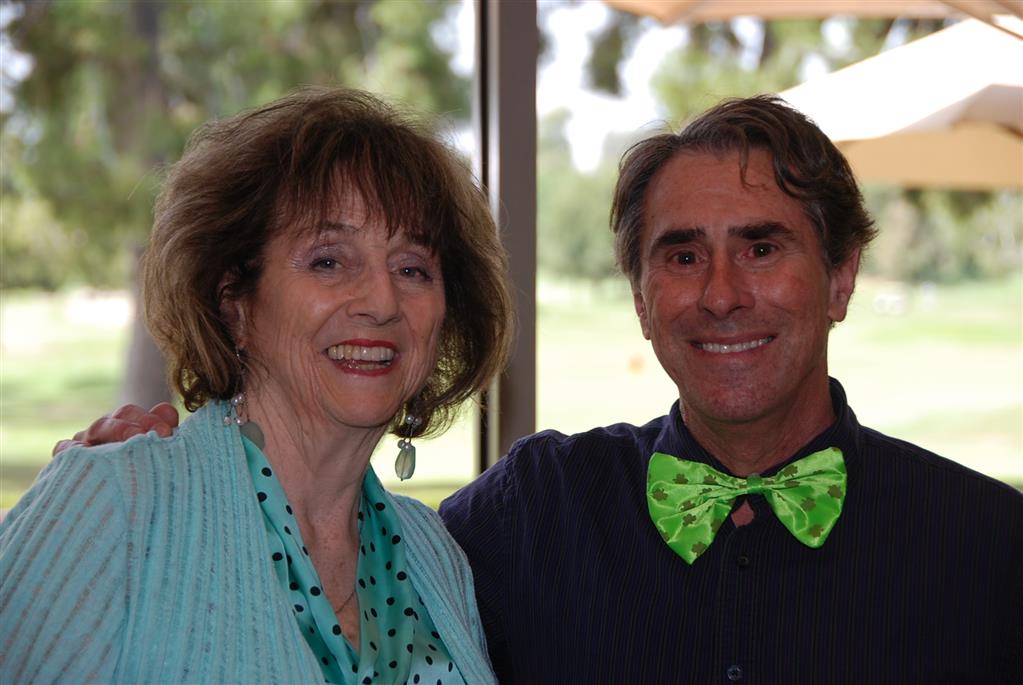
Opportunities still abound to help right now, such as a club like Rotary sponsoring one of the K-5 School concerts, which could be achieved for a contribution of approximately $550.
In answer to a question as to his favorite composer, Mark said that playing the Brahms First Symphony is so stirring that it makes him feel that that is what he was born to do. Another member asked what would be a good first concert to attend, Mark’s reply was easy: go to the Downey Symphony concert on Saturday April 11, “Romantic Gems,” where you’ll hear the Brahms First, along with the 18 year old winner of the Youth Competition, playing the Sibelius Violin Concerto. “A great first-time experience,” Mark said.