Donate Life California
by Lorine Parks
Thanks to our old friend and former member Dr. Jordan Phillips, our club was already vitally interested in the subject for the day’s program, organ donation. When the speaker from Donate Life California asked how many were actually already organ donors, a forest of hands shot up. “Holy canoli,” she exclaimed, obviously impressed and pleased.
She had never asked his wishes on organ donation, but the hospital informed her that DMV showed he had registered as an organ donor. Knowing that, she was able to feel grateful about having his organs freshly harvested to help others.
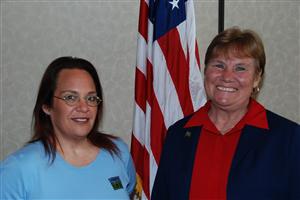
Next Stacey Kelley spoke and told us that only 1% of those who sign to be donors actually end up as a donor. She had had the privilege of being a live donor, giving a kidney to her father when it was shown that she was a perfect match. Because of diabetes his kidneys had shut down, and he had been placed with the 110,111 waiting for a kidney. But her direct donation removed him from that waiting list. Stacey said she has had no ill effects, but was glad she had recently lost 190 pounds, making her a good risk. Those who are rejected as donors include chronic alcohol or drug users.
While Jordan Phillips was living and made this his priority, our club had a 100 percent participation as being registered donors. The stories of how an organ from a person, living or deceased, have brought new meaning to the life of another, became well known to all of us: eye corneas, livers, kidneys.
Since then, the list of other parts has grown as doctors have learned how to make successful transplants. Surgical techniques have had to be perfected, and the role of immune rejection by the body has to be overcome.
When our club was previously involved, the big legal hurdle was that after death the right of disposal of the body belonged to the family and was not subservient to the wishes in the will of the deceased. So, if a distraught family did not want any more to be done with the body, that ended the opportunity to save someone else.
But now apparently the legal hurdle has been cleared. Signing up with the DMV indicating one’s wishes to be a donor, is now regarded as having the same legal protection as an irrevocable gift.
Look on your driver’s license, as many of us did at that point in the meeting. It used to be that you could peel off a pink dot and affix it to the exterior of your license, if you signed up to be a donor, Now, that dot is imprinted into the license, and remains there consecutively, on renewals or if switched to a California I.D.
However, the intent can only be carried out if the person dies in a hospital, not at home or in a hospice. That is because a surgical team needs to be on hand to harvest the organs.
Dying at home or in a hospice is the wish of many people, and it is in the interests of the insurance companies as well, so for once, both forces are in agreement on bringing about this circumstance.
How that affects universal organ donation is a new issue, which still remains to be solved. But we thank the volunteer speakers from Donate Life who testified to the importance of this program in so many lives.