Several African countries are considered at high risk for a polio outbreak. But for many years, Malawi wasn’t one of them.
The nation has a sound public health infrastructure, and its immunization rate is good. The last time a child there had been paralyzed by polio was in 1992, decades before all countries on the continent were deemed polio-free. “Imagine how many children were born and grew up without knowing polio,” says Jamal Ahmed, coordinator of the polio eradication program in the African region for the World Health Organization. So, when a child in Malawi tested positive for wild polio in February 2022, “it was a surprise,” Ahmed says.
It was a similarly unwelcome surprise a few months later when Janell Routh saw an email from Kirsten St. George at the Wadsworth Center, the polio reference lab in New York State. The lab had identified a case of polio in an unvaccinated man living in Rockland County, about 30 miles north of Manhattan. “That was quite a shock,” says Routh, a medical officer in the Division of Viral Diseases at the U.S. Centers for Disease Control and Prevention. “We never thought that we would see a case of paralytic polio in the United States.”
So how did health workers discover polio in two countries long considered polio-free? And how can they be sure it’s gone now? This process of searching for a disease is known as surveillance, something that Rotary has supported with $73.6 million in funding over the past five years. As the worldwide eradication of polio approaches, surveillance will play a pivotal role in ensuring that the world is truly polio-free.
READ MORE HERE use this link.
PHOTO CREDITS:
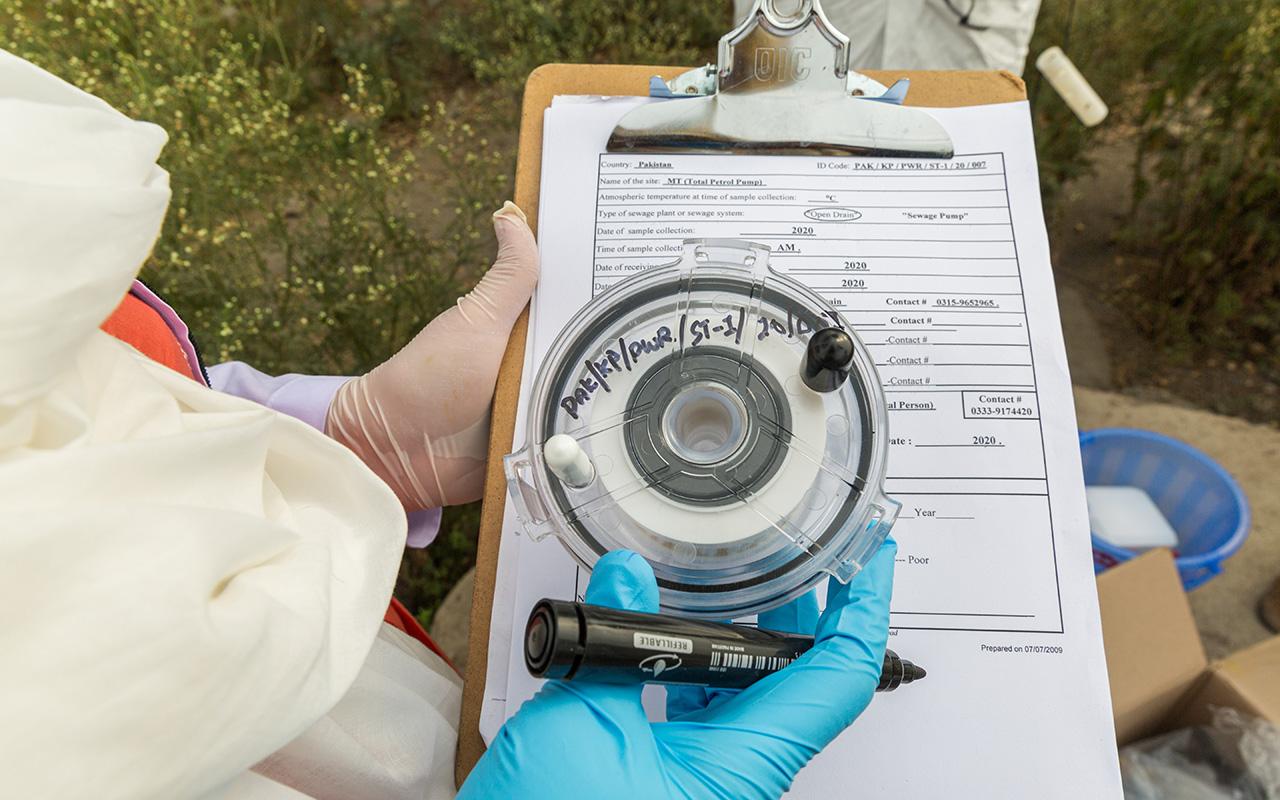
In Pakistan, one of two remaining polio endemic countries, environmental surveillance plays an important role in detecting the virus. As of June 2023, the country had 114 sewage collection sites; 1 percent of the samples tested positive for the virus in the first six months of the year.
PHOTO 1: World Health Organization
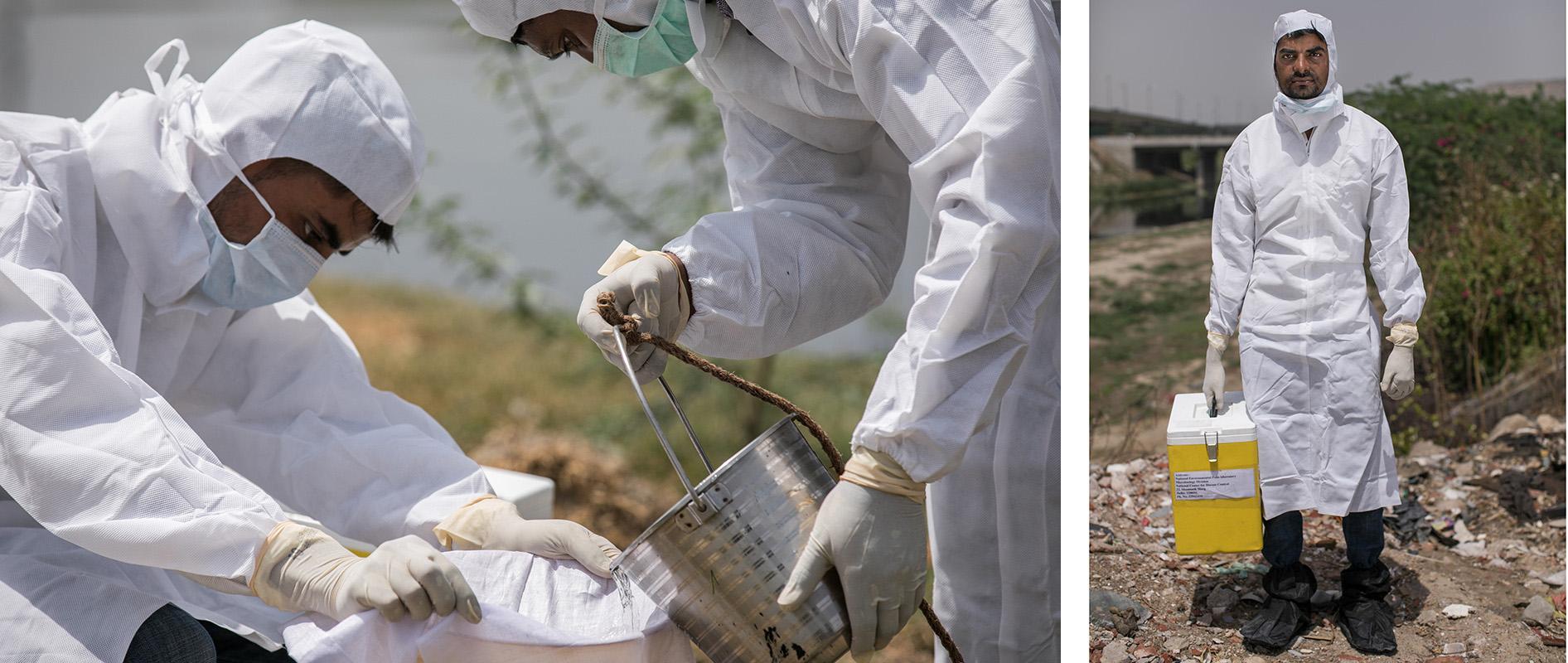
Lab technicians take water samples at Bhalswa Lake in Delhi, India, to test for poliovirus. This process, known as environmental surveillance, helps officials search for asymptomatic cases that could signal an outbreak.
PHOTO 2: Alyce Henson