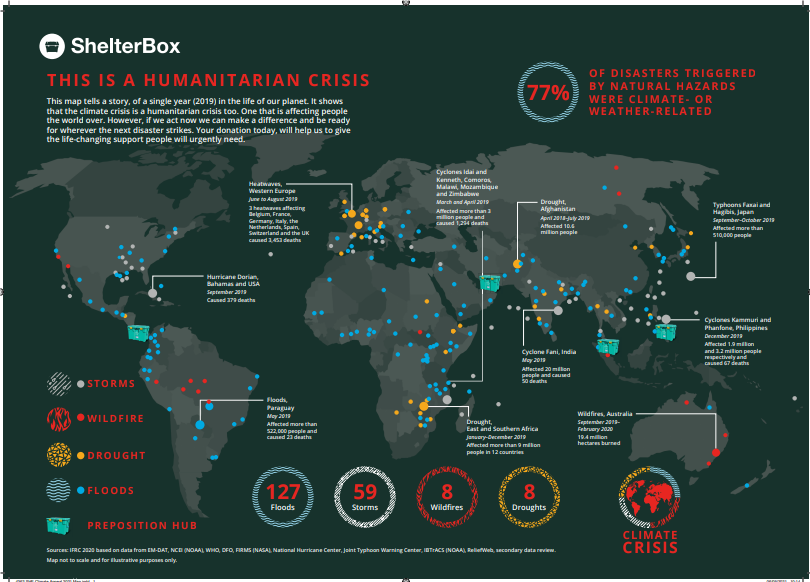
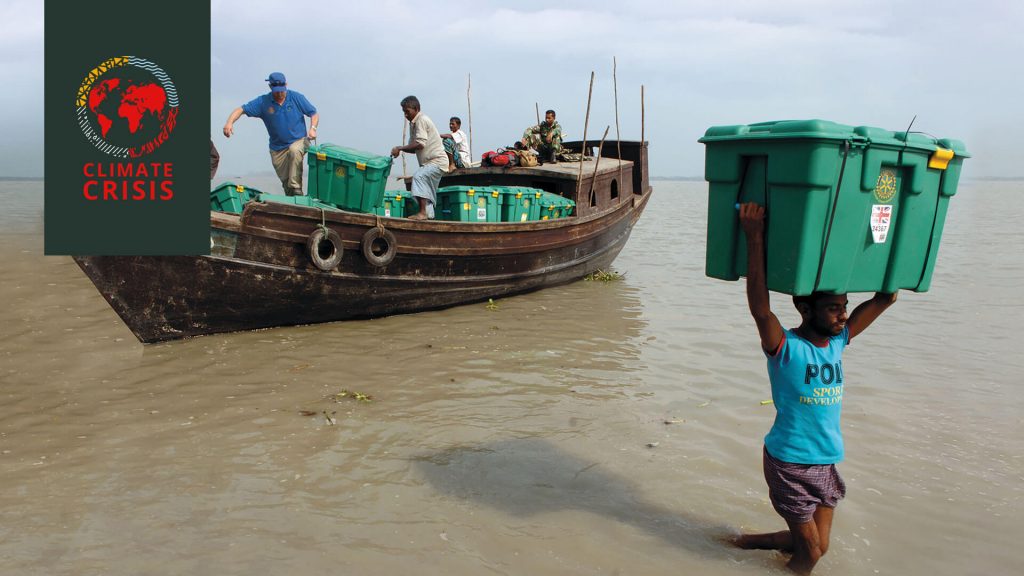
It shows that the climate crisis is a humanitarian crisis too. One that is affecting people the world over. We must act now to make a difference. We provide emergency shelter and tools for families who have lost their home to disaster, enabling them to rebuild their lives. Supporting communities who have lost their homes to extreme weather events has been a significant part of our work for the last 20 years. As the climate crisis continues to destroy homes and livelihoods, we are working to reach some of the world’s most vulnerable people. People who are bearing the brunt of the increase in extreme weather and the ravages of conflict. Climate Change and DisastersClimate change poses a significant threat to humanity. It is a threat which can only be tackled with immediate global action. Why Disasters Are Not Natural Disasters are not natural. If the same powerful cyclone were to hit two different regions in the world, the results would look very different. It’s actually the decisions we make that create a disaster. Factors like living conditions and poverty, government capacity to prepare and respond, as well as the process of rebuilding and how efficient that would be, are all factors that will define whether a disaster occurs as a result of the natural hazard. Hazards are inevitable – but the impact they have on society is not. The most widely used definition of a disaster has been developed by the International Federation of Red Cross and Red Crescent Societies (IFRC). It states that a disaster is: “A sudden, calamitous event that seriously disrupts the functioning of a community or society and causes human, material, and economic or environmental losses that exceed the community’s or society’s ability to cope using its own resources.” This definition clearly differentiates between a hazard, which is natural, and a disaster, which is not. A hazard can only become a disaster once it affects society or a community. WHY DO WE NEED TO MOVE AWAY FROM THE WORD ‘NATURAL’?Using the word ‘natural’ ignores the role that humans have in the disaster. It assumes that the event would happen anyway and there is little that we can do to prevent it. Shifting the blame for the disaster damage and losses to nature or to an ‘act of God’ absolves responsibility for communities living in vulnerable conditions and locations. The word takes away the social, political, environmental, and economic context from disaster stories, failing to recognize the social injustices that are present. Donna Lee Gulley will share her Shelter Box experience with us on Tuesday - don't miss it. |