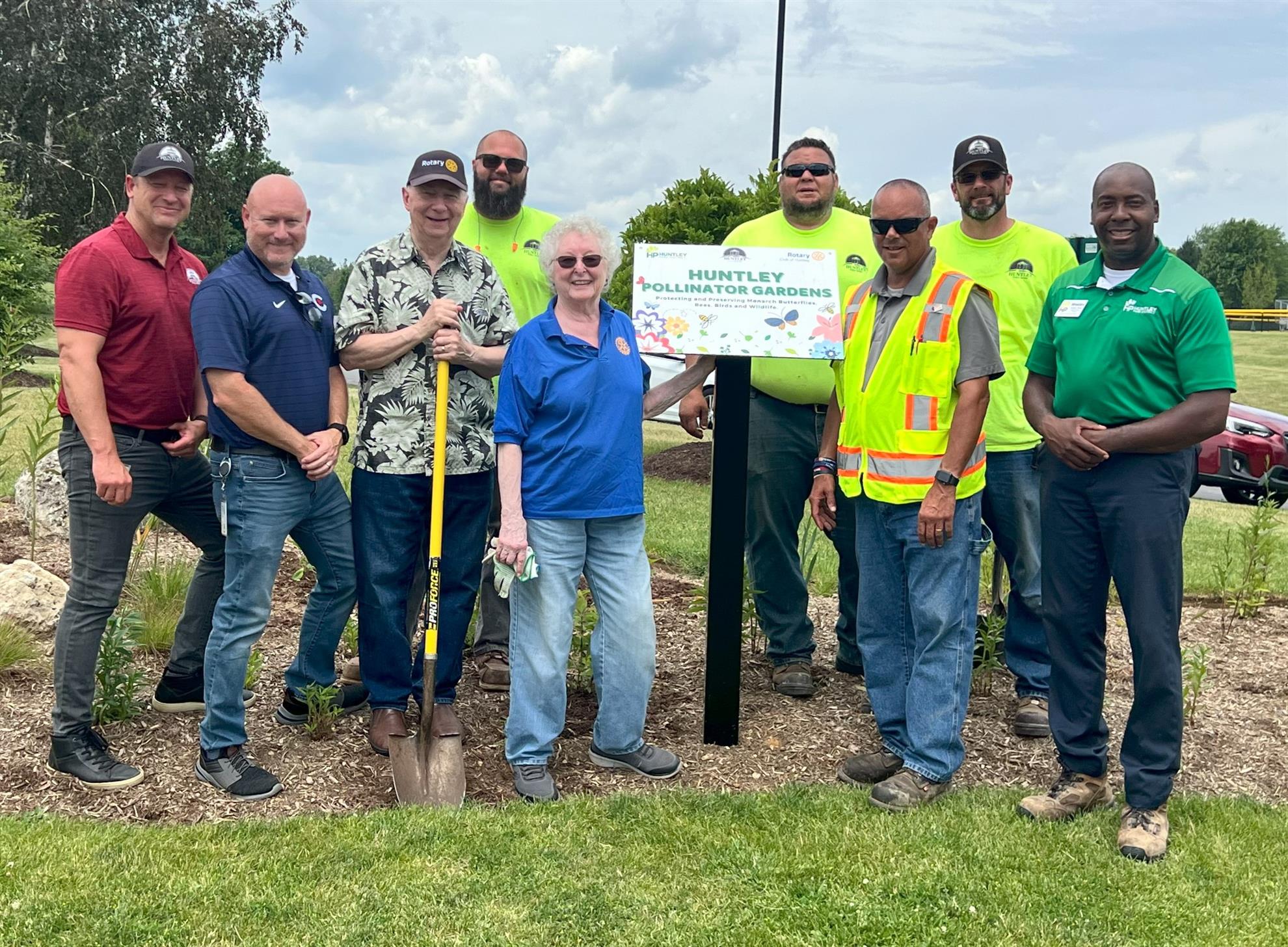
The Village of Huntley, Huntley Park District and Rotary Club of Huntley celebrated Pollinator Week (June 17-23, www.pollinator.org) by planting a new pollinator garden at the south end of Betsey Warrington Park.
Saving butterflies, bees, birds, animals, and insects that pollinate our yards, and farms, will protect and slow the decline of these essential pollinators. Milkweed is the only food Monarch caterpillars can develop in and eat; plus, adult Monarchs drink nectar from a wide variety of flowering plants. 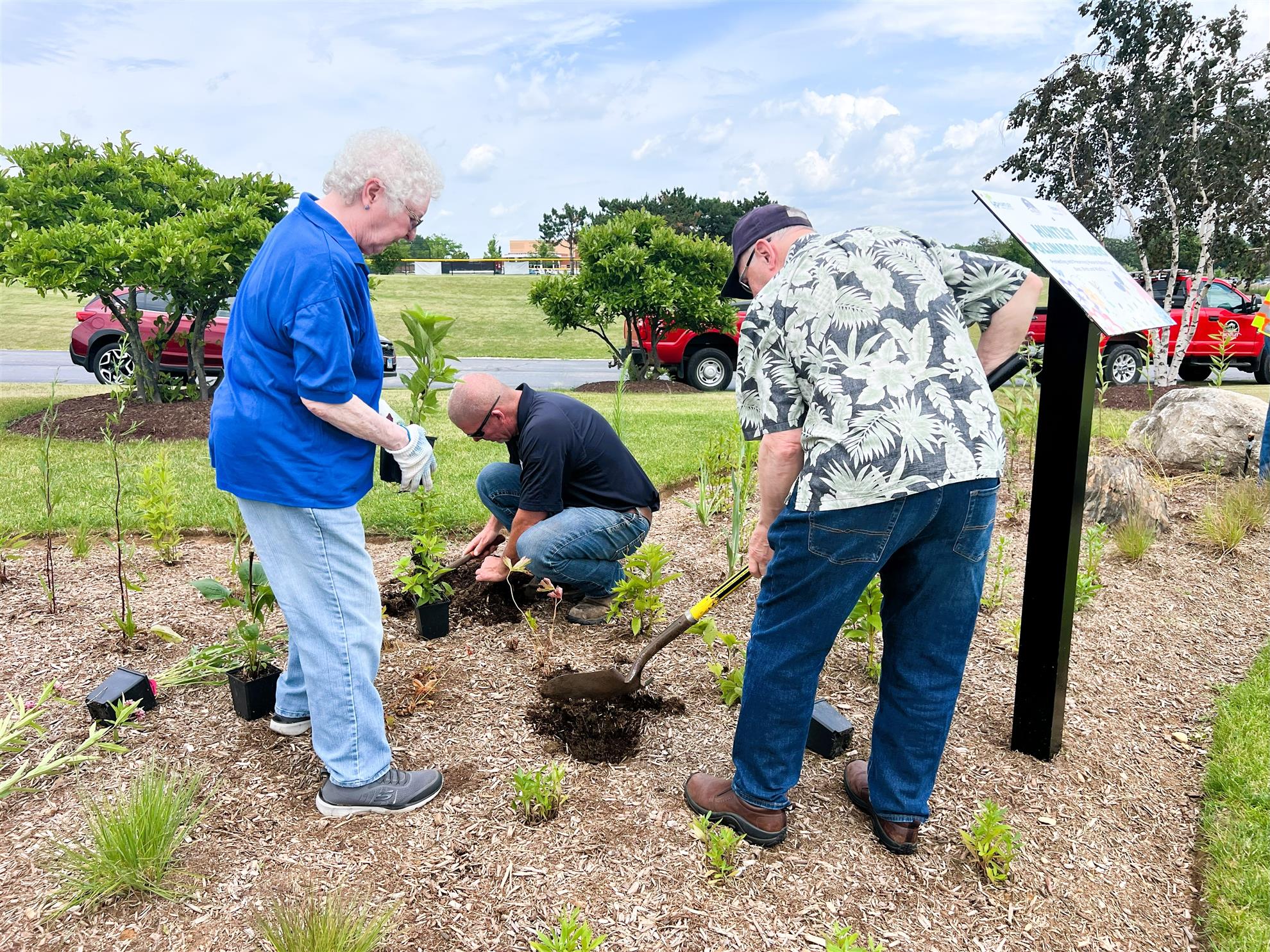
Native plants are the backbone of a pollinator garden along with not using chemical fertilizers and pesticides. Hopefully, all members of our community will place pollinator plants and gardens on their properties, keeping in mind that around 35% of the world’s food crops and 3/4ths of flowering plants depend on pollination to reproduce. For more information, https://extension.illinois.edu/keywords/native-plants, is a good place to begin.
Together, the Village of Huntley, William Ruth Landscaping, Huntley Park District and Huntley Rotary designed, planted, and continue to maintain the gardens for a healthy ecosystem. Parisek and Borhart Parks pollinator gardens are well established, and everyone is encouraged to visit them throughout the seasons to spot pollinators and enjoy the lovely foliage.
##
A planting crew for Betsey Warrington Park pollinator garden included from left (front row): Jason Irvin, Village of Huntley, Deputy Director of Public Works and Engineering, Scott Crowe, Huntley Park District, Executive Director, Jim Uszler with Huntley Rotary, Karen Hutchings with Huntley Rotary, Dan Ruggles, Village of Huntley Streets Superintendent, Wesley Peete, Huntley Park District Director of Parks and Facilities. Back row: Jason Hecker, Village of Huntley Maintenance Worker, James Santoro, Village of Huntley Utility Worker, Keith Brandmire, Village of Huntley Utility Worker. A primary goal is to provide pollen and nectar from native plants to keep pollinators thriving and reverse the trend of declining pollinators.