

Program Speaker Al Anile 2-10, 2015
Posted by Al Anile
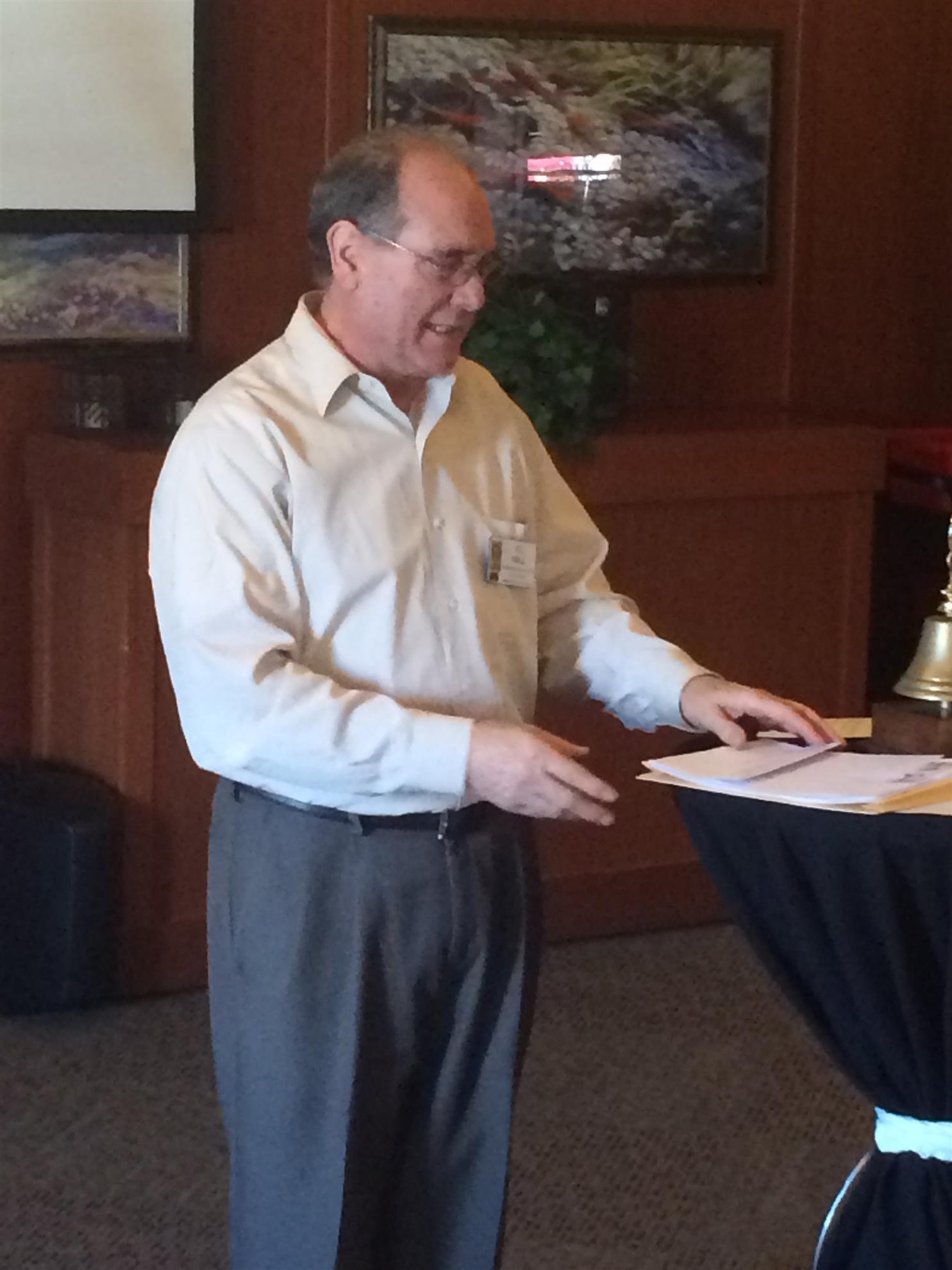
Rotary Member Al Anile was the program speaker at the Rotary Club of Skokie Valley weekly meeting of 2/10/2015. Al's topic was "Stress Relief".
Physiological or biological stress is an organism's response to a stressor such as an environmental condition or a stimulus. Stress is a body's method of reacting to a challenge. According to the stressful event, the body's way to respond to stress is by sympathetic nervous system activation which results in the fight-or-flight response. Because the body cannot keep this state for long periods of time, the parasympathetic system returns the body's physiological conditions to normal (homeostasis). In humans, stress typically describes a negative condition or a positive condition that can have an impact on a person's mental and physical well-being.
An effective way to relieve stress if through Yoga and Meditation. Meditation is as easy as sitting down on a chair with your trunk neck and head in a straight line, in a quite place for 5 to 10 minutes a day. Simply relax your body systematically from head to toes with the aid of natural diaphragmatic breathing. As thoughts come into you mind, gently let them go and concentrate on your breath.
Before meditation the following breathing exercise is strongly recommended, as a matter of fact, if you do not wish to meditate just perform the breathing exercise only once or twice a day:
Alternate Nostril Breathing Technique
Alternate Nostril breathing is a beautiful breathing technique that helps keep the mind calm, happy and peaceful by just practicing it for a few minutes. It also helps release accumulated tension and fatigue. The breathing technique is named Nadi Shodhan, as it helps clear out blocked energy channels in the body, which in turn calms the mind. It is also known as Anulom Vilom pranayama.
(nadi = subtle energy channel; shodhan = cleaning, purification; pranayama = breathing technique)
How to Do Alternate Nostril Breathing (Nadi Shodhan Pranayama)
- Comfortably with your spine erect and shoulders relaxed. Keep a gentle smile on your face.
- Place your left hand on the left knee, palms open to the sky or in Chin Mudra (thumb and index finger gently touching at the tips).
- Place the tip of the index finger and middle finger of the right hand in between the eyebrows, the ring finger and little finger on the left nostril, and the thumb on the right nostril. We will use the ring finger and little finger to open or close the left nostril and thumb for the right nostril.
- Press your thumb down on the right nostril and breathe out gently through the left nostril.
- Now breathe in from the left nostril and then press the left nostril gently with the ring finger and little finger. Removing the right thumb from the right nostril, breathe out from the right.
- Breathe in from the right nostril and exhale from the left. You have now completed one round of alternate nostril breathing. Continue inhaling and exhaling from alternate nostrils.
- Complete 9 such rounds by alternately breathing through both the nostrils. After every exhalation, remember to breathe in from the same nostril from which you exhaled. Keep your eyes closed throughout and continue taking long, deep, smooth breaths without any force or effort.
Alternate nostril breathing helps relax the mind and prepares it to enter a meditative state. So, it is a good idea to do a short meditation after doing alternate nostril breathing
Benefits of Alternate Nostril Breathing
- Excellent breathing technique to calm and center the mind.
- Our mind has a tendency to keep regretting or glorifying the past and getting anxious about the future. Alternate Nostril Breathing (Nadi Shodhan pranayama) helps to bring the mind back to the present moment.
- Works therapeutically for most circulatory and respiratory problems.
- Releases accumulated stress in the mind and body effectively and helps relax.
- Helps harmonize the left and right hemispheres of the brain, which correlate to the logical and emotional sides of our personality.
- Helps purify and balance the nadis, the subtle energy channels, thereby ensuring smooth flow of prana (life force) through the body.
- Maintains body temperature
Points to Remember while Practicing Alternate Nostril Breathing
- Do not force the breathing, and keep the flow gentle and natural. Do not breathe from the mouth or make any sound while breathing.
- Place the fingers very lightly on the forehead and nose. There is no need to apply any pressure.
- In case you feel dull and are yawning after practicing alternate nostril breathing, check the time you take to inhale and exhale. Your exhalation should be longer than inhalation.