Heroic Work in Milot, Haiti
Posted by George Sherman
on May 13, 2012
At Thursday evening's meeting at Bibi'z, President Fay Logan asked Cindy Rose to introduce her friend and our guest speaker, Dr. David Butler. A gynecologist at Holy Name Medical Center in Teaneck, Dr. Butler has been giving of his time to the people of Haiti for 20 years, after having been recruited by his cousin to volunteer there. It was through his efforts that Holy Name Hospital became affiliated with CRUDEM, the Center for Rural Development of Milot, and he now is president of that agency. Several times a year, physicians from Holy Name, including Dr. Butler, return to Milot to care for the patients of Hospital Sacre Coeur.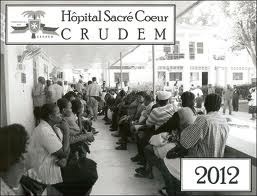
During his moving presentation, Dr. Butler talked about the horrendous conditions in which the people of Haiti live and the difficulties Haitians face in simply trying to stay alive. Life expectancy is 51 for men, 54 for women; maternal mortality rate is 684 per 100,000; infant mortality before age 1 is 76 per 1,000. In Milot, electricity and proper sanitation are virtually non-existent. It is not uncommon for people in need of medical care to walk 10 miles or more to Milot, there being little in the way of easy transportation.
Hospital Sacre Coeur began as a 6 bed facility in 1983. Today, it is the largest hospital and medical provider in the northern region of Haiti, regularly serving a population of 225,000. It has become the area's largest employer with 18 Haitian physicians and 250 hospital staff caring for 60,000 patients annually.
The earthquake of 2010 generally spared the hospital but placed huge new demands on it. Within a two week time period, the hospital grew from a 73 bed facility to a 400 bed hospital. Dedicated volunteers and staff were able to mobilize resources and supplies while converting schools in the community into hospital wards for triage. The ensuing cholera epidemic created greater challenges still.
Of the hospital's many needs, Dr. Butler cited medication, new generators and a deep water well as being most vital. Given the huge number of burn injuries that people suffer, he also hopes to have built a burn unit and, at some point, a nursing school.
It is impossible in this space to fully explain the challenges facing CRUDEM, Hospital Sacre Coeur, and the people of Milot. Nor can we adequately portray the extraordinary work being done by Dr. Butler and the volunteers who continue to work there. So that you might gain a greater appreciation of all that is being done and the hope it engenders, members are urged to spend some time at CRUDEM's website: http://www.crudem.org
We are greatly indebted to Cindy Rose for inviting Dr. Butler to speak to us.
During his moving presentation, Dr. Butler talked about the horrendous conditions in which the people of Haiti live and the difficulties Haitians face in simply trying to stay alive. Life expectancy is 51 for men, 54 for women; maternal mortality rate is 684 per 100,000; infant mortality before age 1 is 76 per 1,000. In Milot, electricity and proper sanitation are virtually non-existent. It is not uncommon for people in need of medical care to walk 10 miles or more to Milot, there being little in the way of easy transportation.
Hospital Sacre Coeur began as a 6 bed facility in 1983. Today, it is the largest hospital and medical provider in the northern region of Haiti, regularly serving a population of 225,000. It has become the area's largest employer with 18 Haitian physicians and 250 hospital staff caring for 60,000 patients annually.
The earthquake of 2010 generally spared the hospital but placed huge new demands on it. Within a two week time period, the hospital grew from a 73 bed facility to a 400 bed hospital. Dedicated volunteers and staff were able to mobilize resources and supplies while converting schools in the community into hospital wards for triage. The ensuing cholera epidemic created greater challenges still.
Of the hospital's many needs, Dr. Butler cited medication, new generators and a deep water well as being most vital. Given the huge number of burn injuries that people suffer, he also hopes to have built a burn unit and, at some point, a nursing school.
It is impossible in this space to fully explain the challenges facing CRUDEM, Hospital Sacre Coeur, and the people of Milot. Nor can we adequately portray the extraordinary work being done by Dr. Butler and the volunteers who continue to work there. So that you might gain a greater appreciation of all that is being done and the hope it engenders, members are urged to spend some time at CRUDEM's website: http://www.crudem.org
We are greatly indebted to Cindy Rose for inviting Dr. Butler to speak to us.