29 OCTOBER 2020 – PARK RIDGE CLUB MEETING VIA ZOOM
Members Present: Michelle Albergo, Dan Antokal, June Bertini, Bob Bustard, Terry Ciulla, Bernie Cohen, Steve Fox, Stuart Gold, Linda Hanlon, Harriet Kallet, David Kist, Fay Logan, Vicky Meo, Cindy Rose, Linda Wells, Peter Wells
Visiting Rotarians and Guests: Kent Blair, Jonathan Riess, Amgad Wassef
Happiness:
- Most present were happy to welcome guests Jonathan Riess, and Amgad Wassef
- Dr. Jonathan Riess was happy to have the opportunity to speak with the club and say thank you for receiving a Stewart Alexander scholarship
- Steve Fox was happy that his dad had a successful surgery
- Bob Bustard was happy to be returning to New Jersey in two weeks
Program:
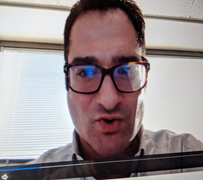
On October 291, 2020 at a virtual meeting via Zoom, Park Ridge Rotary members welcomed guest Dr. Jonathan Riess. Dr. Riess is an oncologist and associate professor at UC Davis in California. He is originally from Park Ridge and educated in New Jersey medical schools. His residency was at UC San Francisco and his fellowship was at Stanford. He delivered a presentation on advances in cancer research.
Dr. Riess began his presentation with a thank you to the club for granting him a Stewart Alexander scholarship, which helped defray the cost of medical school. He noted that modern chemotherapy began with observations made by Dr. Alexander. He observed the effect of mustard gas on blood counts when he investigated the disaster at Bari Italy. It was Doctor Alexander who connected these low blood counts to potential cancer treatments, especially blood cancers and childhood leukemia. Dr. Riess noted that some of these drugs are still in use today.
Dr. Riess spoke of current research and use of new cancer treatments. He discussed immunotherapy, which results in tumor regression and extends life. These treatments can have auto-immune types of side effects, but are generally tolerated better than chemotherapy.
Another treatment area that has evolved is called cellular immunotherapy, an approach that generates “super-soldiers” to hone in on the cancer. This has been especially useful with blood cancers, but research is ongoing for its use with solid tumors. It is sometimes used in combination with chemotherapy.
Targeted therapy is a third treatment option discussed by Dr. Riess. In this approach a mutation can be targeted by medicines that shut down cell division. It is not chemotherapy.
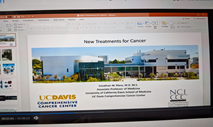
Dr. Riess concluded his remarks by referring to the numbers of improved approaches to fighting cancer and opened up the meeting to questions.