Heather Whalen - Dir. Community & Cultural Affairs
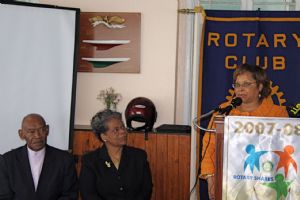
Heather Whalen
Senior Community and Cultural Affairs Officer
brought along
two "significant seniors" in our community, Joy Wilson-Tucker Co-Founder of Bermuda Heritage Museum and a former employee for Public Works, which is now referred to, as Works and Engineering George Leon Burt. Heather held a trip down memory lane conversation with them recounting life growing up in old
They first talked about a typical Sunday afternoon; George remembered that in the mornings they would attend Sunday school and then church. When they returned home, they would have dinner then attend Regiment band concerts which took place every fortnight. Joy adding that every Easter Sunday, they would go to Sunday school then to Salvation Army church. After the services, they would meet up with relatives and would march around to
There were always chores to do, collecting and chopping wood to heat the copper in which the clothes would be boiled. The clothes were wrung out by hand or some people had a wringer which had two big rollers and a big handle to turn them. The clothes would then be hung out on the line to dry. Cactus from the pond was used to whiten clothes, and to starch clothes; they would drain the water from boiled rice and then dip the clothes in it.
Cooking was done in a chimney, which was built next to a brick oven and of course the traditional meals that were cooked were peas and rice, cabbage and rice, and gingerbread and prunes. George told of Fish Hash & Hellfire Stew, known as "Gumbo" in
They both related with great excitement playtime as children. Box carts were built from Sunlight soap boxes with baby carriage wheels., which in those days were the large cycle wheels. George said that they felt that they owned Barker's Hill, it was not paved like it is today and they would race down the hill so fast that they ended up at
There was a lot of self sufficiency in those days almost everyone owned their own livestock, chickens, turkeys, goats and pigs were common, however, unlike today, there were no horses or cows on the island. Most families also had herb gardens and grew parsley, thyme and cassava, lemon grass and mint were also grown for medicinal purposes. Joy was taught to use Rhubarb, Tansy and Gin for stomach pain, and George said that the Tansy with brown sugar or Poppy was used for colds. Of course George had to add that dandy lion flowers were put under girls chins to see how pretty they looked. He also remembered that there were no such things as thermos bottles to keep things hot or cold instead they used mayonnaise bottles wrapped in layers of brown paper.
In closing Heather reminded us that we should continue to promote and demonstrate the values expressed here today, as guidepost for our living.
May is Heritage Month and the Department of Community and Cultural Affairs is hosting a variety of events which will take place this month including the annual Heritage Day parade which will take place on May 26. The public is encouraged to attend as many functions as possible to get an in depth look at the history and traditions of old