Lovette Lovell - Child Development Programme
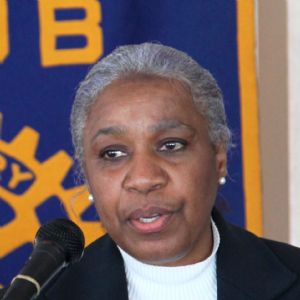
Lovette Lovell R.N., M.E.D.
Human Development Family Coordinator, Supervisor Of The Verbal Interaction Programme, Child Development Programme (CDP) shared with us information about the importance of early intervention, the history of the CDP organization, its mission, approach to practice and types of intervention services.
The literature is abound with information that attests to how an infant's interaction with objects and humans are vital nutrients for the growing and developing brain. The authors of the article, development in the first three years of life state, "we have learned to appreciate the role of relationships in every aspect of early development." Morse and Wiley in their book ghosts from the nursery tracing the roots of violence state "as we learn about brain systems and their maturation, there is growing evidence that preschool rather than higher education ought to be the focus of the most creative educational strategies, including interventions to stem emotional and cognitive disabilities that can undermine learning from the time of birth." It was belief in the importance of prevention and early intervention to improve outcomes for children's intellectual and emotional well-being that led Mr. David Critchley, Mr. Mansfield Brock jr. the then Permanent Secretaries of Health and Social Services, and Education respectively, in addition to Dr. Michael Radford, the Chief of Psychiatry to lobby the government to implement a programme such as the Child Development Programme.
Currently the Child Development Programme (CDP) offers 7 intervention services which are: Verbal Interaction Programme, Portage Programme, Behaviour Management, Family Counselling, Speech, Language Therapy, O
The Portage Programme
is the programme offered to children with identified delays in cognition. It is modelled after the Portage Programme from
Behaviour Management Programme
this programme is based on the work of Rex Forehand and enables parents to learn more effective strategies for managing their child's behaviour. Essentially the programme teaches parents the following 6 skills: Attending, Rewarding, Ignoring, Giving Effective Directions, Rules, Limits, Consequences and Time Out.
Family Counselling
this service provides support to families related to parenting, child development and family issues
Speech and Language Programme
this service promotes the development of language comprehension and language expression. It also assists with articulation; speech fluency and appropriate voice use. Speech language pathologists also facilitate the development of swallowing and feeding skills.
Parent Education Workshops
these workshops consist of three 2 hour sessions were parents learn about: discipline methods that work, how to prevent problems such as tantrums, ways to build a loving bond with their child, ages and stages of development, great ways to care for themselves.
K.E.M.H. initiative:
this commenced in January 2004 and consists of CDP staff delivering educational information, to parents of newborns on the maternal child unit at the K.E.M.H. The information includes DVDs on topics related to parenting such as in formation on bonding and attachment, developmental booklets and information on other government services supporting children and families.
Conclusion; in the book from Neurons to Neighbourhoods the science of early childhood development the authors state "the elements of early intervention programs that enhance social and emotional development are just as important as the components that enhance linguistic and cognitive competence. Some of the strongest long term impacts of su
The thanks of the club, could of course only be given by, PP Mansfield "Jim" Brock.