It was welcome back to Trev who’s been away for some 16 weeks, and it was good to see Robbie and Rob back at the meeting after their absences.
Thanks to George for his presentation on the Players lodge at Hotham. It’s amazing to think that they could get that off the ground for about $20k back in ’75. Even adjusting for inflation, I wonder what it would cost today to do the same.
RYDA
Thanks to all those who have put their names down to take a RYDA session. We’re still looking for one or two for the Tuesday, plus another 5 on the Wednesday. I shall bring the roster around again next week, but in the meantime if you have some time available, please let me know.
Designated Driver
As mentioned at Tuesday’s meeting, we’re looking for designated drivers to assist three members who need assistance getting to our weekly meetings. Thanks to all those who have volunteered already. I will be putting the roster into a Google Sheet and will send a link around later this week. We’ll also arrange to get the rostered names into the weekly bulletin in the near future. I shall also make sure that the Roster is available every week for anyone to put their names down.
If you are not able to complete the upcoming position, please let Ann D know via 0428 189 375 or
periwinklepatchwork@bigpond.com
Next Week's Jobs:
September 8th
Sergeant: Greg Lee Fellowship: Keith McLeod
Invocation: Broo0ke McLeod
Property: Glenn Brotchie
Upcoming Speakers:
September
1st: Ian Charles on the Shitbox Rally
8th: Home Life with Simon
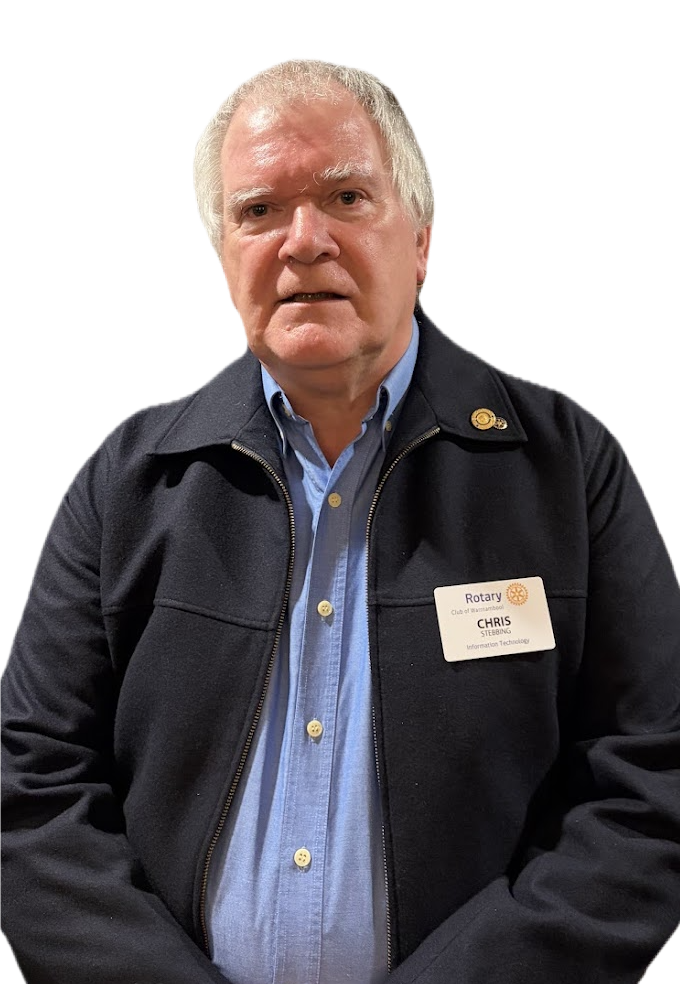
15th Chris Stebbing on Internet security
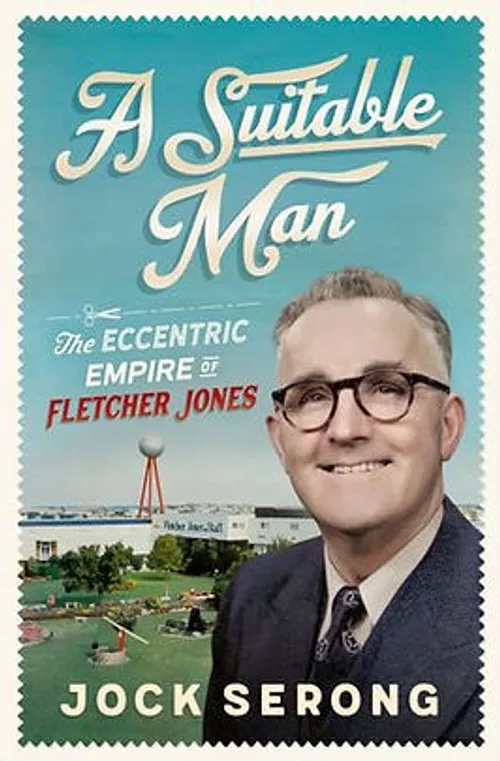
29th Jock Serong on Fletcher Jones
Please see:
Kayla, (k.berends@live.com.au)
or
Svet, (svet62@hotmail.com) if you have ideas for program/speakers
Upcoming Events:
September
1st Ian Charles talking ab0out the Shitbox Rally, (Sorry Marg, just reporting details)
5th Monthly Booksale
(volunteer opportunity)
8th Let's hear what our Exchange student, Simon has to say about himself
7th-9th
RYDA Session #2
(volunteer Opportunity)
29th
Jock Serong talking about our own Fletcher Jones. Chair will be Alan Bowes
November
1st Our Annual Garden Show. Make you keep it clear in your calendar
A Wonderful Opportunity to hear about Jock Serong's perception of our past member and Warrnambool identity. It is an opportunity to bring along your partners, guests, whoever. Should be a terrific night. Jock, from Port Fairy, ex Warrnambool, has spoken to our club before and was very insightful about his experiences as a legal person, a family man, and as a writer.
Additions to the bulletin...
Please contact Glenn via brotchieg@gmail.com
Hi Rotarians. This edition of the newsletter will have to suffice for two weeks. (Yeh, yeh you are all saying thank goodness for that, peace at least for a week). I am going to the Cook Islands, leaving on Sept 7th, with Marion and her 3 sisters. I must have done something wrong to be punished such. No seriously, plenty of swimming, snorkeling, kayaking, but alas not sure about the internet.
By Haresh L. Ramchandani, past district governor and member of the Rotary Club of L.I.F.E, Jamaica
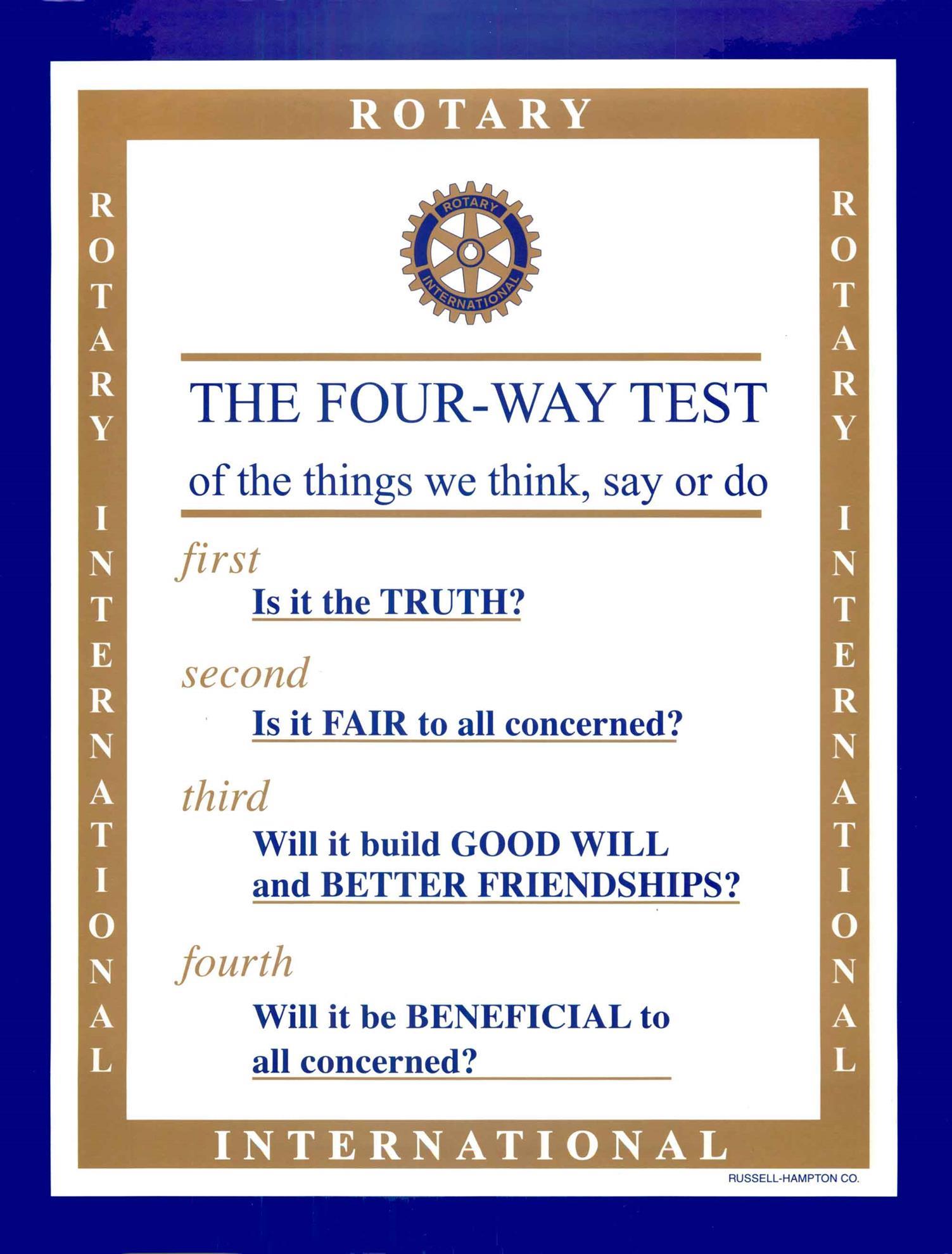
Prominently displayed on my office door is a small sign featuring The Four-Way Test. It recently caught the eye of a customer, sparking a 15-minute deep dive into morals and ethics. That conversation stayed with me because, while our world is changing at breakneck speed, this 24-word code remains one of the most powerful ethical guides ever written.
But where did it come from, and why does a test written nearly a century ago still feel so relevant today?
From Bankruptcy to Breakthrough
The story begins in 1932, during the darkest days of the Great Depression. A businessman named Herbert Taylor was asked to save the Club Aluminum Company of Chicago from certain bankruptcy. The company was $400,000 in debt — a staggering amount at the time. Taylor risked everything, taking an 80% pay cut and lending the company his own savings just to keep the lights on.
He knew he couldn’t out-spend his competitors on advertising or price. Instead, he decided to build a “corporate character” so dependable that it would become his competitive advantage. He turned to prayer and reflection, eventually distilling a 100-word guideline down to just four questions.
The result? Within five years, the debt was paid in full. Within the next 15 years, the company distributed $1 million in dividends to stockholders while its net worth climbed to more than $2 million. Taylor proved that even in the worst economic climate, simple ethical guidelines could provide a clear path to success.
More Than Just Words
What makes The Four-Way Test unique is its design. It doesn’t bark orders at you; it asks questions. It invites us to search for our own answers and constantly examine our own behavior. It’s also broad and inclusive, highlighting values of truth and fairness that resonate across every culture and religion. It’s so universal that honorary Rotarian Buzz Aldrin even planted a Four-Way Test pin on the moon’s surface!
So let’s break down the four pillars of this “prescription for living:”
1. Is it the TRUTH?
Truth is the bedrock. Without it, society would dissolve into chaos. We live in an era of “white lies,” “political truths,” and situational ethics. This first question asks us to strip away the smokescreen and face the reality of our actions. When we stop meaning what we say, trust collapses.
2. Is it FAIR to all concerned?
If truth is about reality, fairness is about morality. This question protects our relationships from bias and exploitation. In an “everyone for themselves” world, this test charges us to remember the humanity of others before making a move.
3. Will it build GOODWILL and BETTER FRIENDSHIPS?
In this test, “friendship” is treated like a verb — something we do. It’s the most democratic of relationships because it’s available to everyone, rich or poor. By adding “goodwill” to the mix, Taylor reminds us that to have a friend, we must first be one.
4. Will it be BENEFICIAL to all concerned?
Taylor chose the word “beneficial” very carefully. He could have said “profitable,” but he wanted to emphasize a commitment to the greater good. To be beneficial means to add something good to the world that wasn’t there before. It moves us away from the “what’s in it for me?” mentality and toward a life of integrity.
Bringing it all together is the spoke of the wheel that rotates it in harmony: “Of the things we think, say, or do,” ensuring a positive outcome for Rotary’s most conspicuous gift to the moral climate of the modern world.
A Compass for the everyday
The Test isn’t just for philosophical debate though; it’s for practical use. For decades, Walgreens drugstores used The Four-Way Test as a “compass” for their corporate culture. Former president Charles R. Walgreen Jr. saw it as a literal prescription for how to treat customers and employees alike.
Our world may be more complex than it was in 1932, but our human need for trust and fairness hasn’t changed. These 24 words might not solve every global crisis, but they are a perfect place to start.
The next time you’re faced with a tough decision — in business or in life — ask yourself these four questions.
You might be surprised at how much clarity they bring.
Haresh L. Ramchandani is a past governor (2016-17) of Rotary District 7020, a member of the 2026 Rotary International Taipei Convention Committee, Communications Action Plan Chair for Rotary Zones 33-34, and 2024-2025 Rotary International Membership Growth Committee Chair.
In July 2000, the Hills District of Sydney suffered a devastating loss when four teenage boys lost their lives in an horrendous car crash on Old Northern Road, Dural. The accident occurred at what was considered to be a mild bend in the road when the car, driven by a 17 year old who had held his provisional licence for just three weeks, veered onto the wrong side of the road and collided with a four-wheel drive. The car holding the teenagers, which police estimate to have been travelling at 110 kilometres per hour in a 60 kilometre per hour zone, was virtually torn in two.
Shocked by the senseless loss of such young lives, the Hills Rotary clubs in District 9680 set out to help avoid a repetition of this appalling accident in a practical way by establishing and sponsoring a youth driver awareness program.
A public meeting was held in August 2000 where local Rotary clubs, the Salvation Army, the RTA, local police, councils, schools, businesses, Road Safety officers and community groups were well represented. Current Road Safety Education (RSE) CEO/Managing Director Terry Birss and RSE Directors Paul Pixton and John Loughlin, all Rotarians, were at that meeting. Also attending the meeting was Rotarian Bruce Angus, who had successfully run a small country-focussed driver awareness program in the Wingecarribee area called “U-Turn the Wheel”, which gave RYDA its early model.
John Loughlin summarised the early success of RYDA as a combination of good funding, good people and good support coming together to address a need. Terry Birss added that Rotary attracts people from private enterprise who are particularly good at making things happen – identifying the issues and the resources required and leading the solution. In their favour was strong support from the community, local governments, police and schools who looked to Rotary to lead a change. When asked why a community group took on what might be considered a government problem, Paul Pixton credits Rotary for the speed with which their response happened.
A Committee was formed to develop and adopt a suitable program for roll-out in Sydney. The curriculum and session plans were carefully constructed and refined in close collaboration with the Department of Education and Training, the Department of Transport, the Police Department, the Department of Health and the Department of Fair Trading. The six-session program under the banner “Rotary Youth Driver Awareness” was first introduced in the beginning of 2001 at the Honda Australia Roadcraft Training site in St Ives, Sydney. Approximately 1,200 Year 11 students from six schools in the Hills area attended the program in its inaugural year.
After four years, it became evident that external funding would be needed to bring on staff to ensure RYDA was best practice and to grow its availability. In collaboration with the Rotary District 9680 committee, an independent not-for-profit organisation, now Road Safety Education Limited (RSE), was established. RSE now controls RYDA. While some in Rotary bemoan the change in status and believe other operational models with Rotary still in charge could have been adopted, it remains a fact. That does not mean however that RYDA cannot form the integral part of Rotary youth service that it does, in the same way as the National Youth Science Forum (NYSF).
Below are the important dates for the RYLA program next year.
RYLA 2027 - Sunday 4th - Friday 9th April 2027.
RYLA Presentation Dinner - Thursday 8th April 2027.
The application dates will be set at a RYLA committee meeting in August and will be published in the Weekly Roundup, Monthly Bulletin and at ryla9780.org
FOR MORE ROMAC INFORMATION JUST SELECT LO0GO ABOVE
Chair’s Message: A busy time for the ROMAC team
Our ROMAC team continues to be busy with four new referrals coming to us since my July report – two from Timor Leste, one from Solomon Islands and one from Fiji.
Currently ROMAC is supporting five children from Vanuatu:
Anis and Melanie at Canberra Children’s Hospital for talipes treatment
John at St Vincents Hospital in Melbourne for talipes treatment
Keysha and Brendan at Starship Hospital in Auckland for cardiac surgery.
In addition, we have:
Vanessa from Timor Leste, at Sydney Children’s Hospital Westmead for ophthalmological surgery
Xinque from Solomon islands, at Queensland Children’s Hospital in Brisbane, for complex abdominal surgery.
Two further children have been successfully treated and discharged from Queensland Children’s Hospital, Brisbane, during the month — Chriselda for cardiac surgery and Stephaneous for surgery for an abdominal teratoma.
We received a very urgent referral for seven-day-old Baby Xinque on 10 August, advising she needed surgery within nine days.
Darwin Chair Judith, as acting Operations Manager while Pam is away on an overseas project, worked wonders to get all the logistics completed, including medical visas for baby and mother, so they could fly from Honiara on Saturday 15 August.
Baby Xinyue was scheduled to be treated at Canberra Children’s Hospital. However, a late departure from Honiara resulted in a missed connecting flight to Canberra. She was admitted to Queensland Children’s Hospital for an overnight stay but, with deteriorating health, the decision was made by the surgical teams for her to stay there for surgery on Tuesday, just eight days after receipt of the referral.
A huge thank you to Judith for all her work and support for this baby and her mother during the past week.
Regrettably, two of the children I reported last month, Michael and Ellan who we brought to Starship Hospital in Auckland for cardiac surgery, on full examination were assessed as being inoperable and we flew them and their carers home earlier this month. Thankfully this is a rare event, but it does have a significant impact on the members of the regional team supporting the children.
Looking ahead, we have children scheduled to arrive over the next two months into Darwin, Brisbane, Adelaide, Auckland and (hopefully) Perth. They are coming from the diverse range of Oceania countries we support — Timor Leste, PNG, Solomon Islands and Vanuatu.
Regrettably Barry Wilson, who had agreed to be the Operations Director, has had to withdraw from this role due to health issues. I will continue to fulfil this role on a temporary basis, until a volunteer comes forward.
As I have said in previous months, ROMAC’s support for the children of Oceania would not be possible without the many hours of support willingly given by our cheerful ROMAC volunteers; together with the generous donations from many Rotarians and Rotary Clubs who continue to support ROMAC.
I acknowledge and gratefully thank each of you — past, present, and future supporters.