GUEST SPEAKER - TONI JENKINS
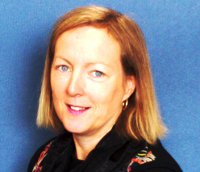
Chairman Rotarian Doug MacLean introduced guest speaker Toni Jenkins to inform the membership about South West Local Learning and Employment Network (SWLLEN).
What are Local Learning and Employment Networks?
"Connecting local groups to improve education, training and employment options for 10-19’s. Local Learning and Employment Networks (LLENs) were established in 2001 by the Bracks Government in response to the Ministerial Review of Post Compulsory Education and Training Pathways in Victoria, (also known as the Kirby Report) conducted by the late Peter Kirby. LLENs work particularly to assist young people at risk of making poor transitions from compulsory schooling to the next stage of their lives and careers.
Thirty one networks based on local government areas were developed with a focus on community capacity building. Central to the intent of the LLENs is the passion for the wellbeing and advancement of young people and specifically year 12 completion.
South West LLEN aims to bring together schools, education providers, families, businesses and agencies to enhance education and training provision across our four municipalities, Colac Otway, Corangamite, Moyne and Warrnambool. LLENS focus on both formal and informal education, school and work-place based. Funding comes from the state Department of Education and Early Childhood Education, and runs to around $370,000 per year.
South West LLEN’s goals include, amongst others,
- Improving Koorie engagement with schooling: Increasing the number of indigenous young people completing year 12, by engage the schools in South West LLEN region in the process of developing an ‘in-school’ local Koorie based program/curriculum.
- Retaining young people who are at risk of disengaging from education/training by working with education and training providers and DEECD to support the broadening of provision and careers transition and pathways in the region.
- Re-engaging young people who are disconnected from education, training, meaningful employment and/or the community, by working with education and training providers and DEECD by brokering the development of flexible learning options and solutions that respond to the region-wide needs to re-engage young people not in education, training or employment.
- Developing Industry and Education links to improve pathways to further education, training and meaningful employment outcomes.
These goals arise from a recognition that people in the south-west face higher rates of poverty and disadvantage than their city cousins. That is, people in country areas are missing out on adequate health care, education and employment opportunities. People with low levels of education are likely to have less capacity to escape from poverty.
Secondary school completion has become more and more influential in the distribution of the good things in life. How we educate and support our most disadvantaged will shape what kind of society we will have in the near future.
Economic change from manufacturing to service industries, and globalisation further adds to demand to improve our school retention record. Even modest occupations now demand a Year 12 entry level. Our Year 12 or equivalent completion rates are much lower than the state average: that is, young people in rural and remote areas are less likely to complete secondary schooling and less likely to commence higher education. Lower levels of commencement at university in part reflect the additional costs involved in shifting to Melbourne. Many defer studies, hoping to qualify for Youth Allowance or to work and save money for further education. The estimated cost for a young person to live away from home and study at university is $22,000 a year, in addition to fees, books and other charges. For the 2012 year 12 classes, more than half the schools in our region had higher numbers of students defer tertiary studies compared to 2011. Many who defer do not ultimately return to study. There is also a higher drop-out rate amongst rural learners who do begin at university. The development of rural universities has reduced but not eliminated these problems. This is not new, it’s not changing and it’s not getting any cheaper.
Although the numbers of young people leaving school early to go into jobs looks good at first glance it is also a worrying trend.
Ms Jenkins said that said many of those who went into employment without training would lose their job once they go on to more expensive adult wages.
To change these trends we need to raise aspirations, support disadvantaged groups and invent new ways to keep young people engaged. To achieve this, SW LLEN leads 24 projects, and participates in another 19, with about 430 people involved in their work.
A spirited discussion and question time followed Toni’s address.
Chairman Doug thanked Toni for an excellent presentation on a most challenging and worthwhile topic.
President John seconded his remarks and brought the meeting to a close.