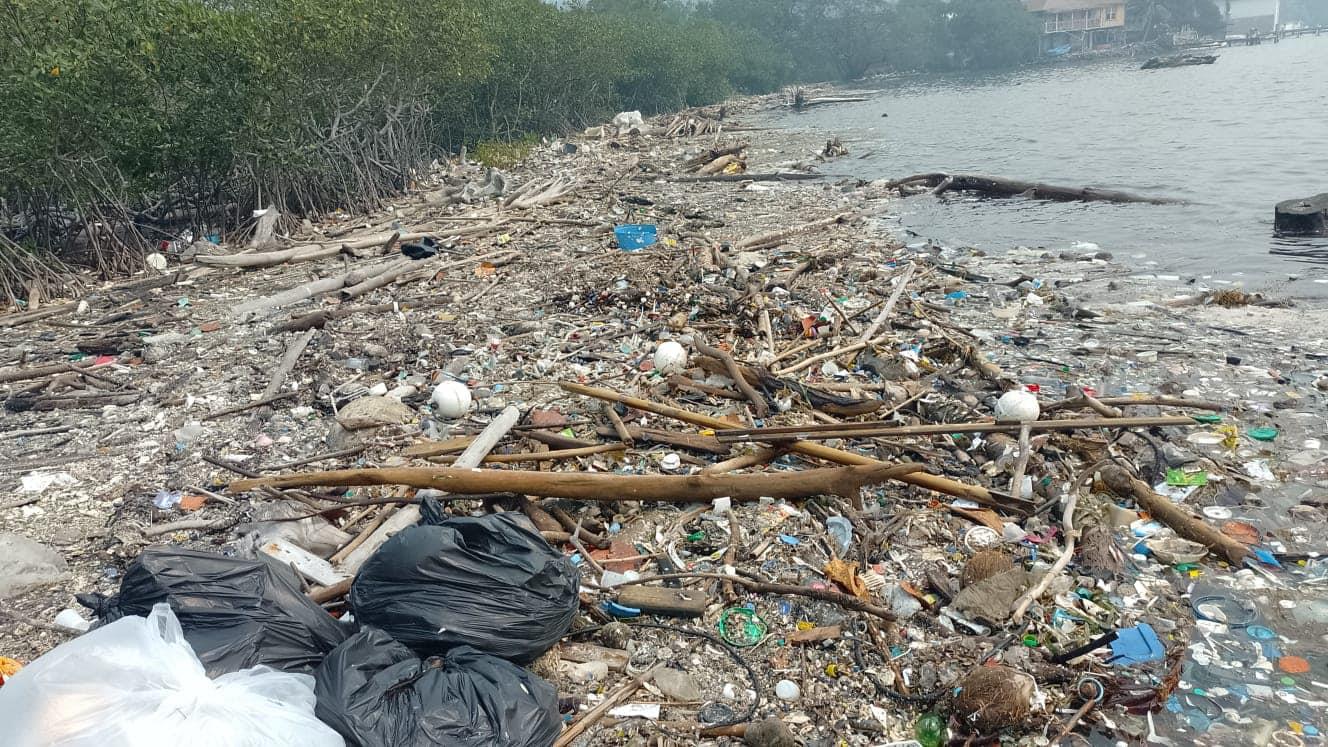
The beach in Brick Bay. (Photo: BICCU)
“Is it for trash or recyclable materials?” The question goes to Angela Szuch, who is holding a plastic bag half-filled with items.
I am up to my knees in floating garbage, only saved by my rubber boots, working with my rake to gather it so we can pick it up. And it never ends. The level of trash is deep.
“This is for trash,” replies Angela, who opens the bag and lets me slip a couple of sandals, a glass bottle once filled with Coca-Cola, and a retired gallon-sized can once filled with engine oil.
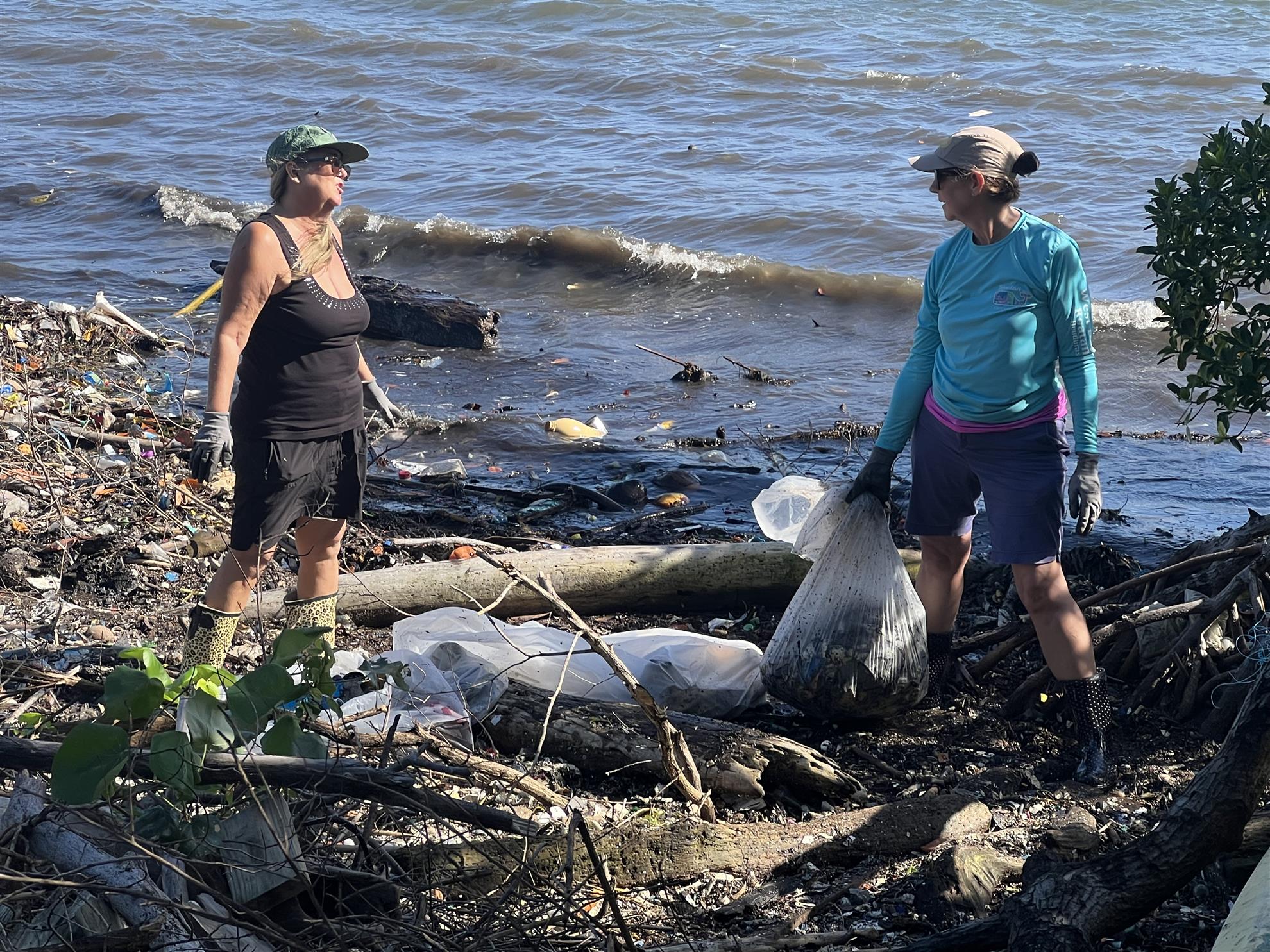
Angela Szuch (left) and Tonya Griffith are battling the trash in Brick Bay. (Photo: Roger Bjoroy-Karlsen)
Five from The Rotary Club of Roatan Utila Guanaja are working shoulder to shoulder with ten employees from Mahogany Bay, which is a part of the BICCU (Bay Islands Coastal Clean Up), and on this day, our club is in action on all three islands.
A total of 90 persons employed at Mahogany Bay participate in the BICCU program, and they usually go out every Friday to clean up beaches and sometimes along the roads in the area. Mahogany Bay offers them four hours of their working time to clean up that area, which they are more than happy to do to keep the level of trash as low as possible.
The beach in Brick Bay is one of the most polluted with trash on the island. The myth tells us that most of the trash comes via the rivers in Honduras and Guatemala and follows the currents before it hits the Bay Islands. But is that the truth?
According to Elena Gonzales, a long-time manager at BICCU, most of the trash comes from Roatan.
“We can see that the majority of the trash is rooted locally when we pick it”
“It used to come from the mainland, but the project “Ocean Cleanup” has established barriers, or interceptor barricades, at several points in the rivers to gather the trash before it hits the ocean,” says Gonzales.
What must be done to make the locals understand that nature is not a trash can?
“One way is to promote through education what items can be recycled and where they can drop them off. For example, people do not see that there is an incentive for recycling.
Also, improving the municipalities’ trash collection capabilities, creating a schedule and locating correct spots where they will collect trash and have bigger containments.”
One of the things Rotary clubs are committed to is supporting activities that strengthen the conservation and protection of the environment. Angela Szuch is one of the Rotarians who is soldiering in the battle against its contamination:
“Each of us should take the opportunity when we can to help clean up in our neighborhoods.
There is an amazing amount of rubbish that washes up, we should always attempt to leave the world a better place.”
Our Rotary Club will continue to contribute to removing the trash from the surroundings. On this day, we gathered 126 bags of trash altogether on Roatan Utila and Guanaja. We might also look into how we can change people’s minds and make them put the trash in the right places.
And soon, you will hear more about some of the composting and recycling that goes on on Roatan!
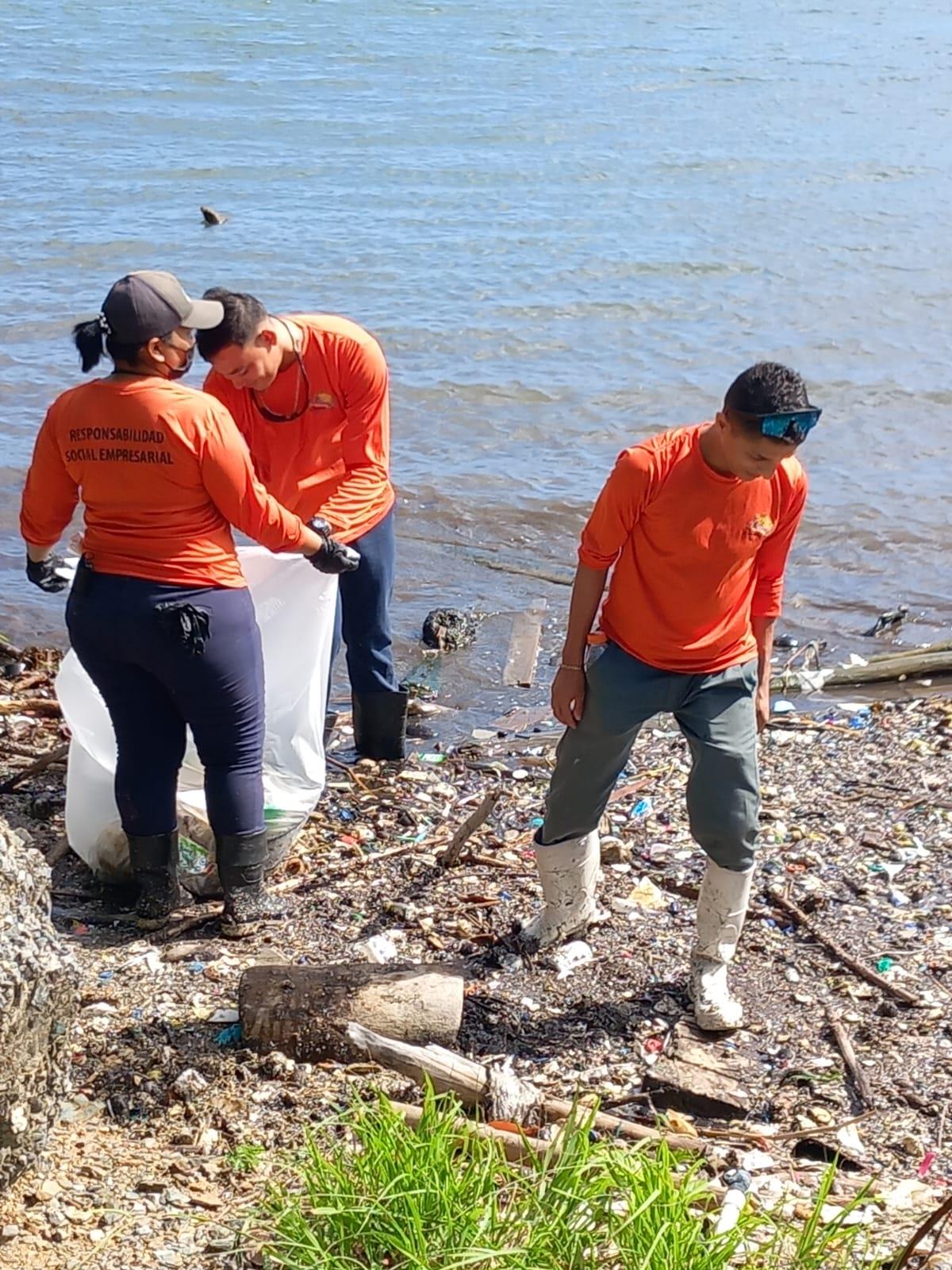
Volunteers from BICCU on their weekly beach clean up. (Photo: Roger Bjoroy-Karlsen)
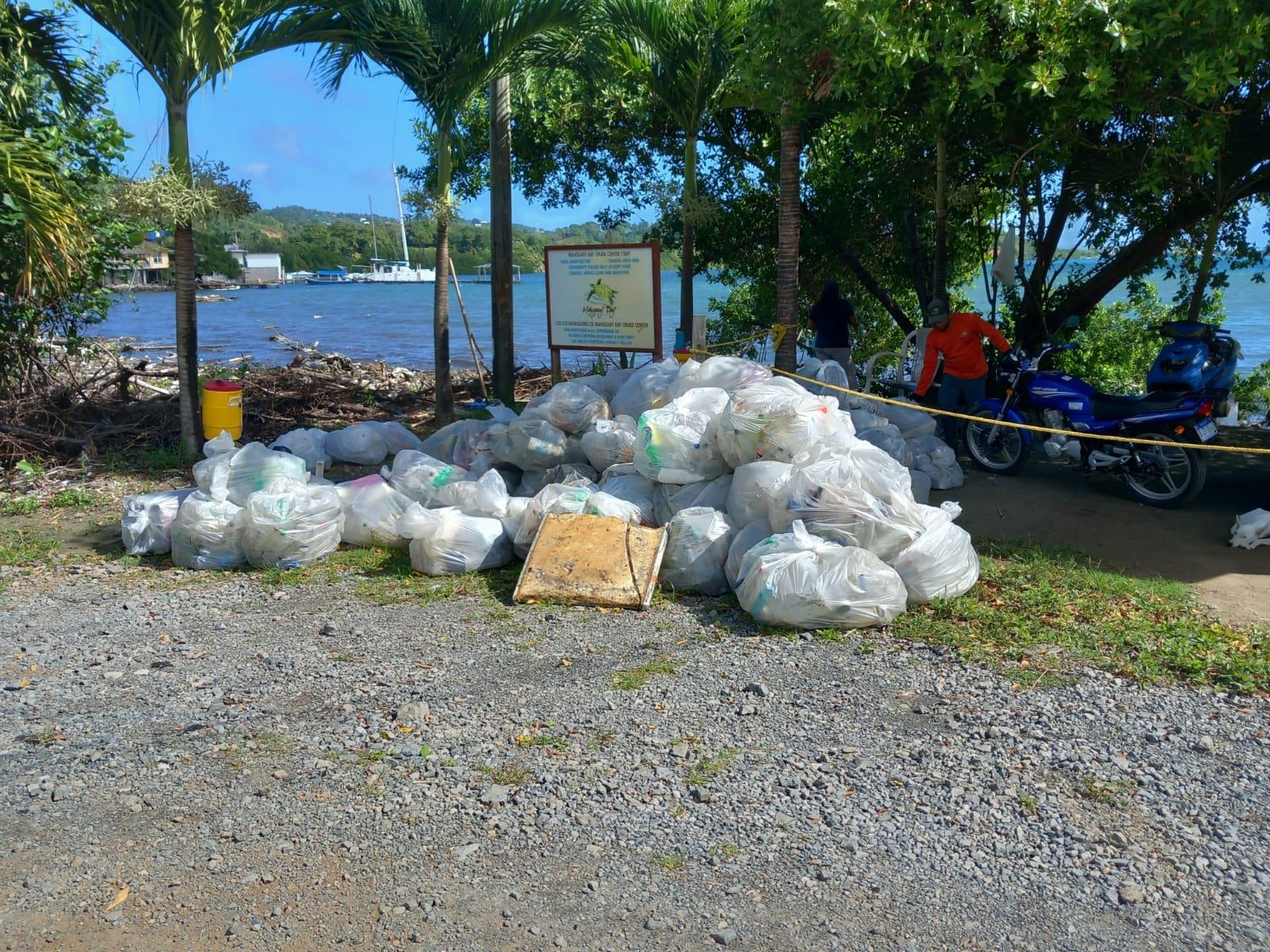
126 bags of trash was collected on all three islands. (Photo: Roger Bjoroy-Karlsen)