
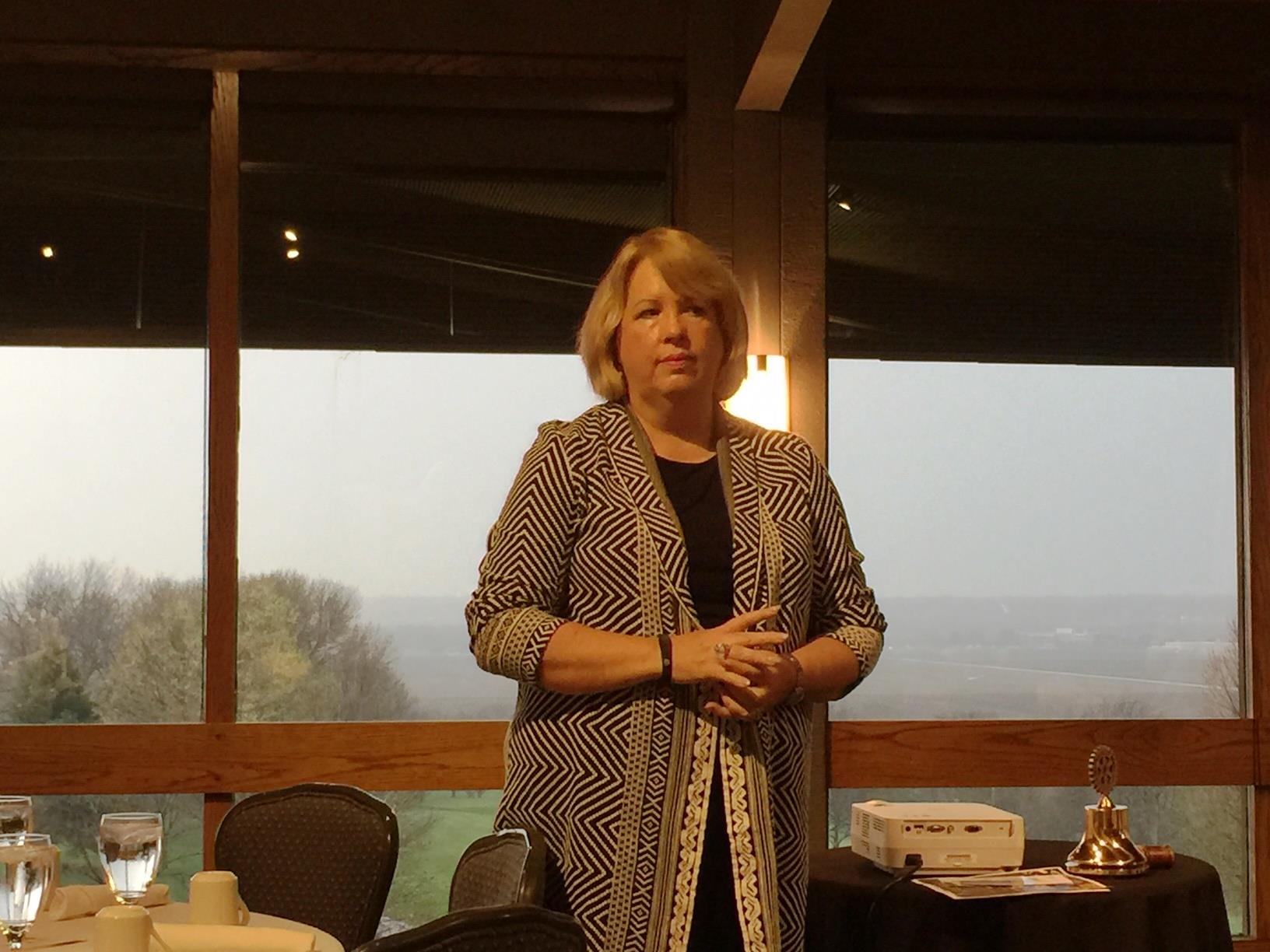
Peggy Huppert the executive director of NAMI, National Alliance on Mental Illness, spoke. NAMI is the largest grass roots organization in the country with 1,000 local affiliates in the state. She shared some statistics on mental illness: 1 in 5 people have mental health challenges in a given year with 6.5% of the population suffering from chronic mental illness which is 137,000 people. Last year there were 450 suicides in the state of Iowa with the fastest growing rate among teenage girls aged 13-17 and rural men (aka farmers) aged 45-64.
Iowa once had 6,000 beds for those with mental health issues though with the deinstitutionalization that has been happening since the 1960’s we now have 724 beds of which 64 are state held. On the other hand prison beds have grown from 700 to over 5,000 in the same time period. Within prisons 50% of the population have at least 1 diagnosed mental illness. Further with deinstitutionalization the homeless population has increased especially where there are no community based services and it’s said 90% have a mental health disorder. Iowa used to have county homes in each of the 99 counties; however, six years ago those were combined into 14 regional homes.
After gathering a focus group of professionals in law enforcement and civilian employment, they presented the Iowa legislature with recommendations especially looking at individuals with complex mental health needs as they have the hardest time getting needed assistance. These recommendations are contained in House File 2456 which passed unanimously this past session. The bill creates at least 6 access centers which will be 24/7 secure no reject facility where people can go to get evaluated and then referred. It also expands the ACT, Assertive Community Treatment, teams which provides a holistic approach to treating the needs of those with mental illness. All regions/counties are to supply an all crisis response as well as create Intensive Residential Service Homes. These homes are for 3-4 people who are incapable of living independently yet are not in need of hospitalization, since currently that is where they are being held. It was recommended that a minimum of 120 beds be provided in this way.
Currently DHS is writing the rules to go along with this bill and the legislature is looking at long-term funding as with everything that becomes the issue. Gov. Reynolds signed this into law as well as an executive order to establish a children’s system to deal with mental illness which currently does not exist.