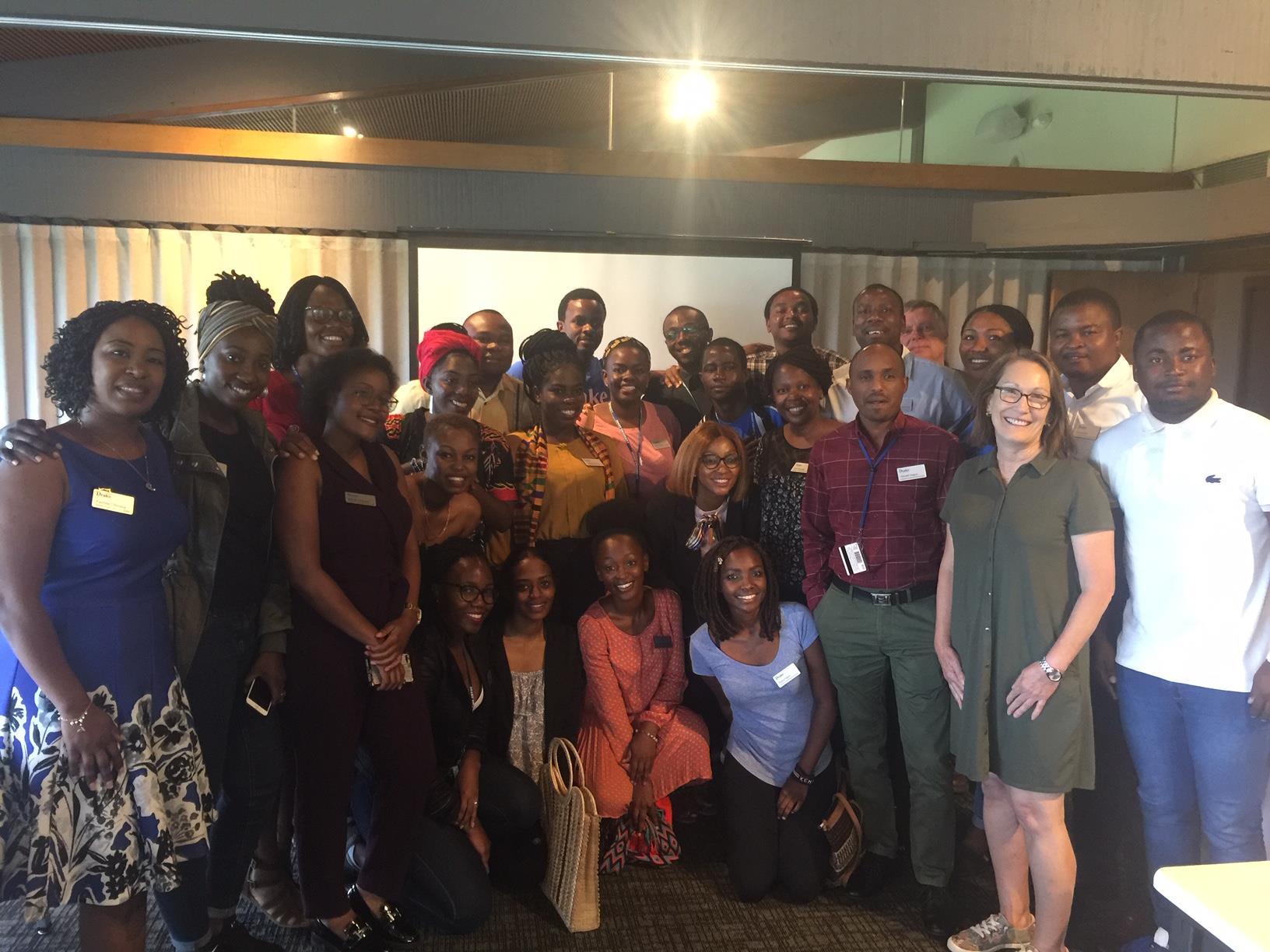
Dr. Deb Bishop, Drake University, introduced the Mandela Washington Fellowship, its 25 members in attendance at the Johnston Rotary Club meeting this morning and one of the group leaders that gave a presentation. Deb is a member of the Johnston Rotary Club and has also made many trips to Africa with Drake students.
Deb's introductory presentation covered the following topics:
Washington Mandela Fellowship Goals - For Young African Leaders
•Invest in a new generation of young African leaders who are shaping the continent’s future.
•Respond to the strong demand by young African leaders for practical skills that can help them take their work to the next level in the fields of public service and business.
•Deepen partnerships and connections between the United States and Africa.
•Build a prestigious network of young African leaders who are at the forefront of change and innovation in their respective sectors.
•Launched in 2014
•Since inception
–250,000 applicants
–3700 Alumni
–700 Fellows in 2019
•Ages 25-35
•49 Sub-Saharan African nations
Themes
- Leadership & Entrepreneurship
- Business and Civil Society/Government and Economic Development
- Rural and Urban Economies
Diverse Learning Experiences
- Academic and skills sessions
- Engagement with experts
- Personal engagement in peer and non-peer mentors
- Site visits
- Community Service
- Cultural engagement
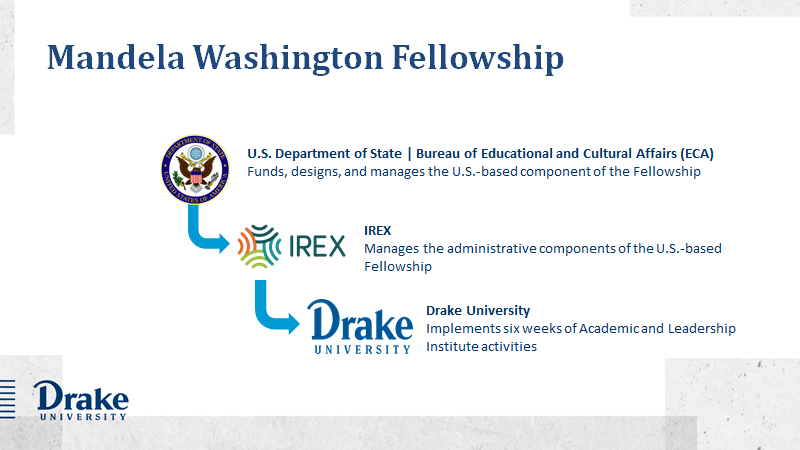
Deb began the program by giving an introduction of the Mandela Washington Fellowship. Acceptance into the program is highly competitive. Fellows range from age 25 to 35, and represent 49 sub-Saharan countries. The program receives federal funding through the Department of State and is administrated by a group called IREX. Drake is involved on the front lines designing the program and hosting the fellows.
The main goals of the group are to invest in young African leaders, equip them with practical skills, and develop partnerships and connections going forward. Themes during their involvement range from leadership and entrepreneurship to civil and governmental focuses. Emphasis is placed on both rural and urban environments. Their learning experience in the United States is incredibly diverse. Fellows spend time in a classroom setting, but also participate in site visits and community service projects.
Our next speaker was Yvonne Chivasa. She works as a Diagnostic Radiographer in Zimbabwe, and had been instrumental in helping to push for positive change and access to healthcare in her homeland. Due to social and economic challenges, Zimbabwe has been faced with issues related to disease, quality of care, and lacking infrastructure. Despite these hardships, Yvonne had proved to be instrumental in securing modern imaging and testing equipment to help detect and combat breast cancer and TB. The Mandela Washington Fellowship aligned with Yvonne’s mission and goals. Despite all of the work it took to not only apply for the fellowship, but also to prepare for the trip abroad, she is incredibly grateful for the experience and eager to further her positive reach by igniting passion, enabling dreams and transforming lives.