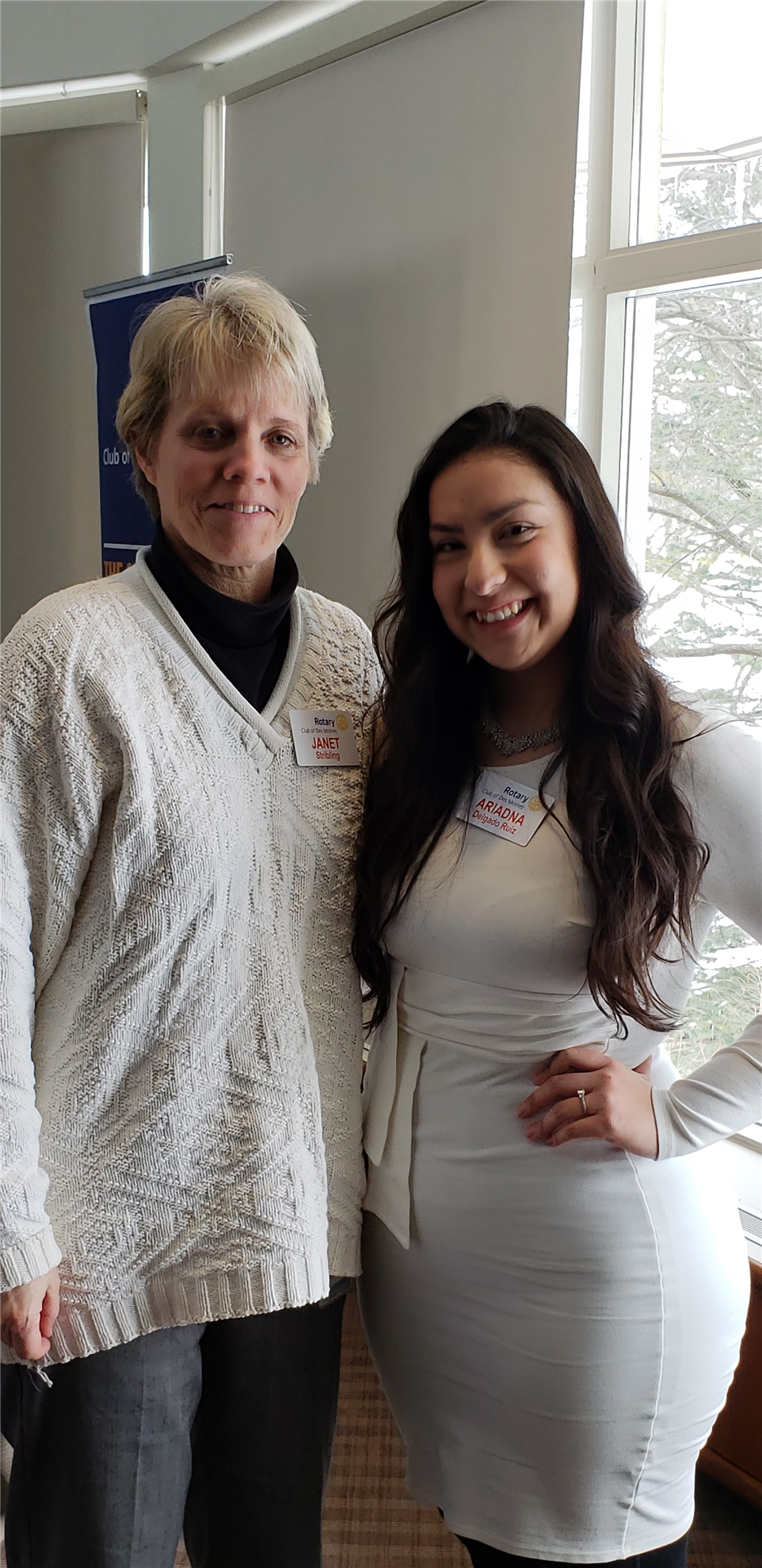
On the gray last February day of what seems the endless winter of 2019, Rotarians were treated to not one, but two engaging speakers. The program committee delivered today, lifting the spirits of Rotarians and guests, sending them out into the frigid afternoon with much to consider and discuss. Congratulations to all involved coordinating today’s meeting on a job well done.
First to the podium was Aridana Delgado-Ruiz, a recipient of one of our club’s college scholarships, a student at Iowa State University, and a once-undocumented immigrant. She reflected on how the hopes and dreams she had held as a high school student began to unravel on Election Day 2016. As a child brought to the United States by parents who immigrated illegally, Delgado-Ruiz started her studies at Iowa State under the federal policy known as Deferred Action for Childhood Arrivals (DACA). DACA allows individuals such as Delgado-Ruiz to receive a two-year renewable period of deferred action from deportation and become eligible for a work permit in the U.S. DACA was created by an executive branch memorandum announced by President Barack Obama on June 15, 2012.
Delgado-Ruiz spoke of her concerns about being deported because the Trump Administration was moving to reverse DACA and other programs that provided a path to living in the US legally and citizenship for people who as children were brought into the country by parents and guardians.
“I even thought of self-deporting to a country I had not seen since I was three years old, because why would I stay in a country that I love so much when it hates me back,” said Delgado-Ruiz.
The honors student had two options for staying in the U.S., getting sponsored by a company that wanted to employ her because she had special skills, or marrying her long-time boyfriend. After much discussion, she and her boyfriend decided to marry sooner than they had planned so Delagado-Ruiz could begin the costly process of becoming a U.S. citizen. She sought and received permission to defer her Rotary scholarship while she earned money to pay for some of her expensive immigration legal costs.
Delgado-Ruiz is back in school and hopeful about her future. She has taken the first of many steps to citizenship and is no longer illegally present in the U.S. She heartily thanked the Rotary Club of Des Moines for our scholarship saying it has put her “one step closer to reaching my American Dream.” Rotarians gave a tearful Delgado-Ruiz a standing ovation.
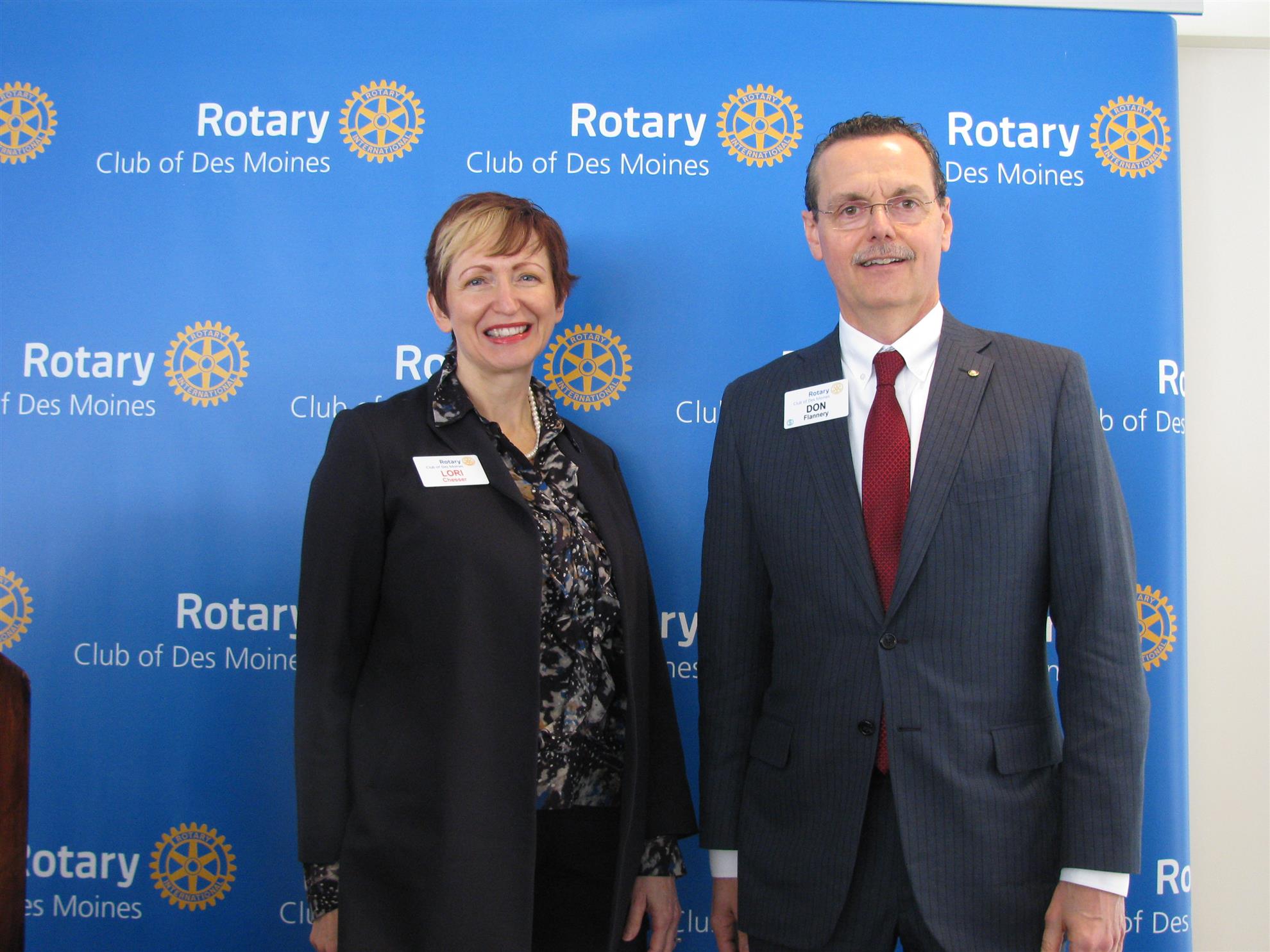
Today’s principal speaker was Lori Chesser, a partner in the Davis Brown Law Firm. Chesser is a preeminent immigration attorney and advocate. With a degree in finance, she initially practiced corporate law. Recognizing the need for immigration services in Iowa, she developed that practice and has been working primarily in immigration law for more than 20 years.
Chesser carefully provided context and a comprehensive summary of the issues surrounding the modern immigration debate. She explained the U.S. intentionally created a complicated immigration system because we want the system to be fair. Chesser referred to a familiar refrain offered by many pushing for more restrictive immigration policy. Many say they want immigrants to follow the rules as their ancestors did. However, for Americans who arrived before 1924, there were few rules. The laws written later favored those favored predominately white Europeans and family members of U.S. citizens.
A significant thrust of Chesser’s remarks was the importance of the Rule of Law. The Rule of Law can ensure fairness and help establish policies that foster the growth of the nation. However, U.S. immigration law has not kept pace with the realities of a rapidly changing world. She also addressed the Trump Administration’s focus on the southern border. The type of people coming to the border has changed. What was once a group of single people in search of work, is an increasingly made up of families fleeing violence. Chesser suggests our border policy and enforcement has not kept up with that reality.
Chesser concluded by saying, “our immigration system is not broken, but it does need to be updated and the holes patched. For this to be done well, it must be done understanding the context of the immigration law, our history, our present reality, and an eye to trends that give us clues to the future, rather than purely political consideration.”
Lori Chesser and Aridana Delgado-Ruiz provided Rotarians context and much to consider today. All who were present walked away better informed about many important facets of the immigration debate.
See you next Thursday at Rotary!