Understanding Polio
Polio and Prevention
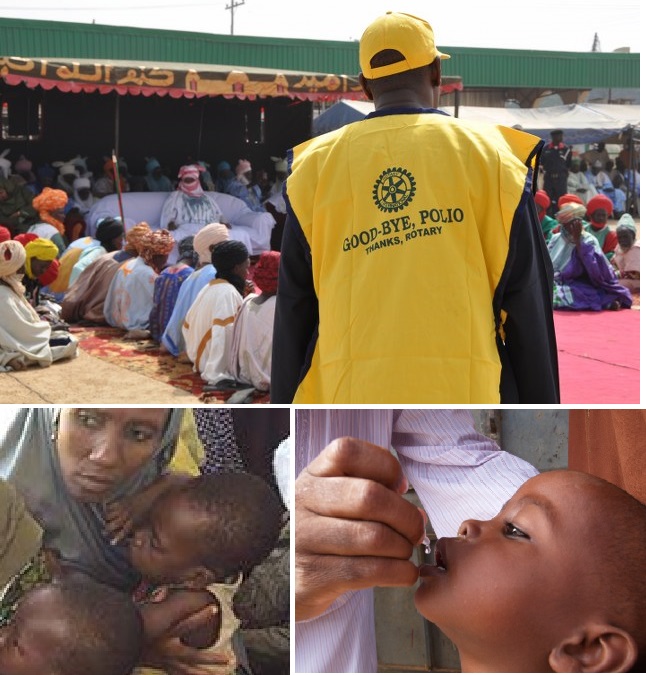
Polio is a crippling and potentially fatal infectious disease. There is no cure, but there are safe and effective vaccines. The strategy to eradicate polio is therefore based on preventing infection by immunizing every child until transmission stops and the world is polio-free.
The disease
Polio (poliomyelitis) is a highly infectious disease caused by a virus. It invades the nervous system and can cause irreversible paralysis in a matter of hours.
Who is at risk?
Polio can strike at any age, but it mainly affects children under five years old.
Transmission
Polio is spread through person-to-person contact. When a child is infected with wild poliovirus, the virus enters the body through the mouth and multiplies in the intestine. It is then shed into the environment through the faeces where it can spread rapidly through a community, especially in situations of poor hygiene and sanitation. If a sufficient number of children are fully immunized against polio, the virus is unable to find susceptible children to infect, and dies out.
Young children who are not yet toilet-trained are a ready source of transmission, regardless of their environment. Polio can be spread when food or drink is contaminated by faeces. There is also evidence that flies can passively transfer poliovirus from faeces to food.
Most people infected with the poliovirus have no signs of illness and are never aware they have been infected. These symptomless people carry the virus in their intestines and can “silently” spread the infection to thousands of others before the first case of polio paralysis emerges.
For this reason, WHO considers a single confirmed case of polio paralysis to be evidence of an epidemic – particularly in countries where very few cases occur.
Read on to learn more about Polio and Rotary's involvement
Symptoms
Most infected people (90%) have no symptoms or very mild symptoms and usually go unrecognized. In others, initial symptoms include fever, fatigue, headache, vomiting, stiffness in the neck and pain in the limbs.
Acute flaccid paralysis (AFP)
One in 200 infections leads to irreversible paralysis, usually in the legs. This is caused by the virus entering the blood stream and invading the central nervous system. As it multiplies, the virus destroys the nerve cells that activate muscles. The affected muscles are no longer functional and the limb becomes floppy and lifeless – a condition known as acute flaccid paralysis (AFP).
All cases of acute flaccid paralysis (AFP) among children under fifteen years of age are reported and tested for poliovirus within 48 hours of onset.
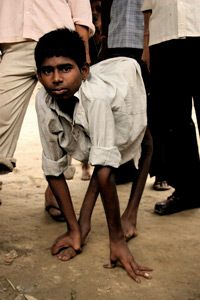
An Indian boy’s legs are shrunken from paralysis caused by polio
WHO/T. Moran
Bulbar polio
More extensive paralysis, involving the trunk and muscles of the thorax and abdomen, can result in quadriplegia. In the most severe cases (bulbar polio), poliovirus attacks the nerve cells of the brain stem, reducing breathing capacity and causing difficulty in swallowing and speaking. Among those paralysed, 5% to 10% die when their breathing muscles become immobilized.
Post-polio syndrome
Around 40% of people who survive paralytic polio may develop additional symptoms 15–40 years after the original illness. These symptoms – called post-polio syndrome – include new progressive muscle weakness, severe fatigue and pain in the muscles and joints.
Risk factors for paralysis
No one knows why only a small percentage of infections lead to paralysis. Several key risk factors have been identified as increasing the likelihood of paralysis in a person infected with polio. These include:
- immune deficiency
- pregnancy
- removal of the tonsils (tonsillectomy)
- intramuscular injections, e.g. medications
- strenuous exercise
- injury.
Treatment and prevention
There is no cure for polio, only treatment to alleviate the symptoms. Heat and physical therapy is used to stimulate the muscles and antispasmodic drugs are given to relax the muscles. While this can improve mobility, it cannot reverse permanent polio paralysis.
Polio can be prevented through immunization. Polio vaccine, given multiple times, almost always protects a child for life.
Article: Polio and Prevention reproduced from Global Polio Eradication Initiative
The Global Polio Eradication Initiative is a public-private partnership led by national governments and spearheaded by the World Health Organization (WHO), Rotary International, the US Centers for Disease Control and Prevention (CDC), and the United Nations Children’s Fund (UNICEF). Its goal is to eradicate polio worldwide. - See more at: http://www.polioeradication.org/AboutUs.aspx#sthash.2P2BW39Q.dpuf
Rotary International and Polio
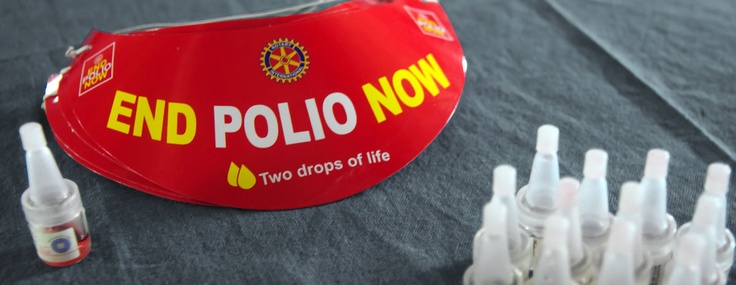
Rotary, along with our partners, has reduced polio cases by 99 percent worldwide since our first project to vaccinate children in the Philippines in 1979. We are close to eradicating polio, but we need your help. Whether you have a few minutes or a few hours, here are some ways to make a global impact and protect children against polio forever.
Give
Rotarians have helped immunize more than 2 billion children against polio in 122 countries. For as little as $0.60, a child can be protected against this crippling disease for life.
Your gift to the PolioPlus Fund is eligible for Paul Harris Society recognition. You can maximize support for polio eradication within your club and your community by organizing a fundraiser. Get some ideas.
Build awareness
Help get the word out about our efforts to fight polio.
- Make it personal by posting about polio on Facebook or Twitter.
- Keep informed by following our campaign to end polio on Facebook and Twitter.
- Add your photo to show others that we are “This close” to a polio-free world.
- Harness the power of the press by writing an opinion piece or a letter to the editor.
- Take a course to learn how you can help eradicate polio.
Become an advocate
Make sure policymakers know how important it is to eliminate polio. You can:
- Sign a petition urging world leaders to fund the final push to end polio.
- Write to your government officials, or better yet, invite them to a Rotary meeting to learn what they can do to support our fight against polio.
Reference & resources
- A Rotarian’s Guide to Advocacy for Polio Eradication
- Advocacy flier
- Outreach tips
- How to illuminate a building/monument with the End Polio Now logo
- Global Polio Eradication Initiative
-
- See more at: http://www.polioeradication.org/Polioandprevention.aspx#sthash.pEHJp0Vt.dpuf
Article Rotary International and Polio reproduced from Rotary.org