
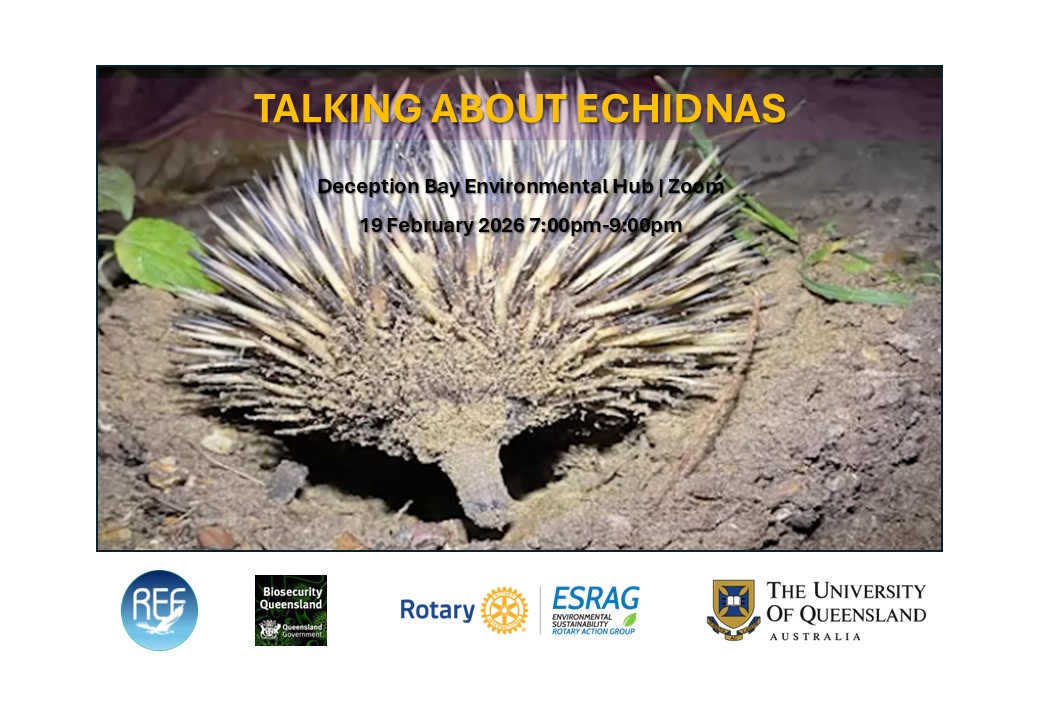
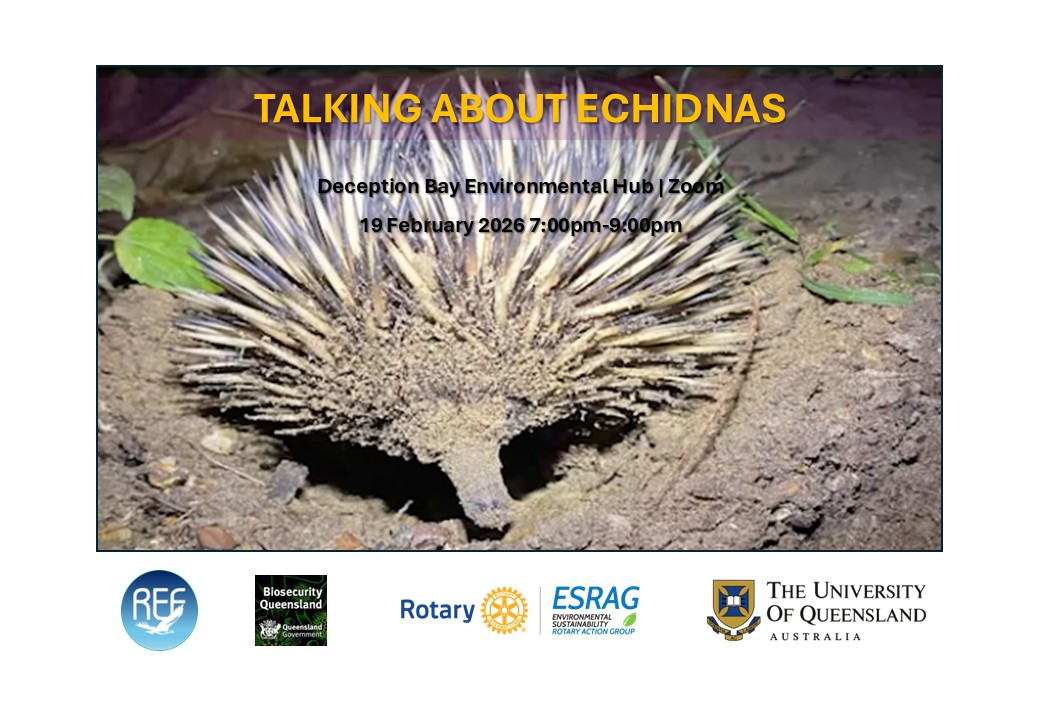
Talking about Echidnas
Feb 19, 2026 7:00 pm - 9:00 pm
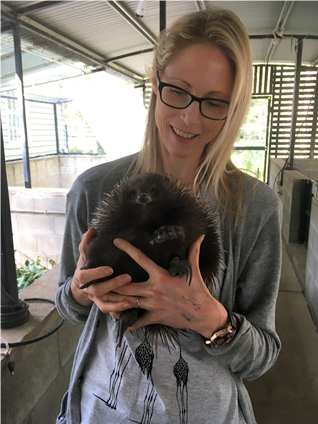
Dr Kate Dutton-Regester is a wildlife scientist specialising in wildlife ecology and conservation, veterinary epidemiology and invasive species ecology.
Kate is an affiliated researcher at the Centre for Biodiversity and Conservation Science and collaborates closely with Wildlife Queensland and manages their EchidnaWatch platform.
She leads the Echidna Conservation: Building a Baseline program, which addresses long-standing data gaps for the short-beaked echidna.
This program is generating the first regional-scale ecological dataset for echidnas in Southeast Queensland.
The initiative involves collaboration with over 10 local councils and community groups and comprises camera trapping, community-led field monitoring and eDNA pilot studies.
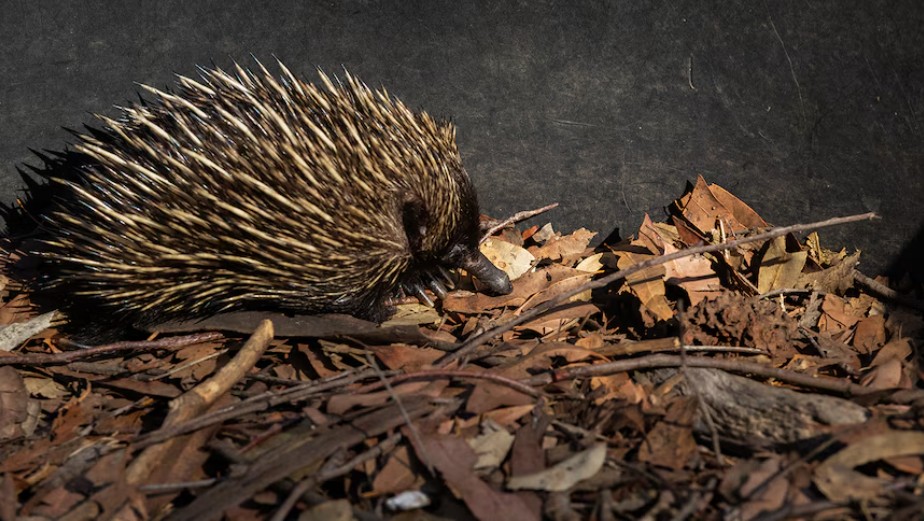
Short-beaked Echidna. Picture: Dr Kate Dutton-Regester
Some topical references: