ECO-FORUM | 17 April 2025
Talking about Humpback Whales
You are cordially invited to hear University of Sunshine Coast researcher Dr. Alexis Levengood "Talking about Humpback Whales".
Some of you may remember that Alexis presented "Talking about Dolphins" at last November's eco-forum.
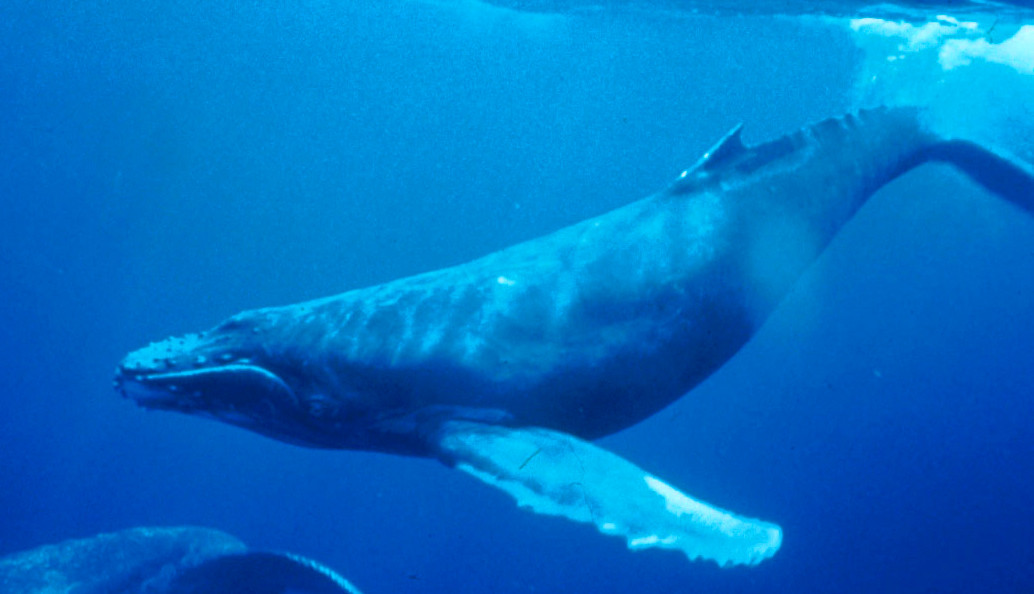
Humpback whales can grow up to 18.3 metres long and weigh up to 36.3 metric tons. They can live for 80 to 90 years.
They are known for their incredible migratory journeys, which can span thousands of kilometres. These migrations are driven by the need to find the best feeding and breeding grounds and are one of the longest annual journeys of any mammal.
Humpback whales normally consume vast amounts of food such as krill and small fish during the feeding season.
They fast during their migration from their colder feeding grounds in the Southern Ocean to their breeding grounds in warmer waters, where they mate and give birth during the Southern Hemisphere's winter months, between June and November.
Fasting can last several months, during which the whales rely on the fat reserves they have stored over the summer feeding season to support their energy needs. They do not need to expend energy on hunting while migrating.
Fasting helps them conserve energy for the long journey and the energy-intensive activities involved in reproduction such as mating, birthing and calf care. They do not mate for life but instead look for a new mate every breeding season.
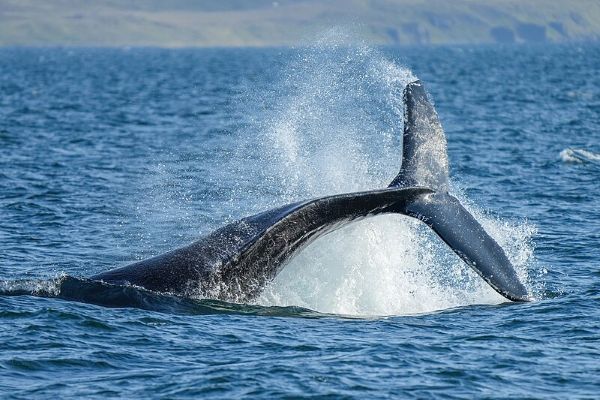
Humpback whale lobtailing. Photograph: Giles Laurent.
Lobtailing describes a whale (or dolphin) lifting its flukes out of the water and then bringing them down onto the surface of the water hard and fast in order to make a loud slap.
The Great Barrier Reef on Australia's East Coast is a major breeding area, and the waters of the Northwest Shelf along the Kimberly coast are also key for their reproductive activities. These regions provide relatively calm, warm waters, which are ideal for calving and nurturing their young.
The way whales (and dolphins) sleep is a perfect example of another incredible adaptation mammals have made to survive in the marine environment. They can sleep in phases by resting one hemisphere of their brain while the other stays alert.
It not only helps them continue to breathe and be aware of their surroundings but also allows them to keep swimming, navigate, and stay safe while resting.
Resting in this way ensures they are aware of predators, surface vessels and other pods encroaching in their space.
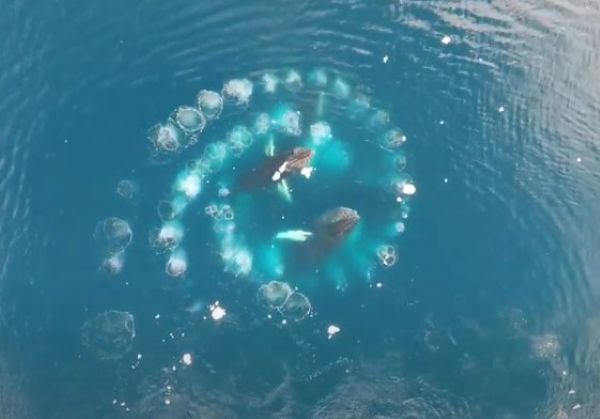
Humpback whales 'bubble net feeding' in the Antarctic Peninsula.
Working collaboratively, humpback whales swim in an ever-shrinking circle blowing bubbles below a swarm of krill to force them towards the surface.
What's fascinating is how these whales are known for their complex songs, which are thought to play a role in mating, as well as how they use bubble nets and other cooperative feeding strategies to catch their prey.