A healthy and thriving natural environment is central to our way of life.
Rotary-ESRAG is currently collaborating with the Queensland Conservation Council (QCC) on a couple of very important environmental issues.
"The QCC is the peak body for Queensland's environmental movement and represents more than 50 community environment groups across the state.
With the help of supporters, the QCC has been working to protect, conserve and sustain Queensland's environment since 1969.
Their vision is for a Queensland in which nature thrives, wildlife is protected, our industries don't cost the earth, and our communities are in balance with the health of the ecosystem."
PARTICIPATE OR HAVE YOUR SAY. Click on these links
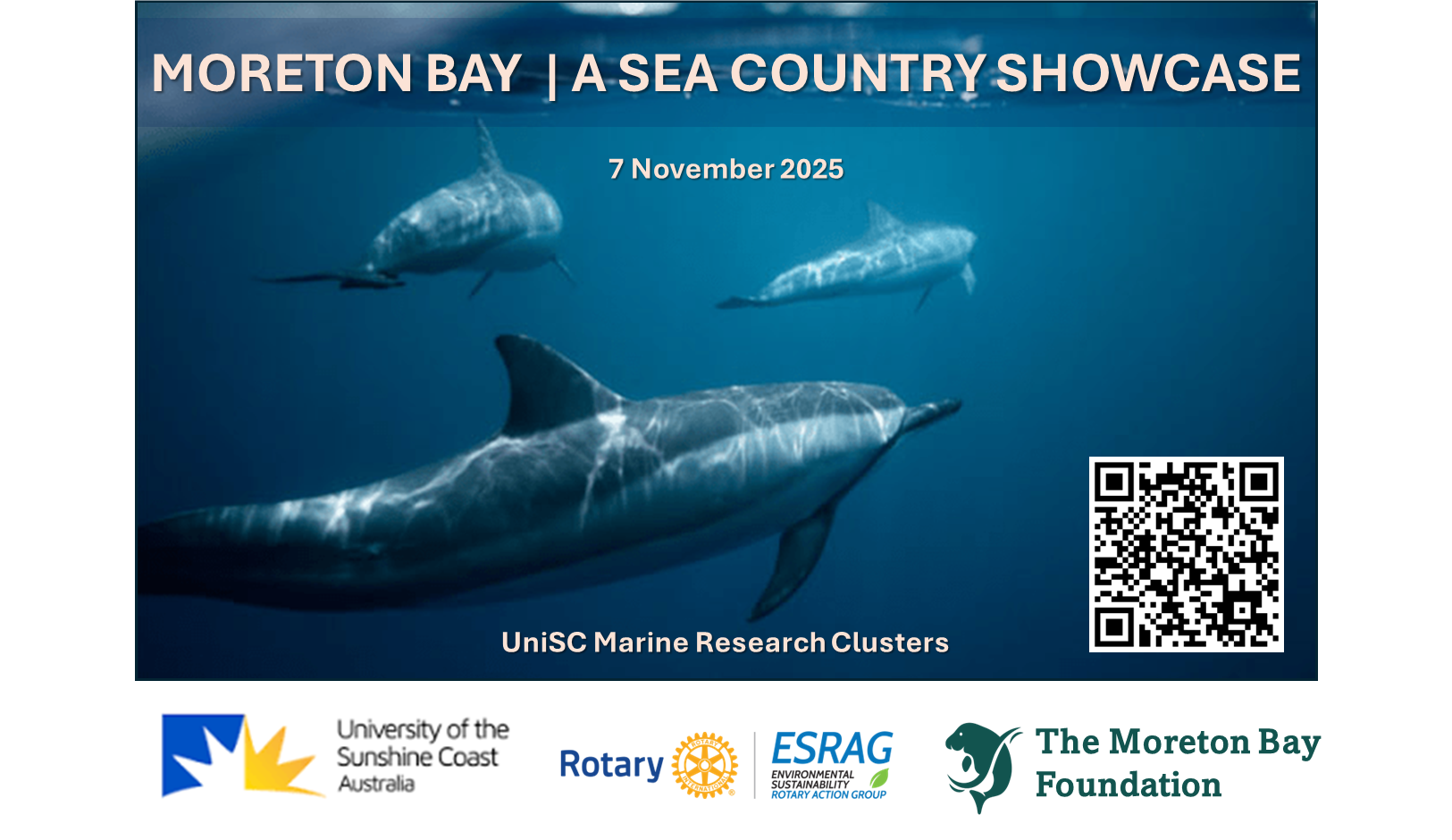
Friday 7 November 2025 | 8:30AM - 12:30PM University of the Sunshine Coast Moreton Bay Petrie Campus Qld 4502
University of the Sunshine Coast experts are at the forefront of marine research and innovation.
Hear ten eminent academics talking about Global impacts and their local influences; Local solutions to global problems; and Threatened species as a pillar of marine conservation.
Take the opportunity to ask our local scholars questions and understand 'where to next' for marine protection, conservation, restoration and the enhancement in Moreton Bay.
Thursday 16 October 2025 | 7:00PM - 9:00PM Deception Bay Environmental Hub
7 Joseph Crescent Deception Bay Qld 4508
Fire Ant. Invasive Species Council.
Come and hear Reece Pianta, Queensland-based Advocacy Manager from the Invasive Species Council (ISC) and Helen Tynan from Biosecurity Qld talk about fire ants.
The red imported fire ant (Solenopsis invicta) originated from South America and is an invasive species in Australia. Fire ants were first detected in Australia in Queensland in 2001.
The ant has the potential to severely impact Australia’s biodiversity. Fire ants are listed by the International Union for Conservation of Nature (IUCN) as one of the world's most invasive species.
The Invasive Species Council (ISC) advocates for the eradication of fire ants in Australia, highlighting their devastating impact on native wildlife, human health, and the economy.