COUNCIL CONVERSATION
On Thursday, February 6, Rotarians Colin Scobie and Peter Row met with Scott Waters, CEO of the City of Moreton Bay (CMB) Council and Cr Karl Winchester, Division 6 representative and Portfolio Councillor for Planning and Development.
The members of ESRAG ((Environmental Sustainability Rotary Action Group) provided updates on the Rotary club’s environmental and sustainability program including its major projects: Adopt-Humpybong Creek Landcare, Redcliffe Beautiful Beaches Coastcare and the Redcliffe Sustainable Business Network.
The Rotarians highlighted their involvement with all things eco: eco-events, eco-forums and eco-fests including their collaboration with the local high schools on eco-initiatives and REF Environmental and the University of the Sunshine Coast on monthly eco-forums.
The citizen scientists have long awaited the release of two important Council plans, both part of the CMB’s Environment and Sustainability Strategy:
- The Biodiversity Plan, which focuses on protecting and managing habitats and the diversity of animals and plants in the region.
- The Integrated Water Management Plan, which describes how sensitive water resources are managed as the city grows. It looks at all uses of water, including water in homes and businesses, water in the natural environment and water for agriculture and food production.
Since white settlement 200 years ago the land has been utilised in a way that caused environmental degradation (e.g., excessive grazing, improper farming techniques, deforestation, unplanned urbanization, and over-exploitation of natural resources), one or more contributing to soil erosion, biodiversity loss, water pollution, and desertification.
All Local Government Areas recognise that land must be managed in a sustainable way with consideration for its capacity, the risk of environmental harm and the long-term impacts on the ecosystem.
The City of Moreton Bay Council is intent on improving erosion and sediment control practices for works undertaken by its tiers of contractors (i.e., principal contractors to mum-and-dad contractors).
In July 2024 Council took steps to minimise environmental harm in waterways from erosion, soil sediment and construction by-products:
Mayor Peter Flannery said a pilot project had stopped the release of sediment into waterways and reduced the threat to wildlife, businesses and lifestyles. “It is anticipated a reduction of 30 per cent in erosion and sediment control complaints will be witnessed by the end of this year [2024],” the spokesperson said. "Future audits will be ongoing." Pilot project to save our waterways. Nick Crockford. Moreton Daily. 16 July 2024.
Messrs. Scobie and Row were keen to understand whether Council had achieved the stated 30% reduction following its education and enforcement activities, knowing that the attainment of such a goal would significantly benefit the regions’ catchments, waterways and Bay.
In 2013 the Sunshine Coast Council and then Moreton Bay Regional Council implemented the inaugural Pumicestone Passage Catchment Plan (CAP) under the Resilient Rivers Initiative, a program driven by the Council of Mayors South East Queensland (CoMSEQ), Queensland Government, SEQ Water, Unitywater, Queensland Urban Utilities and the SEQ Natural Resource Manager, Healthy Land and Water.
The Resilient Rivers Initiative aims to improve the health of SEQ waterways and Moreton Bay by delivering more coordinated catchment management to protect water and keep soil on the land and out of the waterways.
Catchment action plans focus on water quality and habitat destruction and fragmentation due to unmanaged land use.
The Lockyer Creek/Valley, Logan-Albert Rivers and Lower Brisbane River-Redlands Coast currently have current CAPs. The Resilient Rivers Initiative is to be expanded to include planning for the Caboolture Catchment (Caboolture River and Burpengary Creek) and Pine Rivers Catchment (North Pine and South Pine Rivers, Sidling Creek, Hay’s Inlet and Redcliffe creeks).
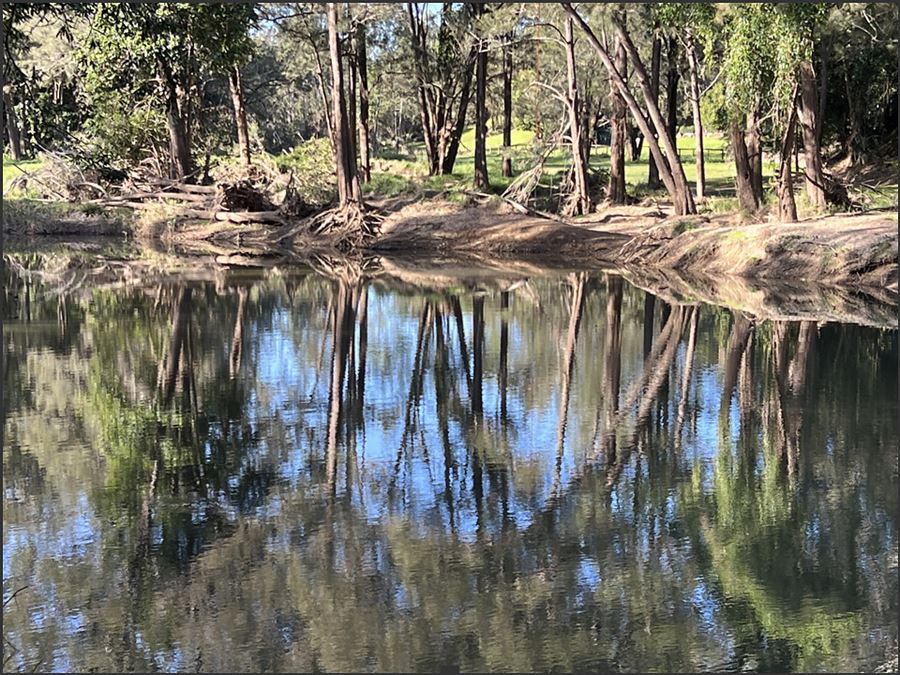
Anonymous. South Pine River. Albany Creek. Royal Geographical Society of Queensland CC-BY-4.0 licence.
The typical Catchment Action Plan comprises seven areas of focus: 1) Social and cultural values; 2) Marine habitats and species; 3) Terrestrial habitats and species; 4) Sustainable agriculture; 5) Sustainable industries and development; 6) Environmental change and adaptation; and 7) Enabling activities, the latter underpinning the other six areas.
The environmental advocates encouraged the Council functionaries to adopt a whole-of-city Catchment Action Plan (Pumicestone, Caboolture and Pine Rivers), that integrated all the necessary actions to stop the decline of and improve the region’s natural assets (i.e., core bushland, waterways, estuaries, other wetlands and the Bay).
The citizen scientists commended the report into the environmental health of Hobart’s waterways commissioned by the City of Hobart City Council.
This study used the presence and diversity of waterbugs to provide a benchmark for the ecological health of Hobart's four major rivulets.
The diversity of waterbugs at points along a waterway tells much about that waterway's long-term exposure to impacts such as pollution and sediment. The presence of more sensitive waterbugs indicates lesser impacts, whereas sites populated only by "tolerant" organisms suggest impacts of pollution, sedimentation and erosion. Tolerant waterbugs are those that have resilience to these impacts.
State of our Rivulets. A report into the Environmental Health of Hobart’s Waterways.
John Gooderham. National Waterbug Blitz. May 2023.
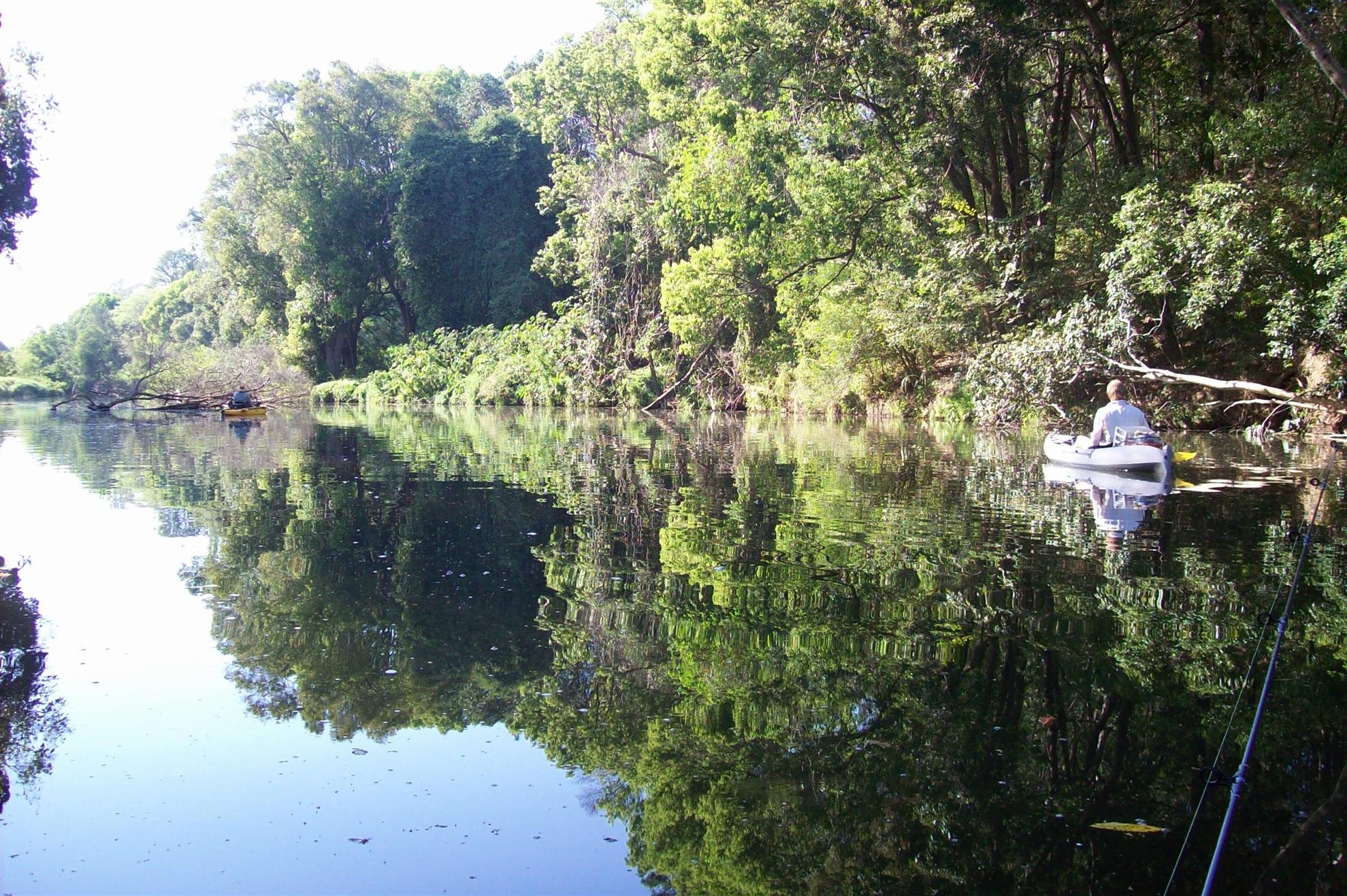
Messrs. Scobie and Row emphasized that by measuring the ecological health of the Pumicestone, Caboolture and Pines Rivers catchments over time by benchmarking and tracking the presence and diversity of waterbugs, the City of Moreton Bay would be able to determine which areas most need closer monitoring and remediation.
Waterbug monitoring is a Catchment Action Plan Enabling Activity, one which informs decision making on the proper management of land use regarding agriculture, industry and urban development.
When Waters, Winchester, Scobie and Row met, Mayor Peter Flannery was in Singapore. He was one of eleven SEQ mayors on a 10-day mission to meet with counterparts in Singapore, Manchester and Paris. Their brief was to examine transport, urban renewal, housing, sustainability, resource recovery and waste management initiatives and gain an understanding of post-2032 Olympic and Paralympic Games legacy opportunities.
All the important topics are on the table!
Quotes attributable to Colin Scobie, Vice President of Rotary Redcliffe Sunrise and Chair of ESRAG Oceania:
“Rotarians and ESRAG members are people of eco-action. We engage people through practical projects and build partnerships and collaborate with clubs, associations, businesses, academia, and environmental and community groups.
“We work with all levels of government to ensure that people and their use of land has a minimal impact on the environment.”
Quote(s) attributable to Scott Waters, CEO City of Moreton Bay Council:
“Cr Winchester and myself have appreciated the ongoing direct engagement with Peter and Colin. It provides a forum whereby community insight is offered for the betterment of our coastal ecology and waterways as well as our broader environment across the City.”
Extract | Council Minutes General Meeting 608 on 27 November 2024 (p28).
“Cr Karl Winchester praised the members of the Environmental Sustainability Rotary Action Group (ESRAG), a subcommittee of the Rotary Redcliffe that organizes environmental initiatives for local families. Council is a proud partner in supporting the organisation's efforts to raise environmental awareness through educational programs.”
IF YOU’D LIKE TO MAKE-A-DIFFERENCE?