Have you ever walked along the beach, picked up a shell, and wondered what its name was?
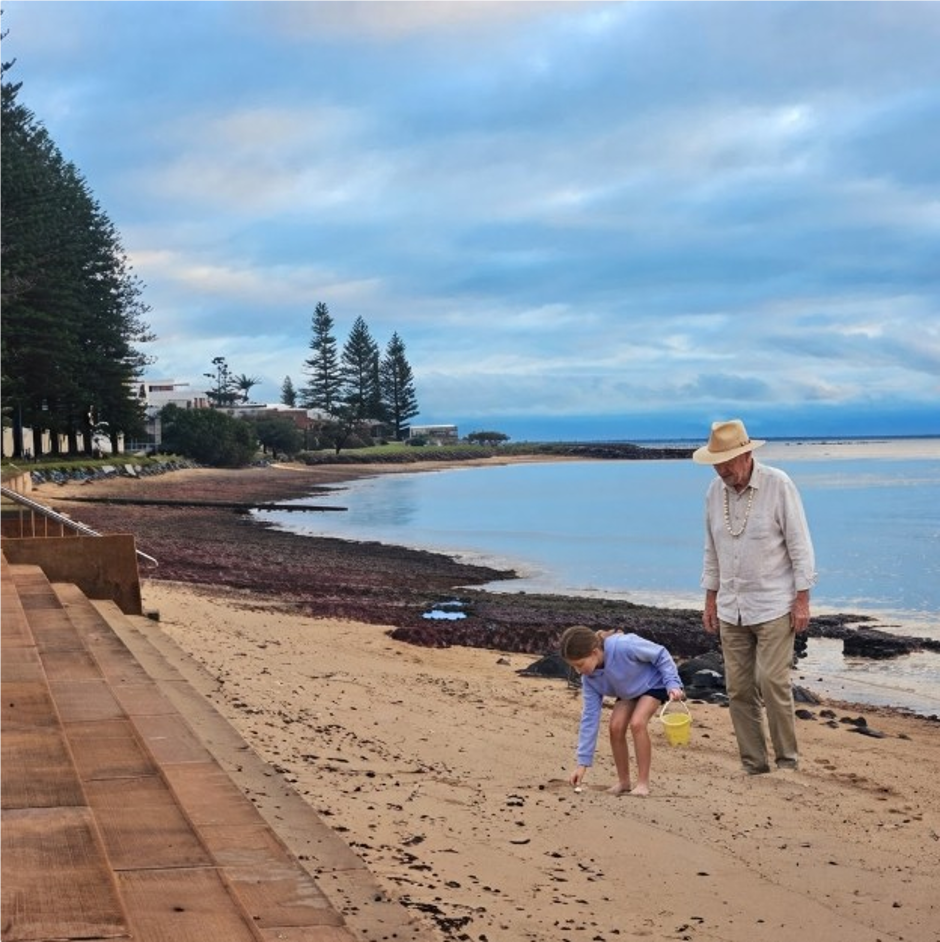
Ava did. She was nine, nearly ten, and she had a bucket that was supposed to be for water but had somehow become a shell museum instead. Her Pop walked beside her, hands behind his back, hat low against the late morning glare.
"Mollusca," he said, as if he were announcing a cricket score. "That's the big family. Soft body, no spine, and usually a shell for a house."
They were on Queens Beach South at Redcliffe, where the tide goes out a long, long way in mid-winter. The sand here wasn't the soft silt of the bay's western shores. It was gritty underfoot, coarse and pale, and further out near the waterline the ground turned stony, dark red rock showing through the wet sand in patches, like something buried and trying to surface.
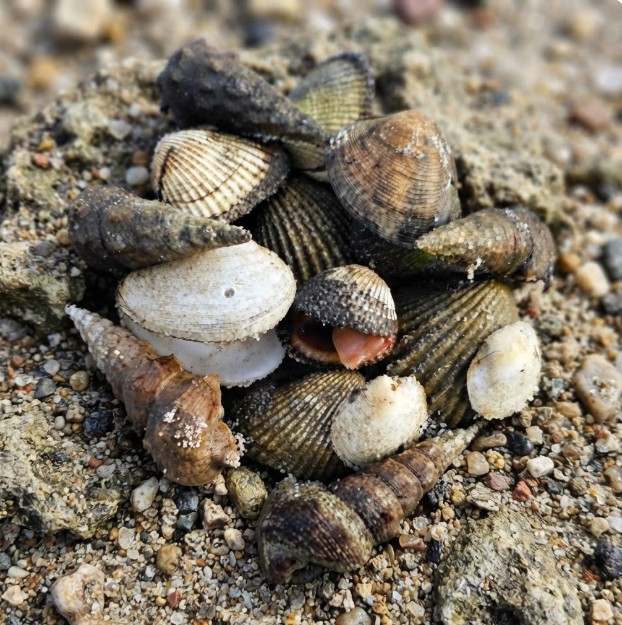
"Mud arks," Pop said, pointing at a stubby dark shell. "Pearl oysters — the old-timers here called them “Quampies”. Razor clams, orange cockles, wedge clams, Venus clams, pipis, mud whelks, sand snails, rock oysters. All of them live out in Moreton Bay. Most of what you find is empty."
Ava turned a Venus clam over in her palm. It was the colour of weak tea.
"Where's the animal gone?"
"Grown up, died, been eaten. Doesn't mean the shell's finished, though. Moreton Bay's got something like three hundred and fifty sorts of bivalves and over a thousand sorts of gastropods. That's a lot of shells. They feed the fish and the birds and the crabs, and the bivalves filter the water as they eat — clean it out, all the bits floating in it. The gastropods hunt other little creatures, or clear up what's rotting, or scrape algae off the rocks. Every one of them matters to the bay."
Ava liked that. A shell wasn't just a shell. It was a house, a meal, a water filter, all at once.
"People count them, you know," Pop went on. "There's a place in the Netherlands where whole communities do shell surveys along their coast, writing down what they find, so they can see how their beaches are changing."
"Can we count ours?"
"We can." He pulled a stub of pencil from behind his ear. "But here's the rule, and it's an important one. We look. We photograph. We say the name out loud if we know it. Then we put it back."
They worked their way down to the rocky ground at the tide line, picking carefully over the wet stone. Ava found a pipi wedged in a crevice, a sand snail half sunk in the grit, a wedge clam the exact grey of the rock around it. She laid each one out on a flat stone and took its photo with Pop's smart phone.
Mud ark. Pipi. Sand snail.
Then she set it down again and stepped back. Her feet left prints in the gritty sand that the next tide would smooth away.
Her bucket came home empty, which felt, strangely, like the best kind of full.
"Pop?"
"Mmm."
"Can we come back tomorrow?"
He smiled at the long flat beach and the far-off water.
"The tide'll be different tomorrow," he said. "That's the whole point."