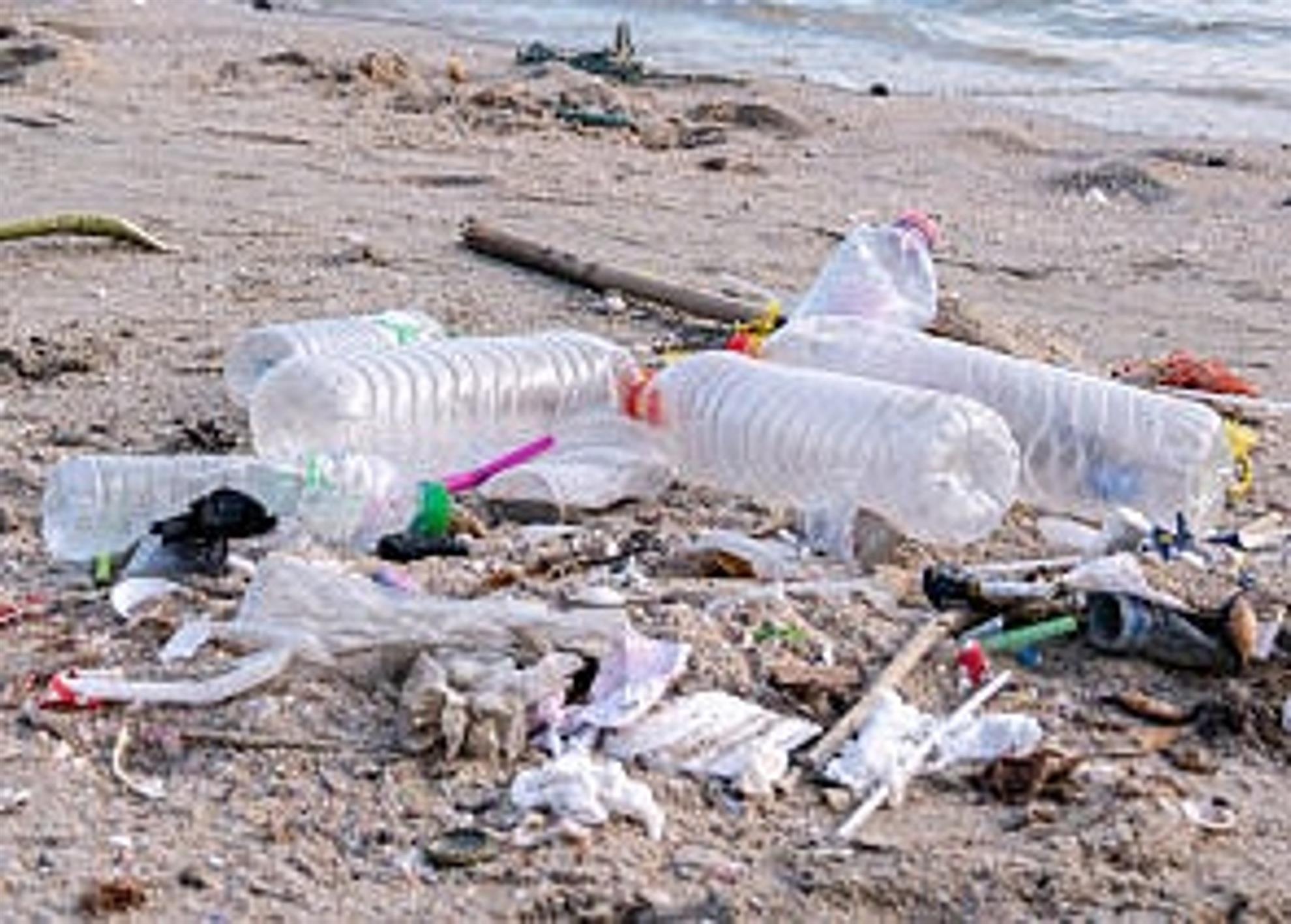
 There are eight billion tonnes of plastic polluting the earth. Elvis Okoffo, Research Fellow at the Queensland Alliance for Environmental Health Sciences (QAEHS), The University of Queensland estimated there were at least 7,000 tonnes of microplastics in Moreton Bay.
He said this was the equivalent of 1.5 million plastic bags, or enough to fill three Olympic swimming pools with plastic.
According to the ABC News "the most common pollutants were polyvinyl chloride (PVC), used in pipes and building materials, and polyethylene (PE), which is used in single-use items such as bottles and food wrappings".
Undaunted some individuals continue to make a difference.
The annual collection of marine debris from three local beaches, led by Rotarian Ian Sutherland, continues to provide valuable insights into the state of our coastal environment.
Mr. Sutherland, recognised as our local environmental champion, has consistently collected marine debris for a decade. Taking steps to make a difference. Moreton Daily. 13 February 2024.
PREVIOUS FINDINGS (2023–2024)
In the July 2024 collection, an increase in the weight of debris was recorded compared with 2023.
This finding was reported to Council and subsequently discussed in a meeting with Cr Tonks, Cr Ruck and Cr Winchester.
Following that meeting, a grant was allocated to support signage initiatives, and discussions highlighted the relevance of the NSW “Don’t Be a Tosser” campaign as a potential model for community education.
This finding was reported to Council and subsequently discussed in a meeting with Cr Tonks, Cr Ruck and Cr Winchester.
Following that meeting, a grant was allocated to support signage initiatives, and discussions highlighted the relevance of the NSW “Don’t Be a Tosser” campaign as a potential model for community education.
CURRENT RESULTS (2024–2025)
The July 2025 collection has demonstrated encouraging results:
The July 2025 collection has demonstrated encouraging results:
- Total weight of debris: decreased from 12.5 kg (2024) to 11.1 kg (2025).
- Total items collected: reduced significantly from 853 items (2024) to 281 items (2025) across 12 categories, as recorded using the Tangaroa Blue AMDI data collection system.
COMMUNITY IMPACT
Ian Sutherland reports noticeable community participation, with more people—particularly children—involved in collecting debris.
The installation of signage is credited with raising awareness. As Mr. Sutherland observed: “I have noticed more folk collecting debris and the signage has increased awareness. Most probably it is children who are telling their parents that other marine animals live in this high biodiversity intertidal zone where the sea interfaces between the ocean and terrestrial habitat.”
The installation of signage is credited with raising awareness. As Mr. Sutherland observed: “I have noticed more folk collecting debris and the signage has increased awareness. Most probably it is children who are telling their parents that other marine animals live in this high biodiversity intertidal zone where the sea interfaces between the ocean and terrestrial habitat.”
CONCLUSION
The positive results from the July 2025 marine debris collection demonstrate that community awareness initiatives and Council-supported signage are having a measurable effect. Continued support of these activities is recommended to sustain and build upon these improvements.
The positive results from the July 2025 marine debris collection demonstrate that community awareness initiatives and Council-supported signage are having a measurable effect. Continued support of these activities is recommended to sustain and build upon these improvements.
See Redcliffe Beautiful Beaches for further background.