
Cold. Colder nor York ever were. I mun sit here i' th' dark of t' cellar, lantern low, wet powder stinking i' my nose, and count t' hours till morning. Thirty-six barrels, lads. Enough to pull Parliament down about King James's ears and every black Protestant lord i' t' chamber wi' him.
Catesby swore it were God's work. I swore it too. Mebbe God weren't listening.
For a letter got writ. Some soft Catholic cousin wi' a conscience, and now they come tramping ower t' cobbles. I heared 'em — torches, boots, men's voices. T' door opens and there's Suffolk's men wi' pikes and a justice squinting at me like I were summat dug up out o' t' ground.
"John Johnson," I said. A lie. It were t' only one I had left.
They found t' fuses. They found me. And I knew then — not a bang, not a blaze, nobbut a rope and a butcher's knife at t' Tower. Catesby'll be dead i' a field by now. All that powder, wasted. All that hope.
Eh. It were a grand plot, mind. Grand and daft.
Guy Fawkes was the Yorkshire explosives expert left in the cellar on the night of 4 November 1605, fuse and matches ready, to light the 36 barrels of powder under the Houses of Parliament.
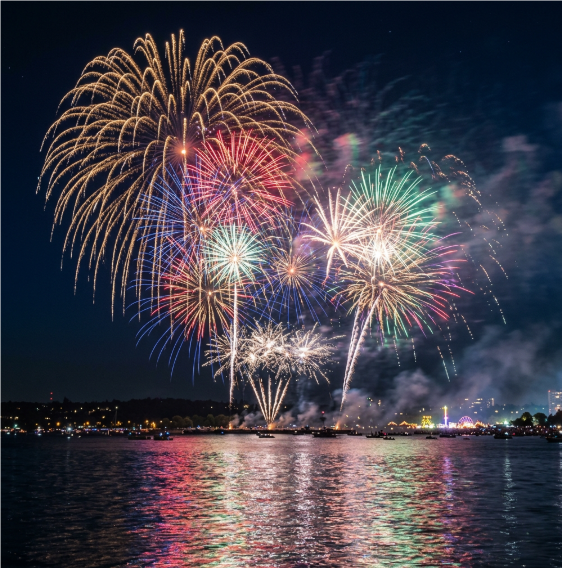
Little would Guy Fawkes know ... Fireworks are now used for celebration and ceremony — marking New Year, Diwali, Bonfire Night, independence days, weddings and festivals with light and noise. They signal, honour and entertain: military salutes, opening ceremonies, sporting finals. They also serve as warnings and distress signals at sea and in remote country, as crowd-moving distraction, and, in wartime, as weapons. Today, entertainment and ritual dominate.
FIREWORKS: A FEW MOMENTS OF JOY, A MUCH LONGER BILL
The fun is concentrated in the people watching, while the costs land on everyone else.
HEALTH AND INJURIES. For example, In the United Kingdom, the national Health Service (NHS) figures record 123 hospital admissions in England attributed to fireworks in 2024–25, a number that excludes people treated and sent home, so the real injury toll is higher. Air pollution matters more at scale: the UK environment department puts the damage cost of fine particulate matter (PM2.5) at £114,411 per tonne in 2025 prices. Multiply that across a night of displays and the health cost runs well beyond the price of the fireworks themselves.
THE VALUE SIDE. Fireworks aren't purely cost. They support retailers and display organisers and carry cultural weight — Bonfire Night, Diwali, New Year. UK government figures cite fireworks imports averaging £27 million a year from 2021 to 2024.
We need to weigh social costs alongside safety, business and cultural value.
ENVIRONMENT. Fireworks affect the environment on several fronts, and the damage runs from the air down to soil, water, plants and animals.
Air quality. Fireworks displays release a sharp pulse of fine particulate matter (PM2.5), sulphur dioxide, nitrogen oxides, carbon monoxide and metal salts — the compounds that give fireworks their colours (strontium for red, barium for green, copper for blue, aluminium for white).
Concentrations can spike to many times normal urban levels for hours after a display, and perchlorate oxidisers and unburned propellant linger in the smoke plume. For example, the UK government's own damage-cost guidance puts PM2.5 at roughly £114,411 per tonne in 2025 prices, which is a way of pricing the health burden that pollution carries.
Flora. Most direct plant damage is localised: fallout of sulphur and metal salts can scorch foliage and acidify the soil immediately beneath launch sites, and heavy deposition suppresses growth in that footprint. The bigger effects are indirect — the smoke haze reduces light reaching plants, and the acidic deposition plus perchlorate residue can shift soil chemistry.
Perchlorate in particular is persistent and mobile, taken up by plants and accumulating in leafy tissue. Firework debris — paper, cardboard, plastic casings, unburned chemicals — also litters parks, farmland and waterways, and the burn scars left by ground-based displays can take a season or more to recover.
Fauna. This is where the evidence is strongest. Fireworks are loud, sudden and unpredictable, and animals have no way to interpret them.
A peer-reviewed Dutch study found roughly 1,000 times as many birds in flight during New Year's Eve fireworks as on an ordinary night, with the disturbance reaching several miles out from the displays.
Birds flushed at night burn energy they can't spare, abandon roosts, and in cold weather some never return.
Dogs, cats, horses and livestock show heightened fear responses, panic flight and, in horses, a real risk of injury.
Wild mammals flee their burrows and dens; nesting birds may desert eggs or chicks.
Aquatic life is hit too — perchlorate and metal residue wash into waterways, where it accumulates in fish and invertebrates, and the noise travels efficiently underwater.