
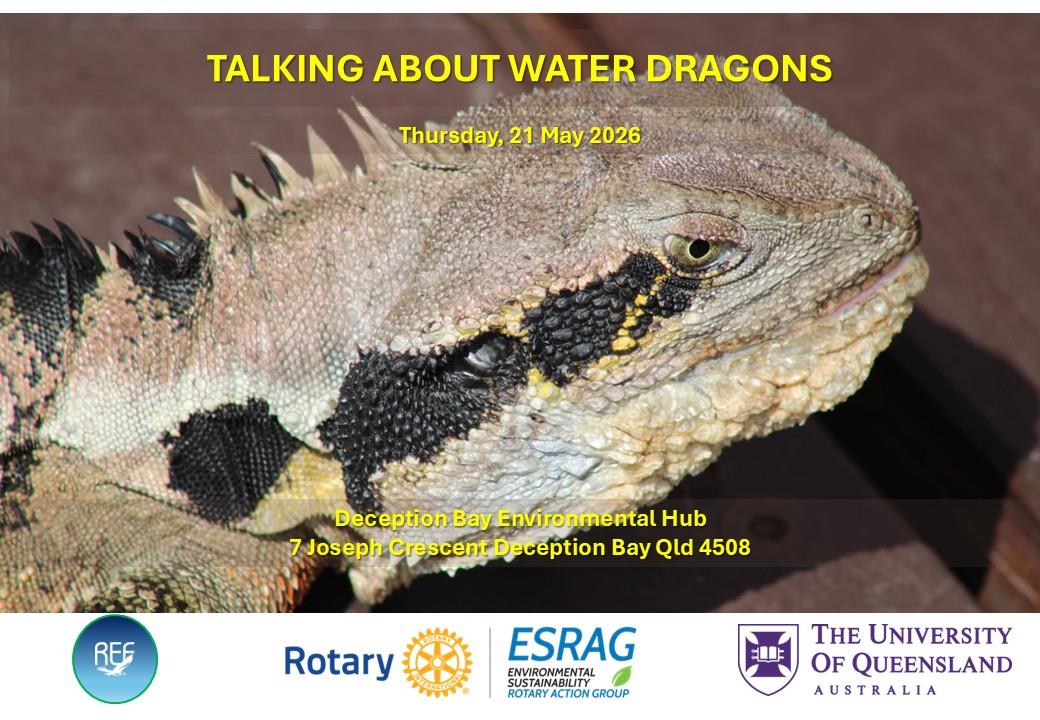
Talking about Water Dragons
May 21, 2026 7:00 pm - 8:00 pm
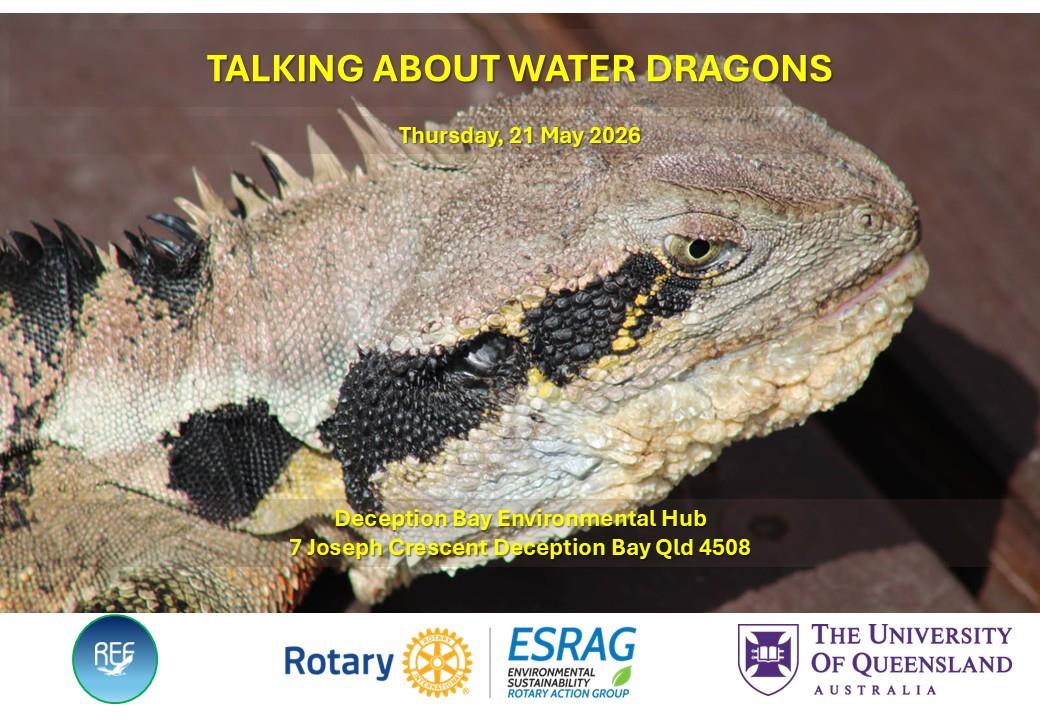
EASTERN WATER DRAGON
- Appearance: They can grow up to about 90 cm long, with long tails used for swimming. Males often have red or orange chests and larger heads, while females are smaller and less brightly coloured.
- Habitat: Common along waterways like the Brisbane River, Moggill Creek, and throughout coastal Queensland. They prefer areas with dense vegetation and nearby water.
- Behaviour: Diurnal and semi-aquatic, they bask during the day and sleep in trees or burrows at night. They can hold their breath underwater for up to 30 minutes.
- Diet: Omnivorous — feeding on insects, small vertebrates, flowers, fruit, and sometimes molluscs or fish.
- Breeding: Females lay 6–18 eggs in sandy soil, usually in late spring. Hatchlings appear around January, often hiding among leaf litter to avoid predators.
They’ve existed for roughly 20 million years, earning their reputation as one of Australia’s most ancient and fascinating reptiles — even nicknamed “intelligent lizards” for their adaptability and complex social behaviours.
You’ll often see them sunning on creek banks or even in city parks across Queensland, perfectly at home between bushland and suburbia.
OUR SPEAKER: SAM GALLAGHER-BECKER
Sam Gallagher-Becker is a PhD student at the University of Queensland, studying wildlife disease using quantitative genetic methodologies.
His research focuses on how pathogens spread through wild populations and how hosts respond to infection through behavioural, physiological, and evolutionary mechanisms.
From a young age he had a strong interest in Australian wildlife, particularly reptiles, and during his high school biology studies he developed a fascination with genetics and evolution.
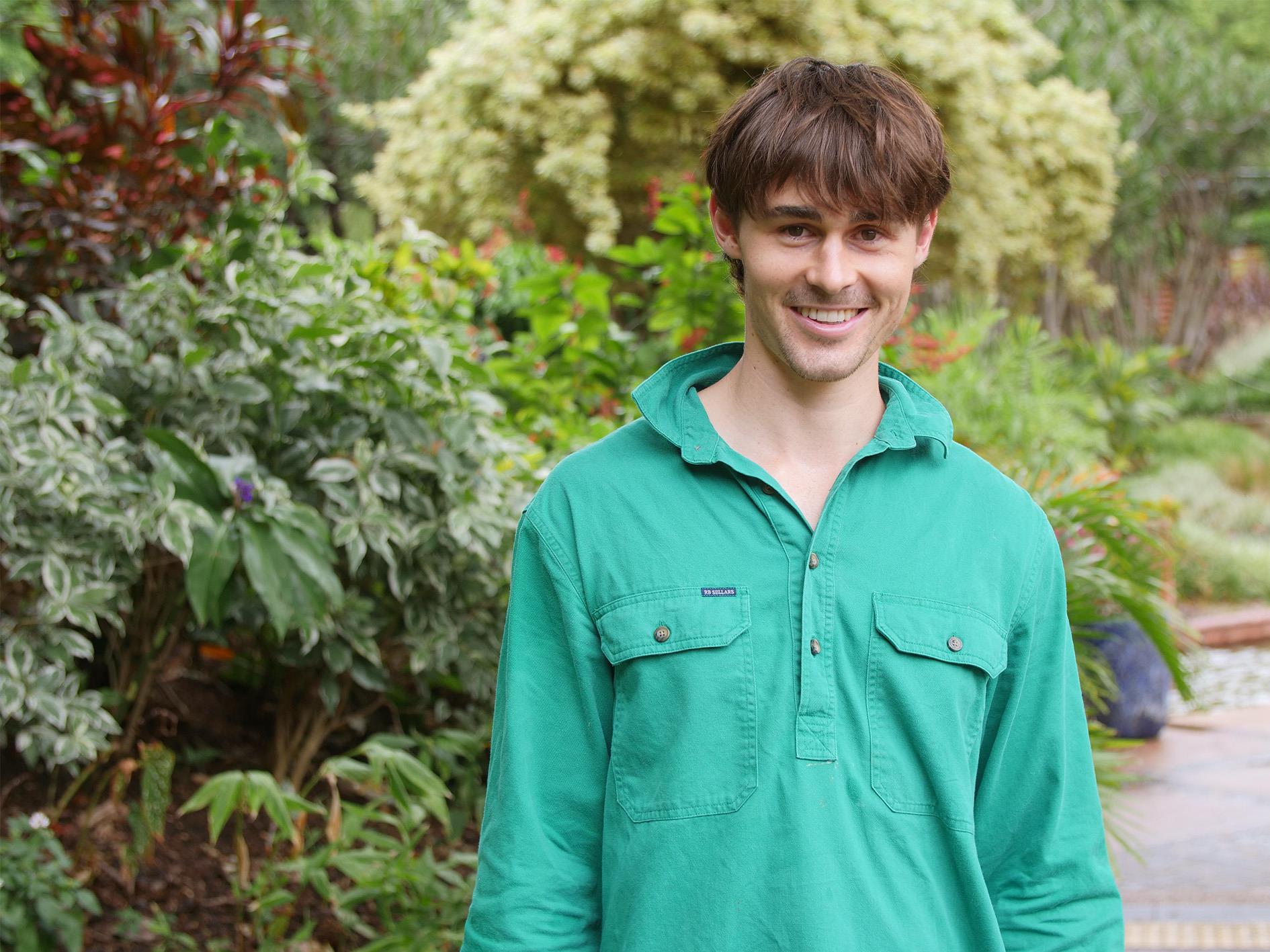
Sam Gallagher-Becker
This led Sam to enrol in a Bachelor of Advanced Science (Genetics) at the University of Queensland in 2020.
During his undergraduate studies, he discovered a strong aptitude for statistical data analysis, which motivated him to pursue a research career in quantitative genetics.
In 2022, he began working with Associate Professor Celine Frère on her research into eastern water dragons, a system focusing on a native Australian reptile that integrates various types of data (genetics, behavioural, disease) with advanced statistical methodologies to understand the ecological mechanisms that drive population dynamics and individual variations in animal behaviour and disease outcomes.
Sam initially joined the project as a volunteer and later completed his Honours research under her supervision, where he investigated the transmission dynamics of a fungal disease outbreak in a water dragon population.
He graduated in 2024 with First Class Honours and a University Medal and presented his research at the International Society of Behavioural Ecology Conference 2024 in Melbourne.
He has since commenced his PhD, during which he published his Honours research and established international collaborations, including research visits to the University of Edinburgh and Trinity College Dublin.
Following the completion of his PhD, he aims to apply his expertise in quantitative genetics to address applied challenges in animal populations, ranging from conservation of wildlife populations, to increasing the productivity of livestock and animal production systems.
THE PRESENTATION
Researchers from the University of Queensland have found that a little understood (N. barbatae) fungus spreading through the environment is putting Australia’s reptiles at risk of extinction.
“We need to get on the front foot and create strategies to control and prevent outbreaks in Australian reptile species,” Mr Gallagher-Becker said.
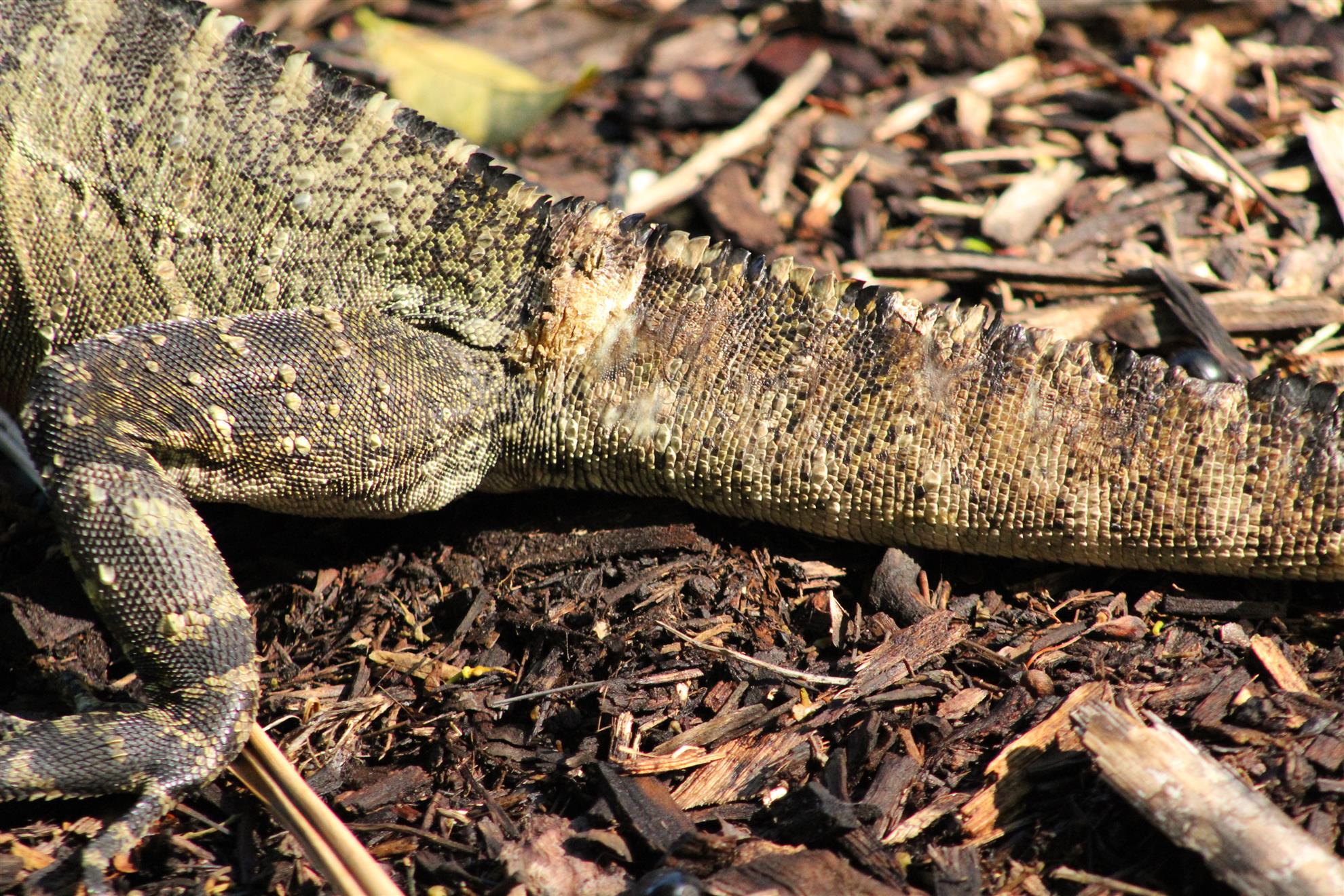
The N. barbatae fungus affects the skin. Note the yellow discolouration behind the back leg.
The presentation will answer these questions:
- How does evolution in response to disease work
- What factors can constrain/hinder this process
- Why is this especially important for fungal diseases
- How we can measure evolutionary potential and constraints
- What is the evolutionary potential for the water dragons to evolve greater resistance to fungal infection
- What do the results mean for their survival, and potentially other species
- How can we use this knowledge to inform conservation actions
SOME REFERENCES: