
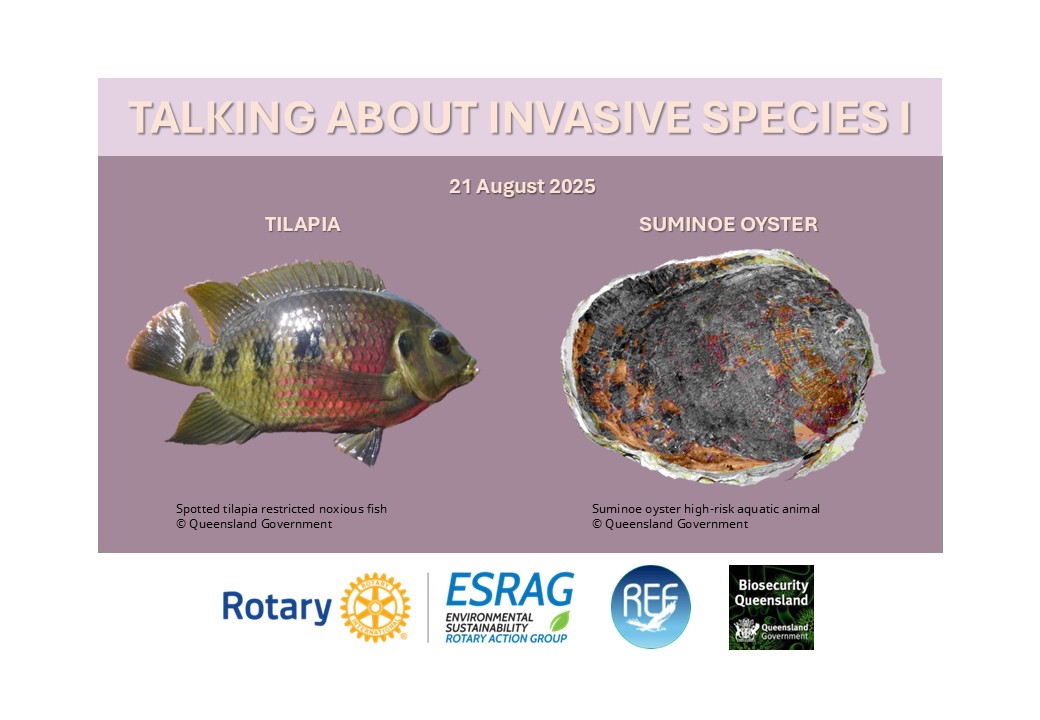
Talking about Invasive Species I (Tilapia and Suminoe Oysters)
Aug 21, 2025 7:00 pm - 9:00 pm
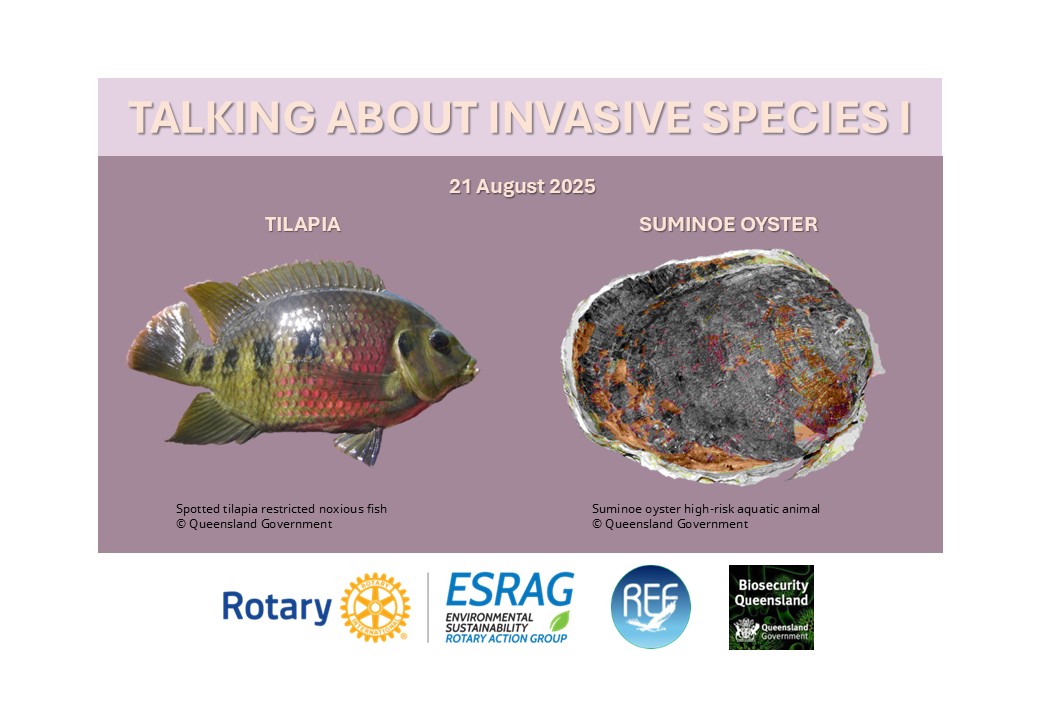
TILAPIA
Tilapia successfully invade and dominate many freshwater habitats due to their high ability to reproduce and survive in very different conditions, and simple food needs.
They can rapidly outnumber native fish and dominate aquatic communities and can survive environments where native fish find coping difficult.
Unlike many native freshwater fish, tilapia can retreat downstream into highly saline waters during drought and move back upstream when conditions improve.
Tilapia have a detrimental impact on native species as they compete for habitat and food, behave aggressively and disturb plant beds when building nests.

Tilapia (Biosecurity Qld)
HAYDEN FERGUSON
Hayden is the Principal Policy Officer pest fish with Biosecurity Queensland’s Invasive Plants and Animals and his work focusses on programs in awareness and prevention of invasive freshwater aquatics.
He has previously worked for Queensland Parks and Wildlife in marine parks in the Great Barrier Reef region and wildlife operations management in Cairns, prior to which he worked in state conservation in Southern Africa.
Hayden has worked in conservation extension and marine and terrestrial protected area management and has a background in community engagement, policy development, compliance and investigation.
In his current role, Hayden primarily focusses on prevention of new aquatic invasive species through both awareness and regulation. Programs and initiatives in established pest are also undertaken partnering with First Nations Groups , local government, and key stakeholders.

Hayden Ferguson
SUMINOE OYSTERS
The Suminoe oyster (Magallana ariakensis) is a fast growing, large rock oyster belonging to the Ostreidae family of salt-water bivalve molluscs.
The shell provides protection from predation and can grow to up to 240 mm long.
Colours of the lamellae on the outer surface vary from grey and yellowish, brown to purple, while the inner surface of the valves is smooth and greyish-white, with purple on the edges.
The muscle scar on the inner surface of the valves is large and purplish. It has unequal valves and an irregular shape.
The internal shell lacks chomata (small ridges on the inside of the shell around its margin).
Suminoe oysters are difficult to identify in the field from other species of native rock oysters, unless you open them or until they grow to a size larger than other species.
The Sumoinoe oyster Very similar in appearance to the Black scar oyster (Magallana bilineata), another introduced marine pest found in north Queensland.
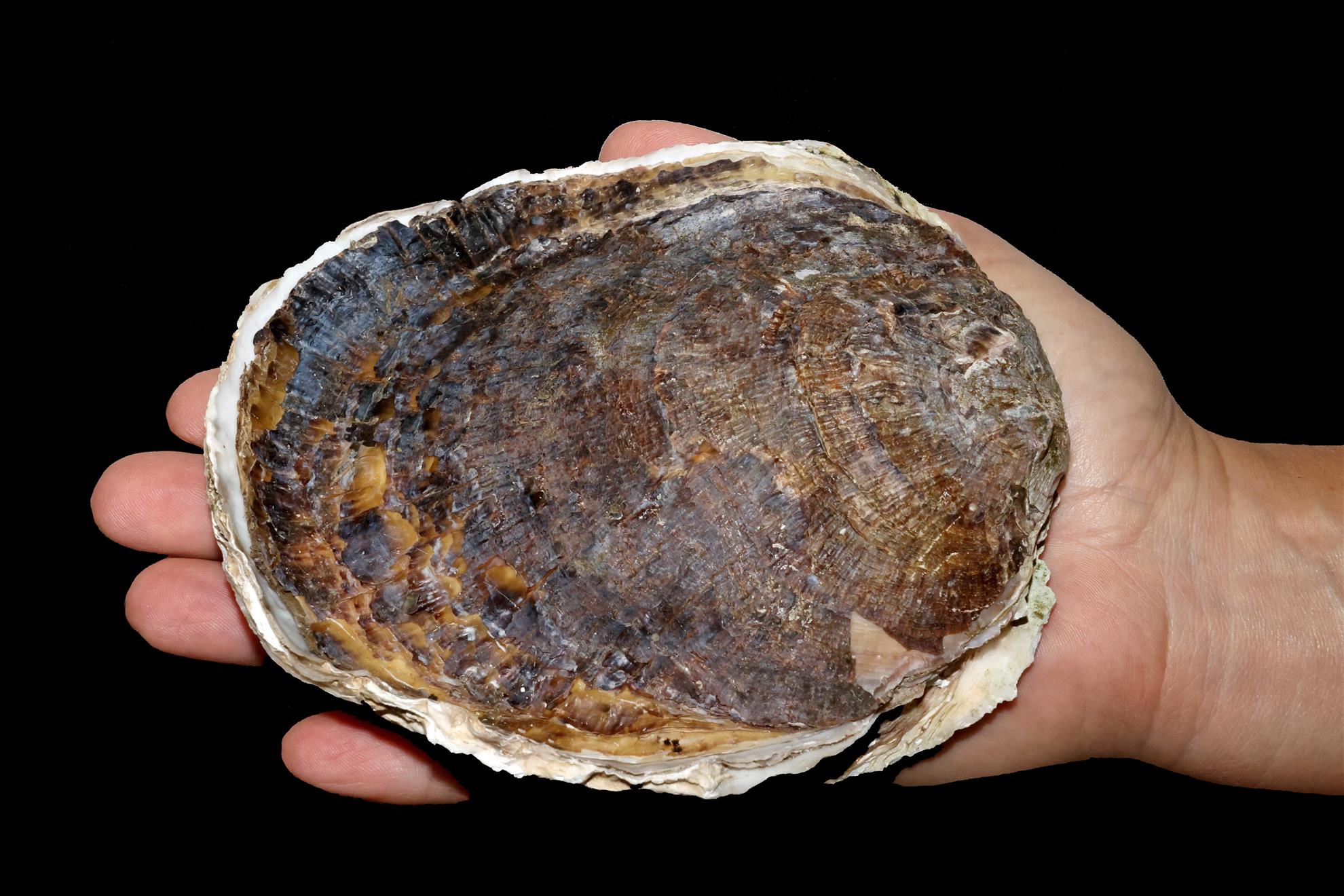
Suminoe Oyster
ANITA WOHLSEN
Anita Wohlsen is the Principal Biosecurity Officer for marine biosecurity at Biosecurity Queensland.
She currently manages the Marine Pest Prevention and Preparedness function which aims to improve awareness of the threat of marine pests and what can be done to prevent their introduction, enhance preparedness of key stakeholders to respond to a detection through delivery of emergency response exercises, and oversees the implementation of surveillance and monitoring activities including the port based Q-SEAS eDNA marine pest surveillance program.
Anita has over 20 years experience working for the Queensland government in marine biosecurity and fisheries management. She is skilled in natural resource management, policy development, stakeholder engagement, project management and emergency response coordination.
Anita leads a team that aims to improve marine biosecurity in Queensland and protect our valuable marine ecosystems and the industries that rely on them.
She is also the Queensland representative on a number of national marine pest biosecurity committees and task groups and enjoys working with her interjurisdictional and international colleagues to try and address the challenges associated with marine biosecurity.
Anita particularly loves the opportunity to work collaboratively with others also driven to preserve our marine environments and getting out on the water and involved in the hands on aspects of marine pest surveillance and management.
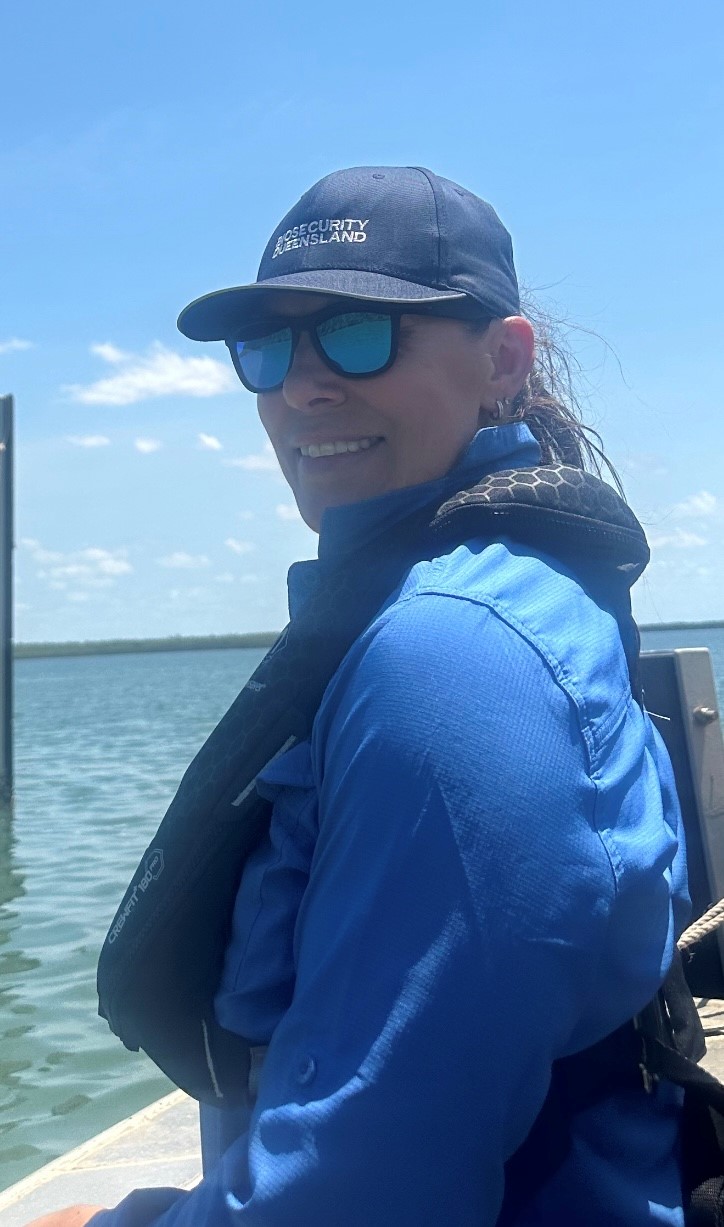
Anita Wohlsen