
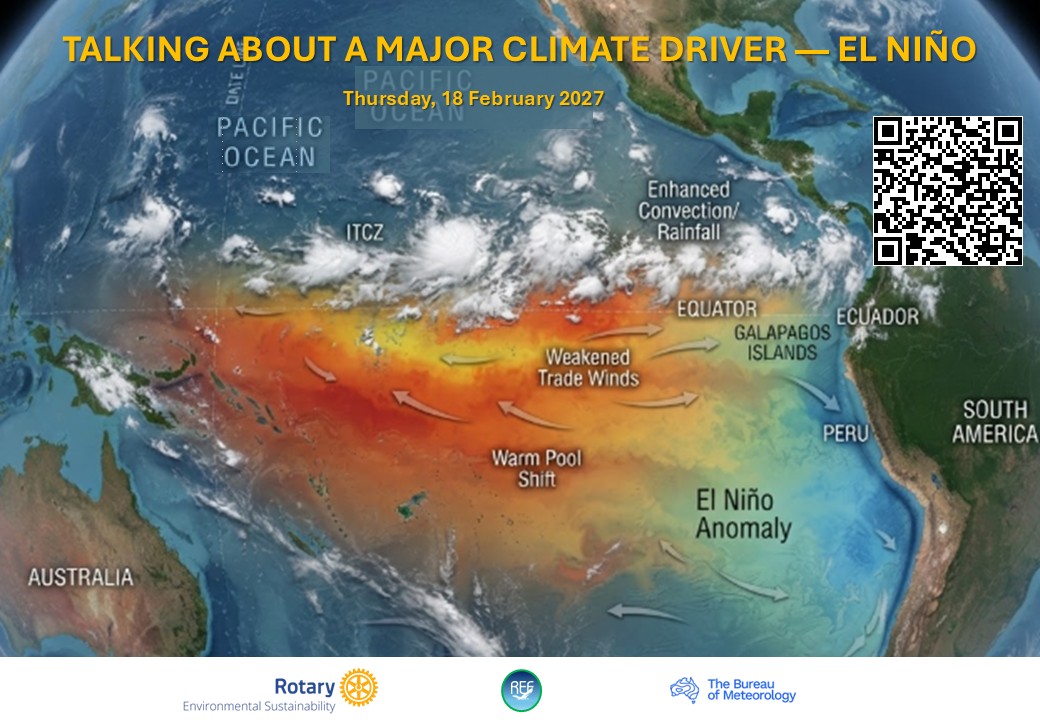
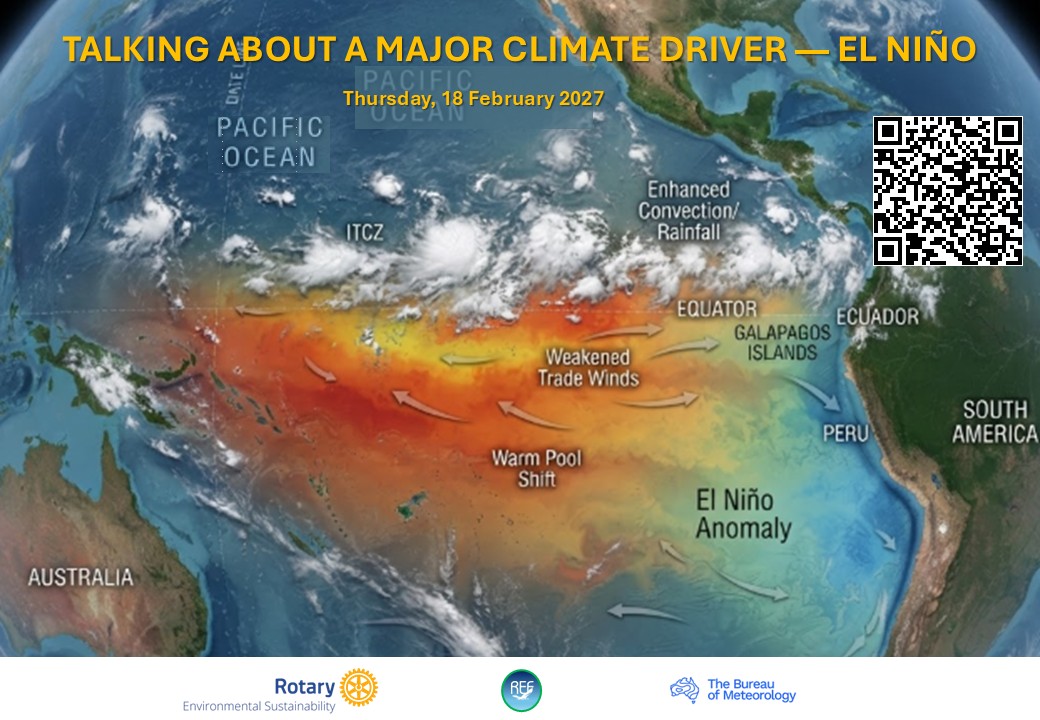
TALKING ABOUT A MAJOR CLIMATE DRIVER — EL NIÑO
Feb 18, 2027 7:00 pm - 9:00 pm
NOTE: THIS EVENT IS ALSO AVAILABLE ONLINE.
Register and the Microsoft Teams meeting link to join online will be provided in your 'Registration Confirmation' email.
🌦️OUR PRESENTERS
CAITLIN MINNEY
Caitlin Minney is a Climatology Specialist at the Bureau of Meteorology working in extended prediction. She joined the Bureau through the APS STEM Graduate Program in 2023.
Caitlin's work includes the analysis of climate drivers, drought, the long-range forecast and high risk weather season preparedness. Her communication experience covers presenting the long-range forecast on ABC Landline, multiple regional and national radio appearances and cross-agency high-risk weather season and hazard preparedness.
🎓 ACADEMIC BACKGROUND
Caitlin Minney is deeply embedded in atmospheric and earth sciences at the University of Melbourne, where her academic history includes:
- Doctor of Philosophy (PhD): Enrolled as a PhD student in in the School of Geography, Earth and Atmospheric Science researching drought attribution in southern Australia.
- Master of Science (Earth Science- Atmospheric Stream): Completed with First Class Honours (2020–2022), focusing her research on tracking carbon monoxide emissions from biomass burning during Australia's catastrophic 2019–2020 "Black Summer" bushfires.
- Bachelor of Science (Climate and Weather): Completed from 2016–2019.
QIAN ZHOU

Qian Zhou is a Climatology Specialist and public spokesperson with the Australian Bureau of Meteorology. Her expertise spans seasonal forecasting, climate variability, and long-range outlooks, with a particular focus on climate drivers such as El Niño, La Niña, and the Indian Ocean Dipole.
Qian regularly provides climate analysis and commentary for national and regional media, helping translate complex climate science into practical information that supports decision-making across agriculture, emergency management, government, and the broader community.
🎓 ACADEMIC BACKGROUND
- Master of Climate Change, Australian National University (ANU)
- Bachelor of Applied Meteorology, Nanjing University of Information Science & Technology (NUIST)
IN THE NEWS
- BOM winter forecast predicts unusually warm season as El Niño increasingly likely. ABC News. 21 May 2026.
- The incoming ‘super’ El Niño will create chaos around the world – and we are far from ready for it. The Guardian. 15 September 2026.
- ‘Jaw-dropping’ El Niño bursts through temperature record months before peak. The Guardian. 21 September 2026.
- ‘Flash droughts’ on the cards as super El Nino intensifies. The Financial Review. 25 September 2026.
- El Nino expected to have minimal impact on Australia. The Western Producer. 26 September 2026.
- Australian scientists develop world-first satellite technology to measure eucalypt flammability. ABC News. 27 September 2026.
- El Niño nears record levels as ocean conditions tilt in unfavourable direction for eastern Australia. Renew Economy. 1 October 2026.