Posted by Robert Chambers
on Jul 09, 2013
Unfortunately many people in the city and Richland County do not understand the economic impact of the Wahpeton Airport. That it is far more than a strip of pavement for a few aviation hobbyists was explained to the members of the Wahpeton Rotary at their regular noon meeting at Prante’s on Tuesday, July 9, 2013 by the Board Chair of the Wahpeton Airport Authority Jim Aldrich. In fact the runway is not even asphalt, it is fourteen inches thick of concrete, seventy-five feet wide; and five thousand one hundred feet long thus able to accommodate airplanes up to twenty thousand pounds in weight. That runway quality and length is fundamental to the economic impact of the airport as modern corporate jets require those specifications. Typical would be the twenty-four seat Pioneer Seed corporate jet that visits regularly. That those visits are possible has been a part of the recent increase in size of the Wahpeton facility to the largest soybean operation in the nation. Cargill and even the CEO of Wick Communications, owners of the Daily News, use the airport to fly in and efficiently use his time when he needs to be here. As it rarely directly affects them most people are unaware of this traffic.
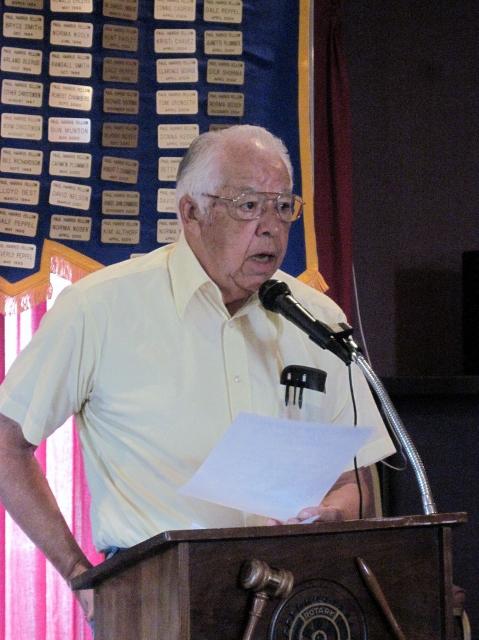
Chairman Jim Aldrich
While regulated by the Federal Aviation Administration (FAA) the airport is owned by the City and governed by the Airport Authority. Chairman Aldrich commented with the number of people very knowledgeable about aviation that are on the Board or that the Board has access to. The Board needs to plan three to ten years into the future to help assist Wahpeton’s economic activity. The project to lengthen the runway to be able to accommodate jets was an important piece of forward thinking. Some jets can use less runway but FAA regulations, backed up by the insurance companies, prescribe the length needed for each type of airplane. The recently updated GPS approach certified from the south allows instrument enabled aircraft to land when visibility is only 500 feet. The airport receives no general budget funding from the federal government. It is financed through a share of the federal aircraft fuel tax and commercial landing fees. That its construction was even possible was due to a bequest from the Stern family. Aside from the business turboprops and jets that visit regularly there are approximately 40 aircraft based at the airport. In addition there are several businesses including the national Ag business Wilbur Ellis who have a crop spraying application there and Tri-State Aviation who rebuild World War II fighter planes and whose mechanics fly all over N. America to work on warplanes.