

Family Footprints
Posted by Robert Chambers
on Aug 14, 2012
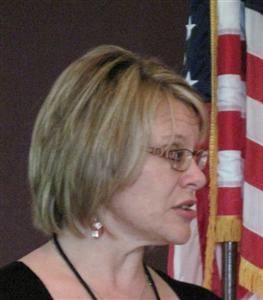
The members of the Rotary Club of Wahpeton, N.D. have long had a concern about literacy at all levels. At their regular meeting on August 14th they heard from early childhood educator Jill Christopherson who is currently the Family Footprints Coordinator at Saint Francis Healthcare Campus. Wait a minute: early childhood educator- hospital; does not compute! In fact, as Ms. Christopherson explained it does. Improved early childhood experience and in particular education has been proven to lead to a healthier life than experienced by those with a poor childhood and education. No only is the person healthier, they earn more money in their lifetime and the community is better off. This explained Rotary member and St. Francis CEO David Nelson is what Catholic Health Initiatives, the owners of Saint Francis, had in mind when they instituted this program at several of their campuses.
As members learned from their "Participant Questions" (Yes there was a test) the developing mind of a young child is like a growing plant, putting down roots and growing a network of synaptic connections (much like limbs on a tree). The most brain development occurs from birth to age 5. This development does not occur spontaneously; it occurs through good parenting and, in particular, regular reading to the child. To be prepared for kindergarten a child must have self-control and be able to cooperate with others. Only fifty percent of the children in Minnesota have all of the needed skills when they enter kindergarten yet no statewide early learning programs are funded to serve all of the kids who qualify for them. This despite good data showing that increased public investment in quality early learning programs lowers crime and poverty rates; ultimately returns $ 12 for every $ 1 invested and creates a better prepared workforce.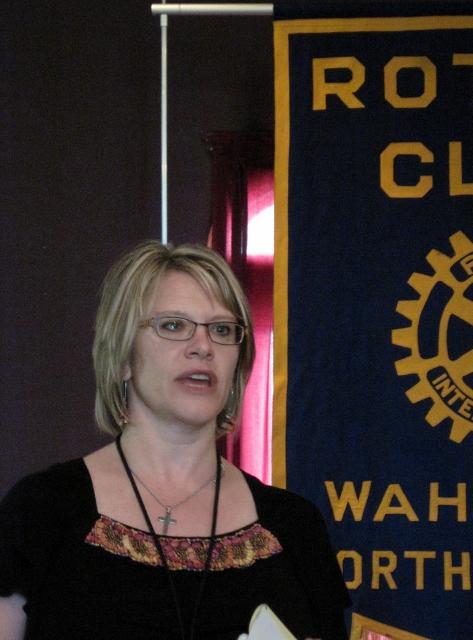
As members learned from their "Participant Questions" (Yes there was a test) the developing mind of a young child is like a growing plant, putting down roots and growing a network of synaptic connections (much like limbs on a tree). The most brain development occurs from birth to age 5. This development does not occur spontaneously; it occurs through good parenting and, in particular, regular reading to the child. To be prepared for kindergarten a child must have self-control and be able to cooperate with others. Only fifty percent of the children in Minnesota have all of the needed skills when they enter kindergarten yet no statewide early learning programs are funded to serve all of the kids who qualify for them. This despite good data showing that increased public investment in quality early learning programs lowers crime and poverty rates; ultimately returns $ 12 for every $ 1 invested and creates a better prepared workforce.
So what does this have to do with Ms. Christopherson and her program? Over twenty years ago new mothers and their child, particularly first time mothers, were in hospital for three to five days post delivery during which time the nurses taught basic childcare. When, some twenty years ago, the emphasis by insurance companies went to shorter hospital stays based solely on medical necessity mother and baby were sent home 12 to 24 hours after delivery with no training. Curiously we train people to drive cars but not how to parent. The "Family Footprints" program is an improvement even on the old hospital model as it identifies mothers/families in need and then works with the mother through a series of home visits looking after immediate concerns, building relationships, teaching parenting, referring to existing services as needed. The program seeks to educate, refer and support the mother without duplicating services and by being an early childhood resource guide that is both cohesive and comprehensive. Members were encouraged to learn more about the benefits to the community of early childhood education.