
On March 15, Solana Beach Eco Club successfully completed an important project at San Dieguito County Park. About a year ago, Head Park Ranger Alejandro Santos approached the club with a request to transform a small, unused area of the park into a native pollinator garden. The club embraced the idea enthusiastically and began planning for a fall planting.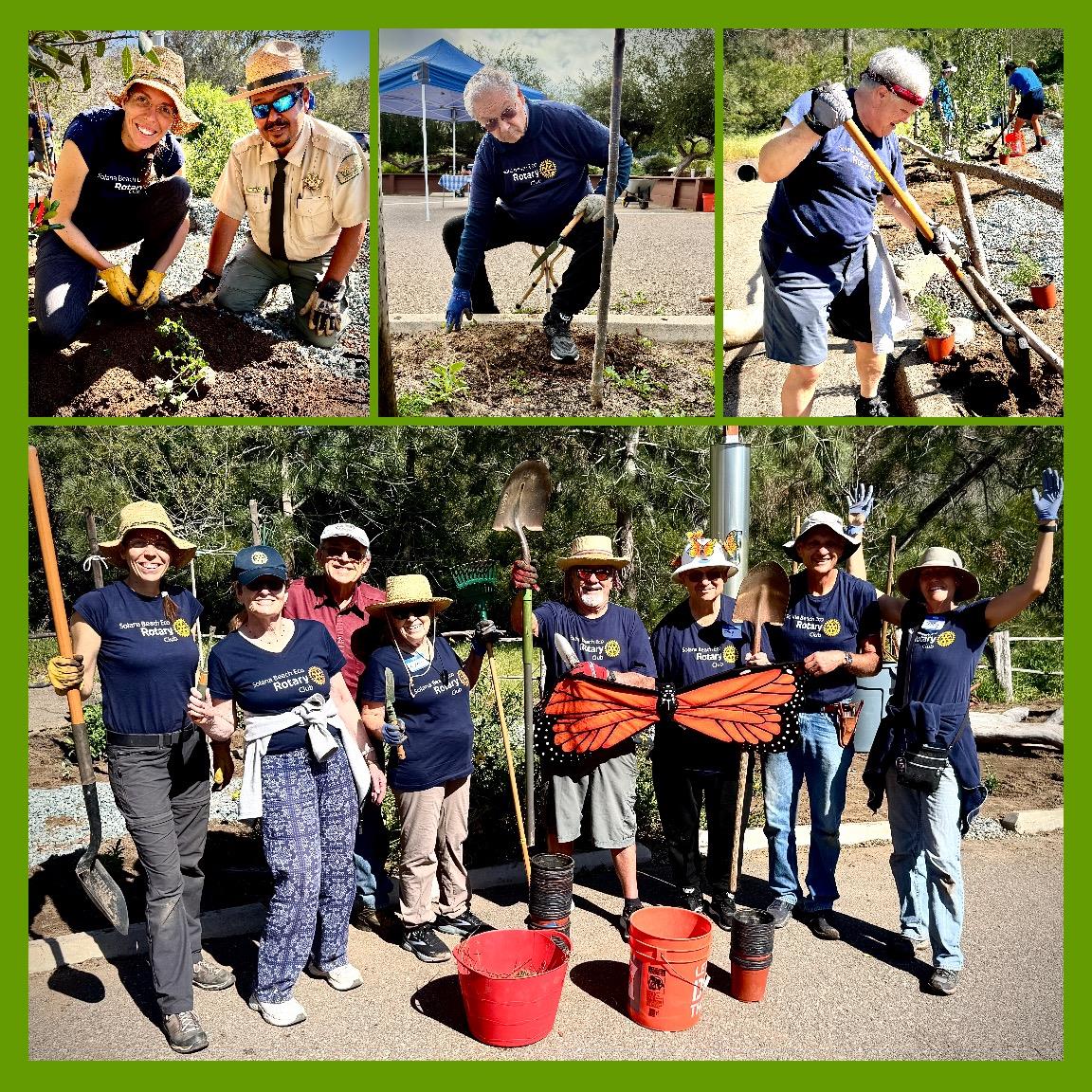
Securing a Grant and Shaping the Project
During the summer, one club member earned a grant through the I Love A Clean San Diego Stormwater Pollution Challenge. The winning idea was named SMRT (Stormwater Makes Retained Treasure) Gardens—street-side and parking lot gardens specifically designed to manage stormwater by channeling runoff from streets into garden bioswales. Native plants in these gardens use the collected water for growth, while simultaneously cleaning and replenishing groundwater supplies. By incorporating these gardens into urban areas, the project provides substantial environmental and community benefits.
Benefits of SMRT Gardens
Building the Garden
Fortuitously, the area provided by Ranger Alejandro for the pollinator garden was located at the base of a long street, adjacent to a parking lot and hillside. Recognizing the potential, the club decided to create a demonstration SMRT Garden using the grant funds rather than a simple pollinator garden. The process began in the fall with community service projects focused on weeding, digging rainwater channels, and constructing bioswales.
The club’s efforts were soon tested by an atmospheric river that delivered nearly three inches of rain over a few days. This weather event allowed the team to evaluate and refine the bioswales, increasing their capacity to absorb rainwater. The larger trees and shrubs were planted just before a second atmospheric river arrived in December. The newly built dry stream beds and bioswales performed perfectly during these storms.
Enhancements and Community Engagement
Over the winter, the Solana Beach Eco Club installed bee hotels, insect houses, bat boxes, and a native seed library. They also added a rain gauge and thermometer, encouraging citizen science projects within the garden. The final phase of planting native species was completed last weekend. A huge thank you to all volunteers (including the Rotarians and Rotaractors) who contributed. The park will soon install educational signage to inform visitors about the garden’s benefits.
Looking ahead, the club will monitor the new plantings and organize educational sessions with scout troops, school field trips and informal presentations for the community. The creation of this garden was a true collaborative effort, involving contributions from community members, teen park volunteers, dedicated Rotarian and Rotaractors all working together to unite for good, improve our natural world and educate the public.