
Fighting to Reduce Waste, Protect the Environment
By Sen. Catherine Blakespear
Sen. Catherine Blakespear has introduced several bills to address different aspects of waste and plastic pollution. The goals of the bills are to support a wider implementation of best practices whether it's to reduce single use plastic use or make composting facilities more accessible.
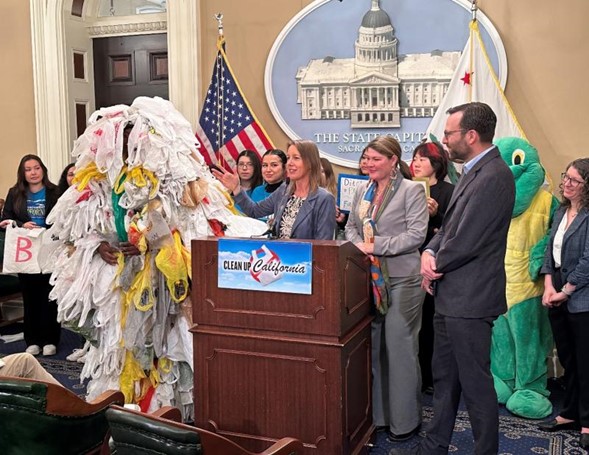
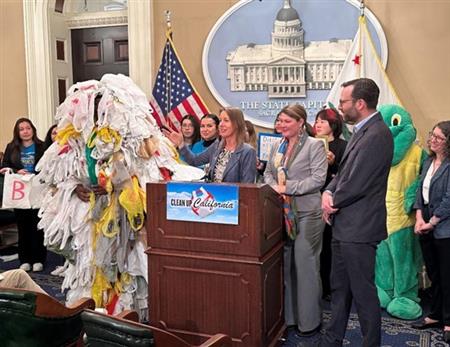
Sen. Catherine Blakespear spoke at a press conference with (to my immediate left) Asm. Tasha Boerner and Sen. Ben Allen regarding legislation to ban plastic bags. They are surrounded by advocates for the bill and the “Plastic Bag Monster,” illustrating how disgusting plastic waste is!
Sen Blakespear has introduced legislation (SB 1053) to prohibit grocery stores from providing plastic bags at grocery checkout. Instead, grocery stores will be able to offer only paper bags when customers have not brought their own reusable bags. This bill is joint authored with Assemblymember Rebecca Bauer-Kahan, D-Orinda, with Sen. Ben Allen, D-Santa Monica, as the principal co-author.
Did you know that the average life span of a plastic bag is 12 minutes? It is then discarded, often clogging sewage drains and over time degenerating into toxic microplastics that contaminate our drinking water, fester in our oceans and fill up our landfills for up to 1,000 years.
This bill recognizes the reality that although the thicker plastic bags at our grocery stores indicate that they can be recycled, there are in reality no facilities in California that recycle these bags. Analysis of used plastic grocery bags using AirTags has shown that almost none of the thicker plastic bags actually end up recycled.
It’s time to face reality. If we want to reduce plastic bags, we need to ban them. Paper works equally well, as places like Trader Joe’s know. The best options is a canvass, reusable bag, which creates no waste at all.
Requiring Reusable Cups at Dine-In Chain Restaurants
She has also introduced SB 1167, requiring chain restaurants in California to provide dine-in customers with washable, reusable cups, instead of single-use plastic or paper cups that often end up in landfills.
The legislation follows similar ordinances passed by many cities designed to limit plastic waste coming from restaurants. Plastic food service ware, which includes cups, produces 500,000 tons of waste each year, according to CalRecycle.
California has a massive plastic waste problem, and if we are serious about protecting our environment and living sustainably, we must reduce it across the board. SB 1167 is a simple, sensible step to reduce waste coming from restaurants.
Encouraging Composting Facilities
In addition to reducing waste, we need to speed up the establishment and permitting of composting facilities. Organic materials make up half of what Californians dump in landfills and emit 20 percent of the state’s methane. In an effort to reduce methane and other short-lived climate pollutant emissions, California set organic waste diversion targets of 50 percent by 2020 and 75 percent by 2025.
CalRecycle acknowledges that the state still needs approximately 50-100 new or expanded organic waste recycling facilities, such as composting facilities, for sufficient capacity to meet these goals.
That’s why Sen. Blakespear has introduced SB 1045, which requires, among other things, that local air districts and regional water boards meet specified timelines for processing compost facility permit requests.
Preventing Marine Flares from Contaminating Water
Finally, she has authored legislation to make sure that marine flares are disposed of properly. Flares contain toxic metals and pollutants that render them hazardous, reactive and explosive, but boaters have no easy way to get rid of them.
SB 1066 would require producers of marine flares to fund and operate a convenient collection system to manage expired or unwanted flares to ensure they are properly disposed of and don’t pollute the water or environment.