
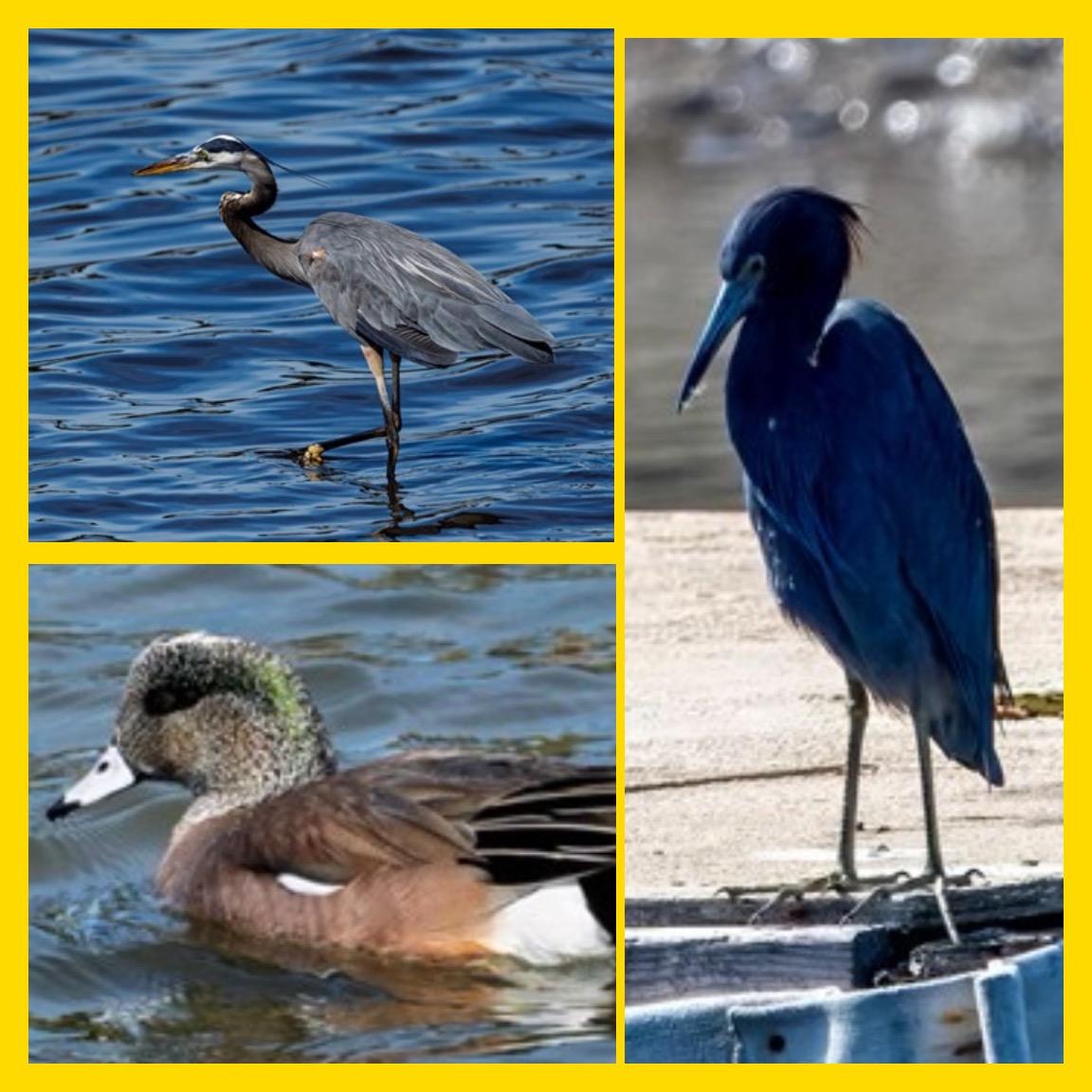
Our field trip to Rose Creek took place on an incredibly beautiful, warm, sunny winter morning – the kind of day that makes the rest of America a little jealous. We were accompanied by pedestrians and bikers going by, kayakers in the water, amazing birds flying overhead. The perfect conditions only emphasized the phenomenal beauty of Rose Creek and the need to protect it. This tour was well timed for other reasons. We had just had speakers Karin Zirk (Friends of Rose Creek in December) and Andrew Meyer (ReWild Mission Bay/ San Diego Bird Alliance in January) visit and talk to our club about the past, present and future of this very important area. There are also an extraordinary variety of birds migrating through the area this time of year as part of the Pacific Flyway. Evidently, the birds enjoy our weather too.
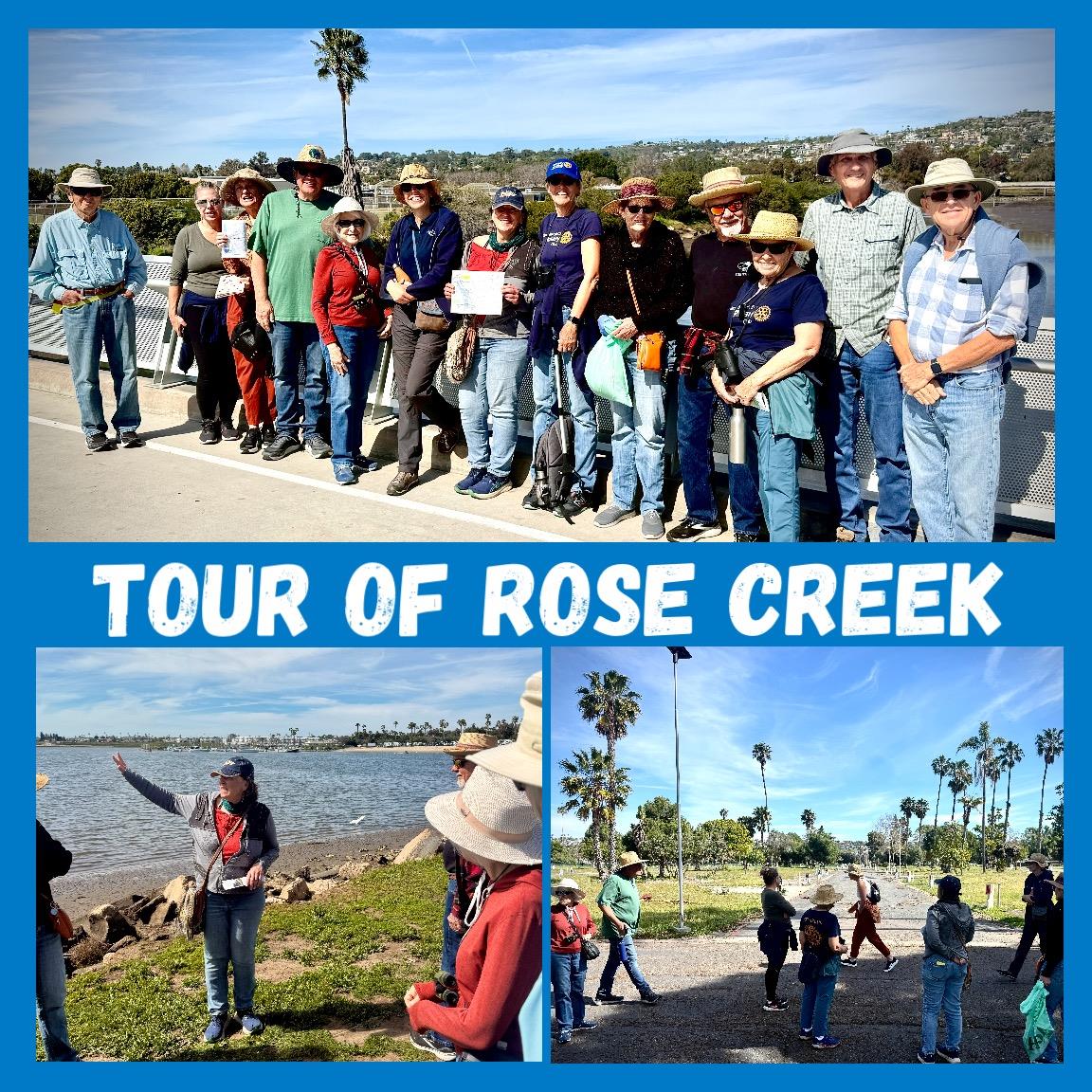
Karin gave us a tour that started on the pedestrian and bike bridge close to the outlet of Rose Creek (Mike Gotch Bridge). From here we could see north to two other bridges that span an unusual concentration of different ecosystems – from Mission Bay to mud flats (high nutrient habitats) to estuary (salt marshes) to just a glimpse of the riparian area beyond. This creek is now the only source of fresh water to Mission Bay, making it critical to marine life because this tidal wetland habitat is rich in essential nutrients. The area also acts as a filter to clean the water (by bioremediation) before entering the ocean and as a sponge to protect us from flooding during storm surges. Sadly, the area has been overlooked for decades. Pollution is a never-ending problem and unhoused people populate the areas under bridges. Friends of Rose Creek regularly remove trash and invasive plants, restore habitat and advocate for enhanced environmental protection.
From the bridge we looked south to Mission Bay. 200 years ago, this area was 4000-acre of wetlands - an enormous breeding and feeding ground for birds and marine life. The Kumeyaay described this area as so dense with wildlife that the sky would darken when birds would suddenly take flight. During the 1950s and 1960s, the bay was dredged for better boat access and new land was development – beaches, housing, resorts, a golf course, amusement parks. This project was a boon for economics of the city and created the largest water park in the US, but it at the expense of an immense and beautiful ecosystem.
To the right of the bridge as we looked at Mission Bay is an area leased to Campland, then the Kendal-Frost Marsh beyond that. The KF Reserve is 21 acres and together with the Northern Wildlife Reserve protect 40 acres of the only wetlands left in Mission Bay (that’s just 1% of the original). Rose Creek historically connected to the marsh. Today, the Kendal Frost Marsh is dying slowly without this connection and the rich nutrients of the creek. To the left is the old De Anza Motor Home Park that was emptied after years of litigation. It’s open to the public now, so we were able to walk through to see more of the space known as the ‘boot’. Check the pictures below.
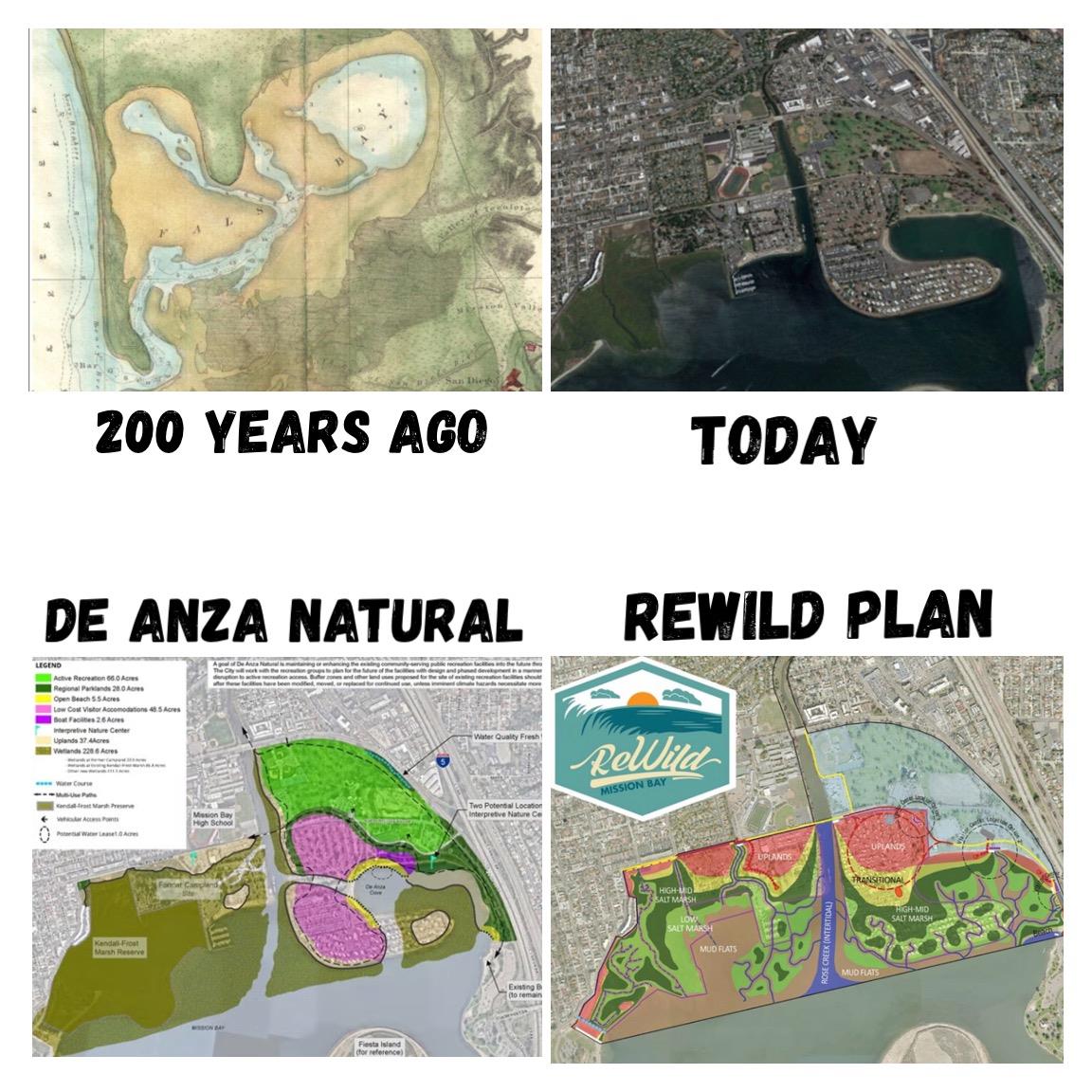
Here is the good news: this entire area at the mouth of Rose Creek is slated for habitat restoration from the Kendall Frost Marsh to the west to De Anza Cove on the east although the exact plans and timing are still being determined. It will be a massive restoration project that entails the removal of Campland (finally reconnecting Rose Creek to the KF Marsh) and the removal of the entire ‘boot’ that made up the De Anza Mobile Home Park. The city has approved one plan, De Anza Natural Plan, that is being reviewed by the coastal commission now. It will add 140 acres of restored wetlands but also includes visitor accommodation and other development. ReWild Mission Bay has alternative plans that consider sea level rise that will occur in the next decades. It creates additional acres of restored wetlands and upland habitats for a total of 170 acres. Experts believe this second model to be superior in protecting water quality, wildlife and the coast from storm surges in the years ahead. It creates open space for passive enjoyment and allows for expected periodic flooding. Both Friends of Rose Creek and ReWild Mission Bay strongly advocate the passage of the second plan (aka ReWild's ‘Wildest’ Plan).
During our tour, we discovered for ourselves that Rose Creek and surrounding areas are an outstanding natural treasure for our city. However, habitat restoration is needed and the funds for this are available through the lease revenue of surrounding businesses - The Mission Bay Park Improvement Fund. Right now, the city is stalled on moving forward with all promised restoration projects and is using funds earmarked for Mission Bay habitat restoration for maintenance on bathrooms and parking lots in Mission Bay Park. Environmental groups are hoping to change that with consistent education and advocacy.
What can Rotarians do to support the best restoration efforts? It has been said that the more you know a place, the more you will love it and want to protect it. Please take your friends and go visit Rose Creek and De Anza Cove. Karin gives tours frequently. Rotary Clubs can participate in regular cleanups and habitat restoration projects by the organizations listed below and educate others about the two plans being proposed. SBECO Rotary will keep supporting those working hard to see the best restoration plans for Rose Creek and surrounding areas. Find out more/consider your support for