|
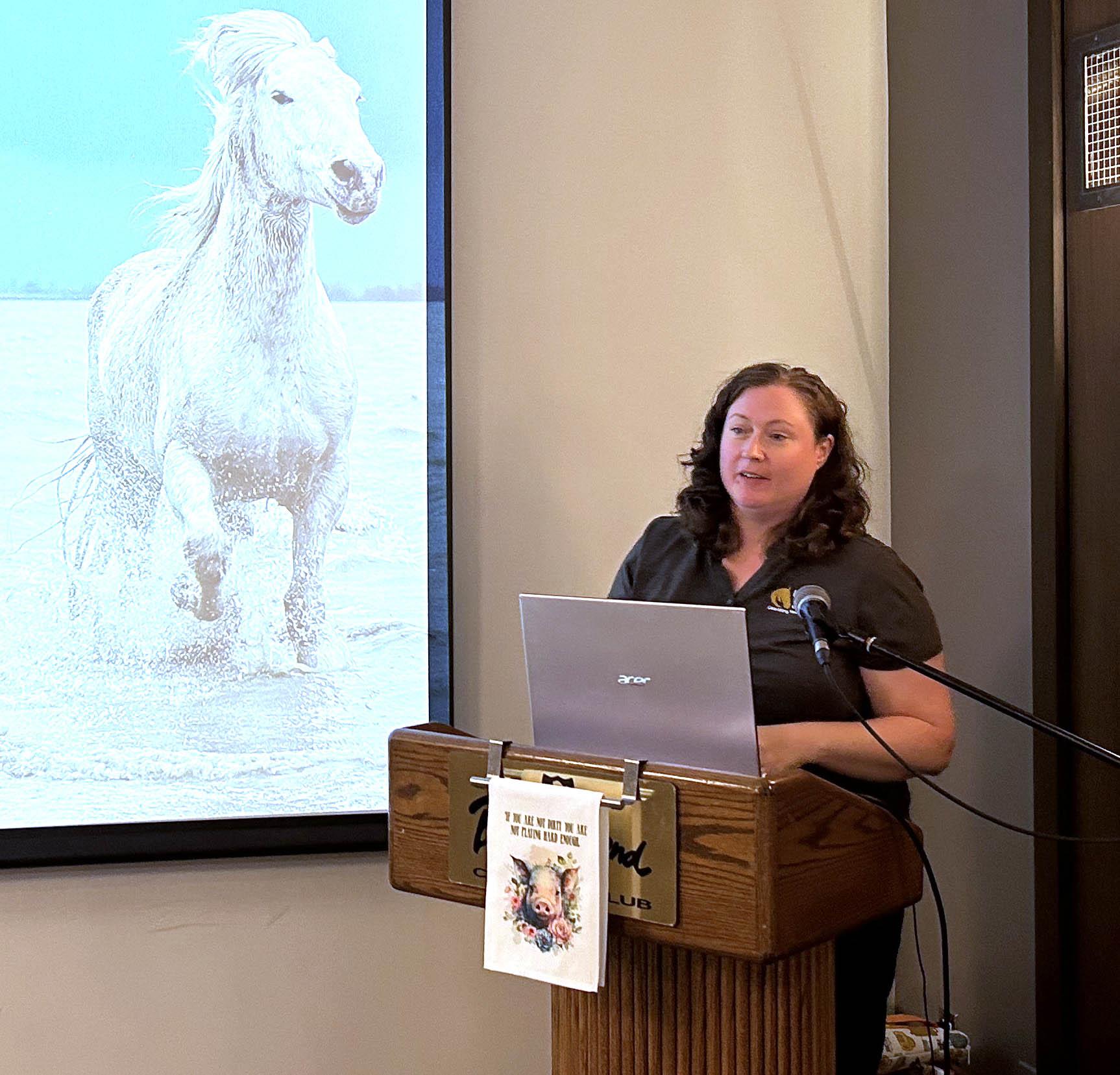 After Dinner, Past President Iain Scott introduced the evening’s speaker. After Dinner, Past President Iain Scott introduced the evening’s speaker.
Hayley Edwards is Executive Director for Urban Stable (www.urbanstable.ca). She specialises in assisting teams and individuals to overcome barriers, build confidence and strengthen connections to their education, organisation, and community through working with horses. Hayley is a certified Canadian Therapeutic Riding Association (CanTRA) Senior Instructor, Equestrian Canada Instructor of Beginners and CanTRA instructor mentor. Hayley joined the Urban Stable team in 2014 and has over fifteen years experience in the therapeutic riding and equine facilitated learning industry. Hayley has worked in all areas of the organisation and emanates the heart of Urban Stable. It is her continuous enthusiasm and passionate belief in people that inspires individuals and teams to become prouder, stronger, and more valuable contributors in their school, organisation, and community connection, and personal discovery that individuals can gain from hands-on learning experiences with horses. Hayley's presentation to the club was on Trauma Informed Care. Mental Health is “a state of mental well- being that enables people to cope with the stresses of life, realise their abilities, learn well and work well, and contribute to their community.” Mental health conditions can include: - Mental disorders (such as mood disorders)
- Psychosocial disabilities
- Other mental states associated with significant distress, impairment in functioning or risk of self-harm* *Just because someone has a mental health condition, doesn’t mean they experience lower levels of mental well-being
Urban Stable has made promoting child and adolescent mental health a priority! Through Trauma Informed Care, Hayley explained Common types of Adverse Childhood Experiences (ACEs) include: - Emotional abuse
- Physical abuse
- Sexual abuse
- Violence in the home
- Substance use problems in the home
- Mental health problems in the home
- Emotional neglect
- Physical neglect
- Divorce or separation of parents
- Having a household member go to prison
How does Urban Stable help with Adverse Childhood Experiences? CORE TRAUMA-INFORMED CARE PRINCIPLES Relationships based on respect, trust, and safety - Frame questions/statements with empathy – avoid being judgmental
- See behaviours as coping mechanisms and explore alternative ways to cope, if needed
- Respond to disclosure with belief and validation
- Help regulate difficult emotions
- Acknowledge that what happened to the person was bad; the person is not bad (shame, guilt are common results of trauma)
- Watch for and try to reduce triggers and trauma reactions. Include the individual in this wherever possible – sense of control is important!
- Celebrate strengths, abilities, and successes
Trauma-informed care is - Being welcoming to those who may have experienced trauma
- Considering that any of the people we’re working with may have experienced trauma
- Recognizing signs and symptoms of trauma
- Recognizing that even people who haven’t been affected by trauma can still benefit from trauma- informed care!
Examples - How to create a welcoming environment? (Quiet, calm, supportive, consistent, positive)
- Extend trauma-informed care to everyone (not just certain students)
- What are signs and symptoms? Flight, fight, freeze…
- We might not know if it is a “trauma response” or if someone is just having a bad day! They can still benefit from these approaches
After the presentation, Hayley explained some of the successes children have achieved from their teachers at school where children have gained confidence and engaged in classes. The presentation ended with questions from members. Past President Iain thanked Hayley for taking time out of her busy schedule to join us all. It is comforting to hear that local schools in Charleswood are benefitting from the programs offered by Urban Stable. |

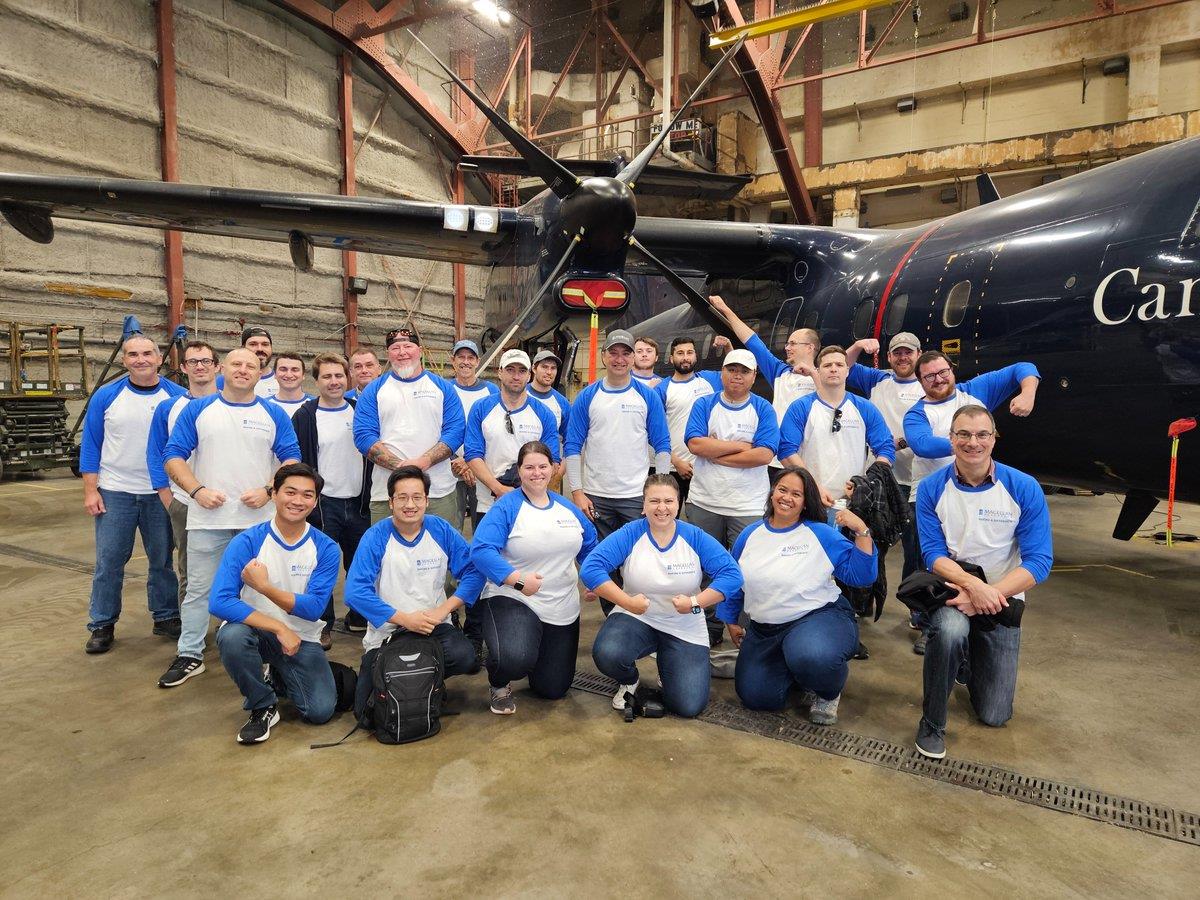 Rod: Enjoyed being part of the Magellan Aerospace team at the United Way fundraiser. Team Magellan proudly participated in the 17 Wing CFB Winnipeg '24 Plane Pull, an event to support #UnitedWayWinnipeg & #GCWCC. The team placed 1st in the civilian category of the sweeper & Dash-8 pulls, but the true success of the day was the generous support for the community!
.png)