Dr. Wally Temple delivered the invocation in which he shared Vivienne R. Reich’s “Coronavirus Letter to Humanity.”
Welcome. Before starting, I would like you to join me in sending our deepest condolences to those that are affected by the tragedy in Nova Scotia and all those affected by this terrible pandemic.
In preparing for this meeting, I looked up the definition of an invocation. It is an act or process of petitioning for help, support or inspiration from a deity or spirit today. I call on you as representatives of Rotary to help make the world healthy again.
This idea came from George Brookman’s presentation on the tragedy of plastics in our oceans. The eight million tons dumped into the oceans yearly will grow up to 400 million tons in less than a decade, and the plastics patch in the Pacific ocean is now three times the size of France. This situation is unbelievable and unacceptable.
So, in the spirit of George’s suggestion, I would like to read you this poem written by Vivienne R. Reich that calls humanity to action.
The Earth whispered, but you did not hear.
The Earth spoke, but you did not listen.
The Earth screamed, but you turned her off.
And so, I was born.
I was not born to punish you.
I was born to awaken you.
The Earth cried out for help.
Massive flooding. But you didn’t listen.
Burning fires. But you didn’t listen.
Strong hurricanes. But you didn’t listen.
Terrifying Tornadoes. But you didn’t listen.
You still don’t listen to the Earth when
Ocean animals are dying due to pollutants in the waters.
Glaciers are melting at an alarming rate.
Severe drought.
You didn’t listen to how much negativity the Earth is receiving.
Non-stop wars.
Non-stop greed.
You just kept going on with your life.
No matter how much hate there was.
No matter how many killings daily.
It was more important to get that latest iPhone than worry about what the Earth was trying to tell you.
But now, I am here.
And I’ve made the world stop on its tracks.
I’ve made YOU finally listen.
I’ve made you take refuge.
I’ve made you stop thinking about material things.
Now you are like the Earth.
You are only worried about YOUR survival.
How does that feel?
I give you fever as the fires burn on Earth.
I give you respiratory issues as pollution fills the Earth’s air.
I give you weakness as the Earth weakens every day.
I took away your comforts.
Your outings.
The things you would use to forget about the planet and its pain.
And I made the world stop.
And now, China has better air quality.
Skies are a clear blue because factories are not spewing pollution into the Earth’s air.
The water in Venice is clean, and dolphins are seen because the gondola boats that pollute the water are not used.
You have to take time to reflect on what is essential in your life.
Again, I am not here to punish you.
I am here to awaken you.
When all this is over, and I am gone, please remember these moments.
Listen to the Earth.
Listen to your soul.
Stop polluting the Earth.
Stop fighting among each other.
Stop caring about material things.
And start loving your neighbours.
Start caring about the Earth and all its creatures.
Start believing in a Creator.
Because next time I may come back even stronger.
Signed,
Coronavirus
Yes, I believe there’s hope. We should join George Bookman’s call to clean up our planet’s oceans. We are uniquely positioned as a global community of Rotarians to accomplish global missions. We are a significant contributor to the elimination of polio once causing 250 thousand deaths per year and countless more people paralyzed. It’s now reduced to less than 100 cases a year.
Our next task must be a healthy planet. Thank you, George Brookman, and thank you to the author of a letter from coronavirus to humanity.
Did you know April is Rotary International’s Maternal and Child Health Month? Today the focus will be on maternal health.
Our club is very fortunate to have several healthcare professionals who use their skills and expertise to improve the lives of others both on and off the clock. There are many Rotarians around the world that have healthcare backgrounds, and there is a Fellowship of Health Professionals in Rotary.
Lori Forand, our current International Director, is also a program manager with Alberta Health Services. Lori brought an opportunity to the board to reduce cervical cancer worldwide, with the Cervical Cancer Project, an initiative by World Community Service, which involves cervical cancer screening in Guatemala and research support.
Cervical cancer kills more people than polio did. According to the World Health Organization, cervical cancer is the eighth most common cancer worldwide and the fourth most frequent cancer in women. Approximately 90% of deaths from cervical cancer occur in low and middle-income countries. These deaths could be reduced by prevention, early diagnosis, effective screening and treatment programs and the use of the HPV vaccine, which can prevent most cases of cervical cancer if given before exposure to the virus. In low resource, developing countries, the disease is often not identified until it is further advanced, resulting in a higher rate of death. As a result, the WHO has made the elimination of cervical cancer one of its top priorities. The government of Canada similarly sees the importance and, in June of 2019, announced an investment of 10 million dollars to support national cervical cancer research.
When the WHO called attention to this enormous issue, eight Calgarians, including club members Dr. Walley Temple and Dr. Sonny Belenkie, decided to link their research and created Cervical Action Canada. Cervical Action Canada will hold three conferences in Calgary in two-year intervals, with the first to be held in 2022. These will be available in six languages, with 30 countries in attendance.
Dr. Walley Temple joined Barb Young, Chair of WCS in Guatemala in January, pre-COVID-19, along with Guatemalan Rotary Clubs to discuss support for cervical cancer screening. In Guatemala, cervical cancer is the leading cause of cancer-related deaths among women of reproductive age, with 3.77 million Guatemalan women currently at risk for this potentially fatal cancer. Our club is proud to support cervical screening to women living in impoverished and isolated communities.
Club President Rick Erven shared the following announcement.
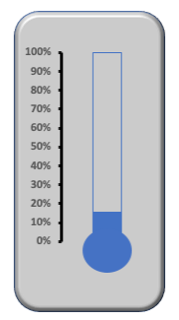
We announced the lunchbucket challenge last week, and Peter McKean called to say that while he doesn't look on his computer very often, he did read last week's COG bulletin. He said he was inspired by the lunchbucket challenge to match all donations to a maximum of $50,000. So, if you get a chance, please reach out to Peter and Adele to thank them for their generosity. We need to work hard to achieve our target, and you can periodically check the "thermometer" on the club website to follow our progress. I hate to say it, but please get out your wallet in these tough times, but it's such a fantastic opportunity for our club to do something significant in the way of COVID-19 relief. Please think about donating $45 you saved on lunch today, the $45 from last week, and so on. Please reach out to Joanne or visit the club's website to make your donation today.
Walter Chayka congratulated Trevor Ironside on his completing all of his new member activities and removal of the "red dot" from his name tag.
I'm pleased to introduce to you Trevor Ironside many of you have come to know. So, today the "red dot" removal signals that we welcome him as a full member of our club. In keeping with his passion for providing education and humanitarian aid to needy communities in foreign lands, he has joined the world community service committee to contribute his knowledge towards grant writing. He is also a member of the long-range planning committee.
The Stay in School programs operated by our club benefit immensely from the computer systems we access through Alberta Computers for Schools (ACSF), provided at virtually no cost to the club; just $20 each for the pre-loaded software!
This year we will have received over twenty computers that have then been distributed to students-in-need in the Rotary Carl Smith and Rotary Tom Jackson stay in school programs and we have more on the way.
Accessing badly needed computers this way saves the program thousands of dollars and ensures that students have the resources they need to participate equitably in school programs.
Please send an e-mail to Stay-in-School Program Coordinator Alana Sargent at stayinschool@rotaryclubofcalgary.ca letting her know what equipment you can donate, and we will provide either a pick-up option or a drop off location. Computers for Schools in Calgary employs four technicians who are completing their mandatory two-month Practicum, financed by a Government of Canada Youth Employment program plus up to an additional 4-months (if required) as they seek work! Visit https://www.cfsalberta.ca/about.php to learn more about Alberta Computers for Schools.
CSF technicians remove hard drives from all computers and erase them using certified deletion software before re-installing them and distributing them to students.
Please consider donating any used computer equipment that meets the following specifications.
Equipment:
Minimum Specs:
Laptops:
Intel i-series or AMD A4+ processors, with Wi-Fi and A/C adapters, RAM, and HDD
Desktops:
Intel i-series & AMD FX 4000+ complete systems with RAM, HDD
Hard Drive:
Minimum 160Gb SATA 1/2/3
Displays:
20” widescreen LCD/LED displays manufactured 2012 or later
Printers:
HP & Lexmark laser networked printers; inkjet printers in good working order
Networking:
Gigabit switches and routers
Misc:
USB or wireless keyboards and optical mice
You could be eligible to receive a tax receipt for your donation based on the age and condition of your equipment.
Eva Friesen provided an update on the state of fundraising in Calgary.
I am pleased to provide an update on the Calgary Foundation’s pandemic response program. When the city went into its state of emergency, I had just arrived back in Calgary. That was on a Monday, and by the following Thursday, our board had organized its first Zoom meeting. The next day we initiated our first COVID-19 response action, which I think will be our most effective action. We created a place on our website for charities to post their pandemic needs, and we now have 311 charities and not-for-profits listed. If you are interested in following the progress of a charity, you can see their fundraising progress on the site.
As COVID-19 prevents charities from doing their usual work, we directed three million dollars to our COVID-19 response. We gave one million dollars through the United Way, and we granted two million dollars through our process that is more broadly-based than the United Way.
W have opened our process for people to give, but we do not fundraise directly. We continue to consider grant requests and could provide up to five million dollars to worthy causes.
We try not to fund initiatives supported by the provincial and federal governments. It is crucial that there not be any duplication in support. For example, we could receive a request to support mental health in an area funded by the provincial government. While we might have supported such an initiative before the provincial funding commitment, we would subsequently direct the applicant towards the province. We must be flexible to make the best use of the monies in our care.
Our staff is working harder than ever, mainly while we work with the United Way. There is another sector with high needs, and that is the arts community. Many in the artist community have lost jobs, or grants, owing to cancelled performances and closed museums and galleries. You can just imagine how stressful that is for them.
We have joined with the Rozsa Foundation to support artists. We also work with the Calgary Arts Foundation to support artists. There are many needs, and I think anything that anyone can do makes a difference.
The lunchbucket challenge is a great idea. We can save a lot of money by not meeting at the Palliser for the next while, so imagine what our club can do. We can donate to the United Way’s COVID-19 response fund, and that would make a big difference to vulnerable populations.
Our presenter this week was Dr. Gerry Turcotte, President of St. Mary's University, who discussed the state of post-secondary education during the COVID-19 epidemic.
Thank you very much. I would like to talk a little bit about the coronavirus impact on our post-secondary institutions, and I am happy to put that in context using St. Mary's as a case study. However, I want to begin with a reflection partly moved by the opening poem that we heard today.
I have been writing a monthly column for several newspapers for the last six years, and writing columns is a challenge. You must overcome your writer's block when it happens, and you must keep things fresh. My column uses a lot of humour to talk about everyday issues, and I try to do my best to be clear and relevant, without being superficial. I always try to reference my institution as much as I can in those columns. I admit that I sometimes feel a bit like I am writing one of those product placement ads with the St. Mary's cereal box is placed strategically in a frame. Still, I think what I promote for St. Mary's is the position of all other post-secondary institutions in the province.
The great thing about the work we do is that we promote higher education and the way that it enables and expands opportunities for society. That is an important and noble task. The reason I mentioned these columns is that I swore that I would never write a COVID-19 column, and last night I was putting the finishing touches on such a column.
I love the way we cope with stress through humour in the face of this catastrophe. It can sound as if we are exaggerating, but COVID-19 is a game-changer. It is not just a respiratory bug: it is a game-changer. To me, it is an attack on the very things that make us human: our interconnection with each other. The most devastating image was all the sacred religious sites sitting vacant, from Mecca to the Holy Land. The image that most resonated with me was Pope Francis celebrating Mass in St. Peter's Square on his own.
I marvelled at the images of cities in India and China that are now visible from space due to reduced pollution. These images remind how we impact our planet, but also how quickly nature is prepared to reassert itself. I love how wildlife, usually shy of people, is starting to appear in all major population centers. These images remind us that we have a large but temporary footprint on our planet.
At St. Mary's University, we are trying to provide meaningful experiences to our students despite having had to move all our courses online. We were able to accomplish this in only three days with a small Information Technology department. Unlike the larger institutions that have dozens of IT staff, we only have three IT workers, all of whom are tired right now. We did not have systems designed to carry the required data volumes to support an entirely online instruction environment.
Our professors pride themselves on face-to-face delivery and on being available to work one-on-one with students in an environment where the average class size is twenty-one students. I tell people that one of the universities I taught at in Australia bragged about having small class sizes, but we meant our breakout seminars and tutorials. Otherwise, I taught over 450 students in one lecture hall and had the lectures broadcast to five satellite campuses. The requirement to go online had a much more significant impact on St. Mary's than would have been at a larger university. Our post-secondary institutions have performed miracles to deliver online instruction, and I think we have done as well as can be expected with the commitment of our faculty and support staff. Our students embraced the challenge.
Moving the last three weeks of a semester online is one thing, but starting a new academic year online is quite another, particularly when students must pay fees and purchase textbooks. The complications will be of a different order of magnitude, and I can tell you that this is the primary focus of all post-secondary institutions. Right now, we are all modelling three scenarios: face to face, fully online, and blended delivery. In the hybrid situation, which is arguably the most difficult, universities would start online, and slowly return to face to face instruction. We are all hoping for the crisis to be over, but we know the way we do things has probably changed permanently, even once we are back to face-to-face. I do not think we are going to go back to our old ways.
I think COVID-19 has already changed how we look at the configuration of our office spaces, and we all expect there could be further waves of infection. Planning is extraordinary right now, and we are making some of this up as we go along because nobody has tackled this ever before.
Another significant issue is the emotional toll that this is taking on our teams, but also on our students. The situation reminds me that we are all social beings and that human contact is what helps us to cope. It is what helps us to flourish and to hope, and we see more mental health issues on our campuses. We are seeing increased challenges from students who are concerned not just about learning this new way but are also worried about the loss of financial support arising from lost internships and summer employment. St. Mary's has ramped up our counselling services. We use our campus ministry office to reach out to students.
We are hard at work raising donations so we can provide bursaries and buy food for our students who are most in need. We offer a free Humanities 101 program to our most disadvantaged. We pay the childcare, we pay for their food and transportation, even while we cannot meet with them in person.
It is a struggle for St. Mary's as we are one of the fastest-growing Alberta universities. We have grown by 98 percent in the last eleven years, yet we remain the lowest-funded post-secondary institution in Alberta. Interestingly, we do not receive public funding from the federal government because they view us as a public university, and therefore the responsibility of the province, while the Government of Alberta sees us as a private university. To address this, we work on the margins to raise the funds our students need.
I would like to conclude my remarks with an idea to pull these thoughts together. I read an article by the astronomer Harlow Shapley, who realized that about 1 percent of the air that we breathe is argon. The remarkable thing about argon is that, unlike ozone and carbon dioxide, argon gas never disappears. Argon passes through the body untouched and re-enters the atmosphere. Shapley realized that your next breath would contain more than 400,000 argon atoms that Gandhi breathed in his long life. Argon atoms are here around us from the conversations at the Last Supper, from Michelangelo painting the ceiling of the Sistine Chapel, and from the volunteers who helped their neighbours during the Calgary flood. Unlike argon gas, COVID-19 will not be here forever. It will pass. However, it has shown the incredible power of our community to rise above our fear and vulnerability. I think the virus reminds us to look beyond ourselves.
I can't help but think of the hundreds of thousands of people in refugee camps displaced by wars that continue to rage and of those closer to home who are struggling to pay their rent, tuition and their food bills. COVID-19 has one valuable lesson for us, which is that our world is not so vast after all and that we are connected. I prefer to think of that connection to the reality of the argon gas example.
We share a breath that our brothers and sisters all over the world over have a part in shaping. It is a sobering thought that because we share that breath, we must work harder to support our neighbours near and far, even if it means that we must do this virtually. So again, I hope that this is something that we learned from this pandemic is that we bear responsibilities to each other and our world.
Service is the foundation of Rotary, and in this incredible time, I ask you to look out for each other, stay healthy, and stay connected, so we can all get together face-to-face soon. Thank you for the opportunity to share these words with you.
COG Staff - April 28th, 2020
Editor
Craig Henderson
Rotary Club of Calgary - Chartered April 1914 as Club #949
Suite 305, 105-12 Avenue SE, Calgary, Alberta, T2G 1A1