Dennis Ogbe grips the discus in his right hand. He swings his arm and twists at the waist as far to the right as he can. With one move he snaps back, letting the saucer fly. Upper-body strength is important for any discus thrower, but for Ogbe, a Paralympian, it’s everything.
At age three, Ogbe contracted malaria, and while receiving treatment at a clinic near his home in rural Nigeria, he became infected with the poliovirus. Paralyzed from the waist down, he was sent home in the arms of his mother.
He credits his physical rehabilitation to a harsh form of therapy – the taunts of the other...
In Tamil Nadu, India, two doctors, both members of the Rotary Club of Srirangam, discovered an alarming trend in the remote city outskirts of Trichy, women dying of breast cancer.
Drs. K. Govindaraj and K.N. Srinivasan knew that much of the death and suffering could be avoided, and both were motivated by their personal experiences with the disease. Govindaraj watched his mother die of breast cancer a decade earlier, and helped found the Dr. K. Shantha Breast Cancer Foundation in her memory. Srinivasan, an oncologist, witnessed unprecedented growth in the number of younger patients coming to...
In the first month of my stay in Dakar, Senegal, as a Rotary Scholar, a friend gave me a piece of helpful advice. “Buy a wedding ring,” she said. I had already learned that as a young American woman in a Muslim country, I attracted a certain kind of attention. But a ring?
My friend nodded. “That way everyone will leave you alone.”
With my thumb I felt for the empty space on my left ring finger -- a place that, even now, I sometimes touch and worry where my ring has gone. I removed my wedding band on the one-year anniversary of my marriage, eight months after my husband, Miles, was killed in...
Iranian-born journalist Ali Reza Eshraghi, 35, is the Iran project manager at the Institute for War and Peace Reporting and a teaching fellow in the Department of Communication Studies at the University of North Carolina at Chapel Hill. After working as an editor at several Tehran newspapers – all of which were eventually banned or shut down by the government – he became a visiting scholar at the University of California, Berkeley, and met Pate Thomson and Mary Alice Rathbun, of the Rotary Club of Berkeley. In 2012, he completed his studies as a Rotary Peace Fellow at the Duke-UNC Rotary...
A project to provide clean water to all of Lebanon’s schools is uniting leaders from many of the country’s diverse religious, cultural, and political divisions.
In 2011, Rotary members in northern Lebanon decided to install new tanks and water filters in a few nearby schools with the help of a Rotary Foundation grant. The idea caught on and a few other clubs followed suit.
Two years later, District 2452 Governor Jamil Mouawad and other district leaders saw the potential of creating one giant water project that could reach every school and involve all 24 of the country’s Rotary clubs. They...
Rotary Youth Leadership Awards (RYLA) is a program of Rotary International that is funded and supported by each Rotary District. The program encourages servant leadership in youth by recognizing and rewarding deserving 11th grade students from each club area who are chosen to attend RYLA as an "award" for their past and present leadership and service activities. These select young people attend an all-expenses-paid camp where they are inspired by a diverse group of exceptional speakers, make life-long friends through fellowship activities, and discuss the ethical and social issues of today. These activities are conducted in an atmosphere of trust and respect. The result is that these students return to their schools and communities motivated to take on additional leadership roles and to find additional ways to serve. Some of the topics that arise in the course of RYLA activities and discussions include the ethics of positive leadership, the importance of communication skills in effective leadership, conflict management and problem solving, and building self-esteem and self-confidence. On April 21, Quincy Rotarians heard from some of last year’s attendees and met the three students who will be attending the 2014 Camp RYLA for high school juniors.
Two of last year’s attendees to the 8th Grade RYLA were unable to visit in the Club in the fall. Bret Beeson and Kai Hall talked about what they’ve done with what they learned to build better relationships between all their class mates. They hope to continue working with Dr. Segura to break down barriers and improve the high school experience for all students.
Last year’s students who attended Camp RYLA for high school juniors spoke briefly about their respective experiences. Kendall Hicks couldn’t “say enough good things about her experience and that it was surprising how much they learned in such a short time. As an example, she said she’d wanted to be a part of the ‘S’ Club, but that she didn’t think she was ‘S’ Club worthy, but her RYLA experience inspired her to get involved. Kendall hopes to attend U.C. Davis after high school. Claire Hopson also had a great experience. Her advice to those going this year? “Go into it with an open mind.” What did she learn? “RYLA helped me learn how to stand strong as an individual.” Claire plans to take a ‘gap’ year and travel to Peru, Honduras and Argentina for language immersion and to serve by doing volunteer work.
Quincy Rotary will be sponsoring three students for Camp RYLA this year – Abbey Edwards, Dale Morgan and Ava Hagwood. Abbey is the president of this year’s Junior Class at QHS. She is looking forward to the opportunity and hopes it will make her a better leader. Dale is Junior Class Vice-President. His brother is a former RYLA graduate. Dale looks forward to growing as a person.. Ava is also excited. She said there have been a lot of challenges to overcome as a junior class leader, and she hopes to gain skills to motivate her class as they move into their senior year.
The project manager for the Plumas fire safe council, Nils Lunder, joined us to discuss their activity. Nils was raised in Westwood and is very self sufficient. He raises his own livestock, grows his own vegetables, and works hard.
The Plumas fire safe council provides assistance for homeowners and neighborhoods in the reduction of fire fuels. They have had numerous projects throughout the county in which they have already completed. They are funding through grants and donations. They look for projects of at least 100 acres. Neighborhoods that are interested can contact the fire safe council. They subsidize the cost so the homeowners cost is $250/acre treated. With Cal-fire inspections coming down the pipeline Nils recommends for everyone to check their homes for fire readiness. If you or you neighborhood are interested in a project through the fire safe council you can contact Nils at 258-6936.
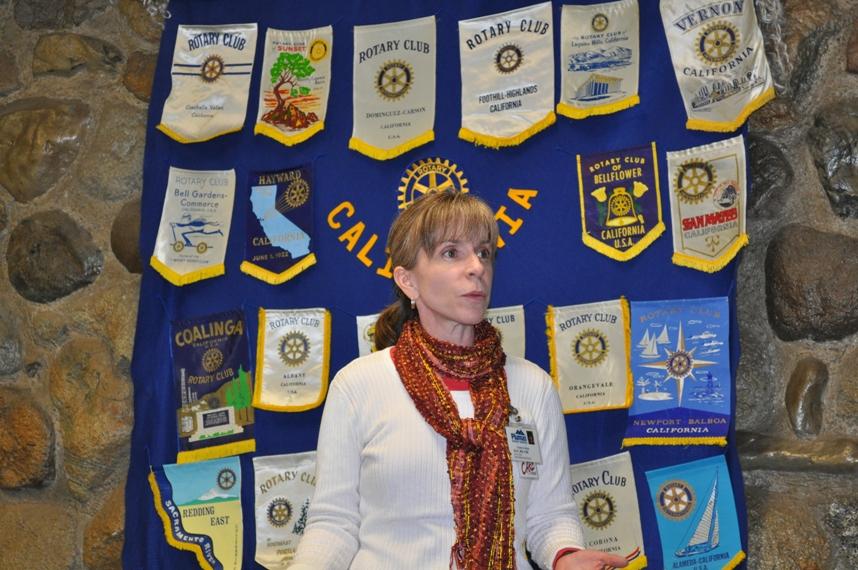
Our featured speaker for the March 31 Rotary Meeting was Kay Lund, Registered Dietician at Plumas District Hospital and a Certified Diabetic Educator. In other words, she is the go-to person for health related dietetic needs and your questions about how to manage diabetes. Here is a recap of some of the things we learned from her highly informative program.
The most serious form of diabetes is Type1, formally known as Juvenile Diabetes, is caused when the body cannot produce insulin, a hormone that is needed to convert sugar, starches and other food into energy needed for daily life. Type 1 cannot be cured but it can be managed through blood glucose control, insulin management, exercise, and good nutrition. If not managed properly it can lead to hospitalization and even death.
Type 2 diabetes effects 25 million persons, a number directly related to both juvenile and adult obesity. While the seriousness of the disease should not be underestimated, it can be managed with diet, exercise, stress control and a good support system. If not controlled well by diet and exercise, medication may be required. Common symptoms of diabetes include frequent urination, extreme thirst, extreme fatigue, cuts and bruises that are slow to heal and blurry visions. Some symptoms of type 2 diabetes are so mild they go unnoticed. Some of the risk factors for diabetes are being overweight, an inactive life style and being age 45 or over. If you would like to know whether you have, or are at risk for, diabetes talk with your doctor. You can also have attend one of the biannual PDH Health Fairs which will include and A1C assessment test.
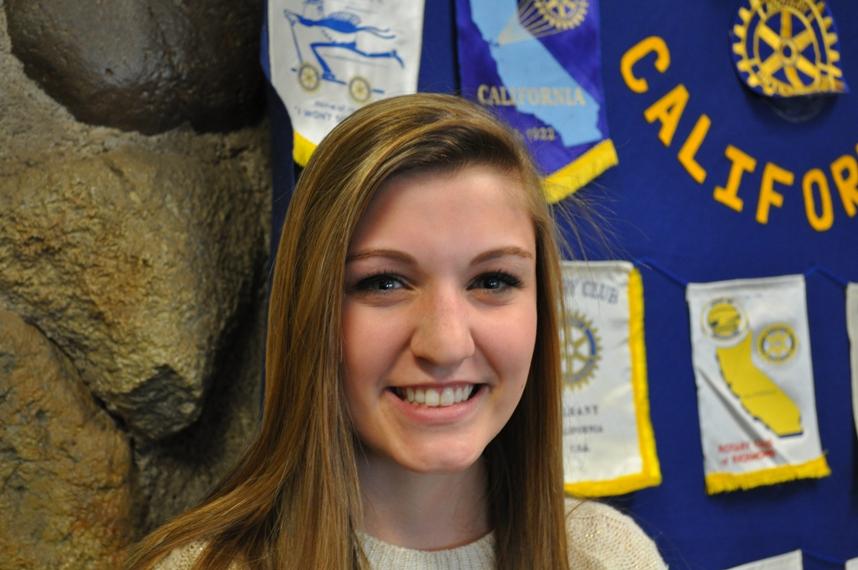
Kathleen Morrison was our visiting High School Senior.
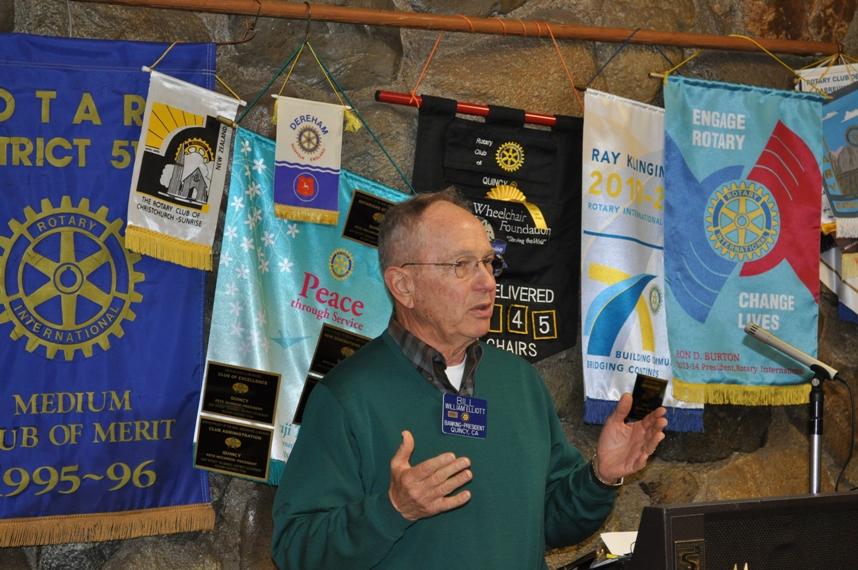
Bill Elliott and Bob Edwards presenting on behalf of the Rotary Foundation.





.jpg)